Author: nechamauser

  • Elias Ammons: the Denver boy who lit street lamps and became governor of Colorado

    Last updated: November 2, 2026.

    Who was Elias Ammons? He was a boy who moved to Denver in 1871, worked in a woolen mill, drove oxen, lit gas street lamps in the evenings, and grew up to be the governor of Colorado. His life is a good window into what a hard-working young person’s world looked like in Denver in the 1870s.
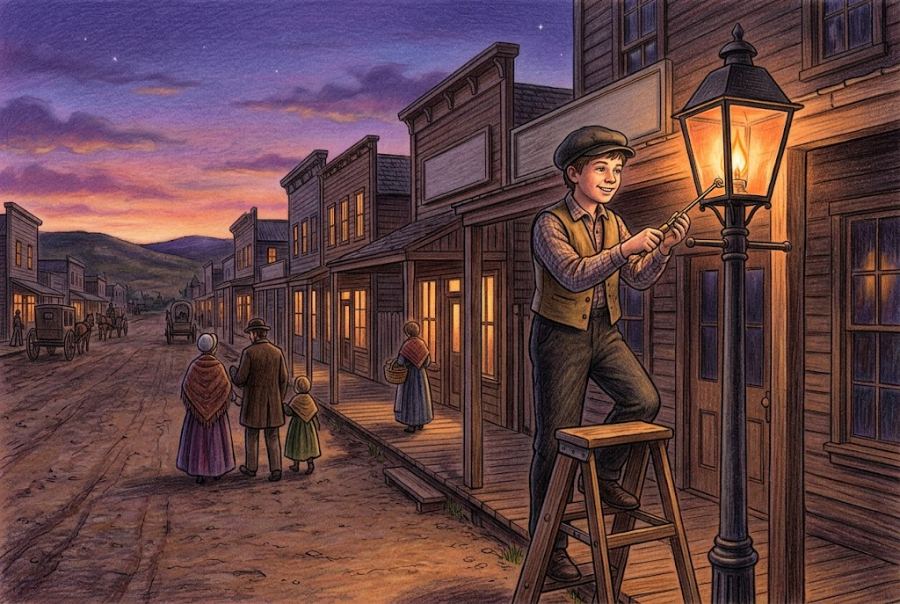
    Colour pencil illustration of a teenage boy on a short ladder lighting a gas street lamp at dusk on a Denver street in the 1870s

    Quick facts

    👶

    Born

    July 28, 1860, in Macon County, North Carolina.

    🚂

    Came to Denver

    with his family, on April 1, 1871.

    🎓

    High school

    he graduated from East Denver High School in 1880.

    🏛️

    Governor

    he was elected on November 5, 1912, took office on January 14, 1913, and served until January 12, 1915.

    💡 Did you know? As a boy, Elias drove oxen that hauled cordwood to limekilns. Cordwood is firewood cut to a standard length, and limekilns are big ovens that burn limestone to make lime.

    Timeline: the life of Elias Ammons

    July 28, 1860

    Elias Milton Ammons is born in Macon County, North Carolina.

    April 1, 1871

    His family arrives in Denver.

    School years

    He works many jobs and lights gas street lamps in the evenings.

    July 28, 1876

    He turns 16, the summer Colorado becomes a state.

    1880

    He graduates from East Denver High School.

    Nov 5, 1912

    He is elected governor of Colorado.

    Jan 14, 1913

    He takes office as governor.

    Jan 12, 1915

    His term as governor ends.

    A boy from North Carolina

    Elias Milton Ammons was born on July 28, 1860, in Macon County, North Carolina. When his family moved to Colorado, he was ten years old. According to a county history published in 1918, they arrived in Denver on April 1, 1871.

    A boy who worked

    Elias did not have a quiet childhood. The sources describe a boy who worked from a young age. He had a job in a woolen mill on West Larimer Street, where wool was turned into cloth. He did ranch work. He worked in lumbering, and he was a teamster in a lumber camp, which means he drove a team of animals pulling loads. The 1918 biography says he drove oxen hauling cordwood to the limekilns.

    Oxen are big, strong, slow animals. On the overland trails, drivers walked beside their teams and guided the animals with their voices and a whip. It was hard work for anybody, and Elias was still a kid.

    The boy who lit the lamps

    Here is the detail that people remember. During his school years, Elias lit the street lamps in the evening. The 1918 biography says he “lighted the street lamps, as was the custom when gas was being used.” Another biography simply calls him a lamplighter.

    There were no electric streetlights then. A gas street lamp had to be lit by hand, one lamp at a time, so somebody had to walk the streets at dusk. Imagine walking through Denver as the sky grew dark and the city slowly lit up behind you. That was part of Elias’s day.

    A note about sources: the lamp-lighting story comes from a biography published in 1918, a few years after his term as governor ended. We use it because it names the job clearly, and a second biography agrees that he was a lamplighter.

    High school and 1876

    Elias graduated from East Denver High School in 1880. So in the summer of 1876, the year Colorado became a state, he was a teenager. He had turned 16 on July 28 of that year. Where he was that summer, and what job he had, is not recorded anywhere we could find. The records we found cover what he did before and after, but that one summer is a gap.

    Governor of Colorado

    Many years later, Elias Ammons was elected governor of Colorado. He won the election on November 5, 1912. He took office on January 14, 1913, and his term ended on January 12, 1915. The boy who lit the lamps had become the state’s leader, in a state that had joined the Union when he was a teenager.

    Think about it

    • Elias worked in a mill, on a ranch and in a lumber camp before he was grown. Which of those jobs would you most like to try for one day?
    • Why might a person who worked hard as a boy want to help build schools and a state when he grows up?
    • Gas lamps had to be lit one by one. What jobs from today might disappear in 100 years?

    What is real and what is made up

    Elias Ammons is a real person, and everything on this page about his life comes from real biographies. The story of The Wrong Choice, a time-travel adventure that begins in Morrison in 1876, is made up. The book’s What Was Real? page explains which parts of its world are history.

    This story comes from TRACE in Colorado by T. A. Held, a time-travel series for ages 9 to 12 with a What Was Real? page in every book.

    Read the book: The Wrong Choice (Book 1) · See all the TRACE in Colorado books

    Previous post: When did Colorado become a state? The quiet day of August 1, 1876

    Next post: What was Denver like for kids in 1876? Horsecars, gas lamps and gold bars
  • When did Colorado become a state? The quiet day of August 1, 1876

    Last updated: November 2, 2026.

    When did Colorado become a state? The answer is August 1, 1876, and the way Denver reacted may surprise you: hardly anyone threw a party. Here is what really happened on the day Colorado joined the United States, why it is called the Centennial State, and why the big celebration had already happened a month earlier.

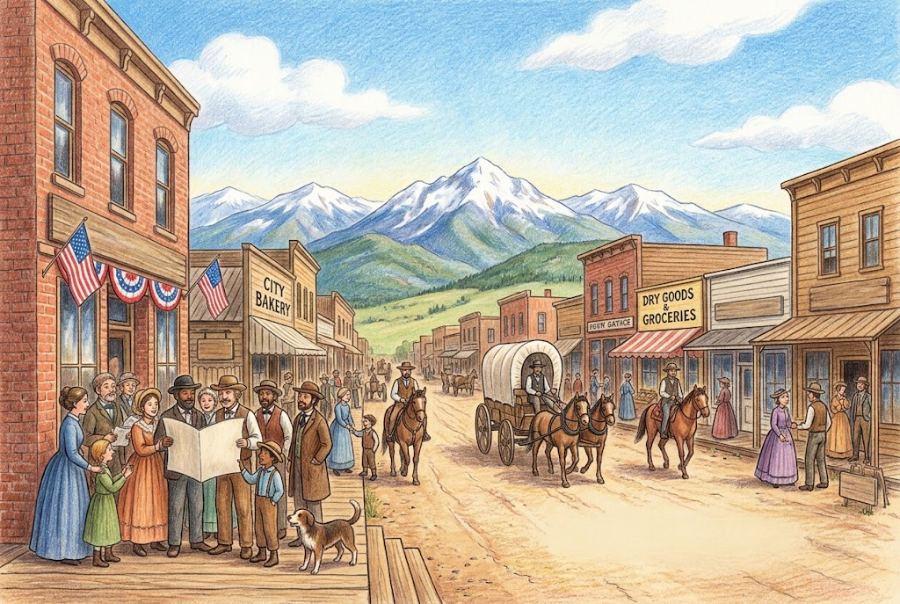
    Colour pencil illustration of a Denver street on August 1, 1876: neighbours gather around a newspaper under small flags, with a covered wagon and the Rocky Mountains behind

    Quick facts

    📅

    Date

    August 1, 1876. President Ulysses S. Grant signed the proclamation that made Colorado a state.

    🔢

    Order

    Colorado was the 38th state to join the United States.

    🏷️

    Nickname

    Colorado is the Centennial State, because it joined in the year the country turned 100.

    🎉

    Holiday

    August 1 is still celebrated in Colorado as Colorado Day.

    💡 Did you know? The name “Centennial State” was already in print in a Denver newspaper, the Denver Times, on February 27, 1875, about a year and a half before Colorado became a state.

    Timeline: from the Declaration to a new state

    July 4, 1776

    The Declaration of Independence is adopted.

    Feb 27, 1875

    The Denver Times prints “Centennial State” for the first time.

    July 4, 1876

    Denver celebrates the nation’s 100th birthday: bells, a sunrise salute, a parade and fireworks.

    Aug 1, 1876

    President Grant signs the proclamation. Colorado is the 38th state.

    Aug 2, 1876

    The statehood telegram is printed in Colorado and national newspapers.

    October 1876

    Elections are set for the first Tuesday in October.

    Why “Centennial”?

    The word centennial means a hundredth anniversary. The United States adopted the Declaration of Independence in 1776, so July 4, 1876 was its 100th birthday. People all over the country marked the date, and a giant world’s fair called the Centennial Exposition ran in Philadelphia from May 10 to November 10, 1876. Colorado joined the Union only four weeks after that birthday.

    The Denver Times saw it coming. Its writers expected Colorado to be admitted at the hundredth anniversary of American independence, and the nickname stuck.

    What the Fourth of July looked like in Denver

    Denver did not hold back on July 4, 1876. According to a history of that day published by Colorado Newsline, bells rang and whistles blew, and a 38-gun salute was fired at sunrise. A parade stepped off just after 10:30 in the morning. It included city officials, police, fire companies, secret societies, social clubs and the Denver Typographical Union, which was the union of the printers. Companies such as Wells, Fargo & Co. and Daniels, Fisher & Co. sent floats, and flags and bunting hung from nearly every building.

    The parade ended at Denver Park, where the territorial governor, John Routt, gave a speech. Fireworks on Capitol Hill closed the day, and the newspaper reported no serious accidents. That was a real celebration. Keep it in mind, because August 1 was very different.

    Then came August 1

    On August 1, the news came by telegram from Washington. Telegraph wires had reached Denver in 1863, so word from the nation’s capital could arrive quickly. The message was dated August 1, and it was printed in Colorado and national newspapers on August 2.

    Denver’s reaction was calm. The Rocky Mountain News said that people were “in the state of Colorado and the state of beatitude,” a playful way of saying they were happy. But there were no big parades and no fireworks like the ones on the Fourth of July.

    Why so quiet? One reason is that the newspapers had plenty of other news. People were still talking about what happened after the Battle of the Little Bighorn, and there was an impeachment case in Washington and a court case known as the Whiskey Ring. Closer to home, farmers were worried about swarms of grasshoppers. The News joked that anyone who hoped statehood would end the grasshopper plague had slipped up. You can read more in our post about the 1876 grasshopper plague.

    What happened next

    Officials turned quickly to the practical work of becoming a state, including setting elections for the first Tuesday in October. Today many Coloradans still mark August 1 as Colorado Day.

    Try this at home

    • Why might the birthday of a state feel quieter than the birthday of a whole country?
    • Which would you remember longer: a parade on the Fourth of July, or a telegram that arrives on an ordinary Tuesday?
    • Look at your own state or country. Do you know the date it joined or began, and how people mark it?

    What is real and what is made up

    In the time-travel adventure The Wrong Choice, two boys from today are swept back to Morrison and Denver in the summer of 1876, just before Colorado becomes a state. The boys and their adventure are made up. The history around them is real, and the book ends with a What Was Real? page that sorts the facts from the story.

    This story comes from TRACE in Colorado by T. A. Held, a time-travel series for ages 9 to 12 with a What Was Real? page in every book.

    Read the book: The Wrong Choice (Book 1) · See all the TRACE in Colorado books

    Previous post: Best adventure and history books for kids set in Colorado and the American West

    Next post: Elias Ammons: the Denver boy who lit street lamps and became governor of Colorado

  • Best adventure and history books for kids set in Colorado and the American West

    Last updated: November 2, 2026.

    Six books for readers about 8 to 14 who love Colorado and the American West: gold-rush journeys, a treasure hunt, a funny tall tale, a nonfiction guide and a gold rush time-travel adventure. Each one has a closer look underneath, and a quick chooser at the bottom if you cannot decide. Updated November 2026.

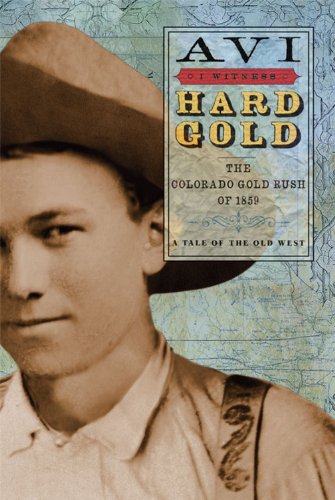
    Book cover of Hard Gold: The Colorado Gold Rush of 1859 by Avi

    1. Hard Gold: The Colorado Gold Rush of 1859

    🎂 Ages 10 to 14 · 📍 Iowa to Colorado, 1859 · ✍️ Avi, Hyperion

    A twelve-year-old follows his uncle on a wagon train to the Pike’s Peak gold fields to save the family farm.

    👍 Good for kids who want a long, suspenseful journey to the Colorado gold rush.

    More about Hard Gold

    Hard Gold came out in 2008 as part of Avi’s I Witness series, which pairs a made-up story with period pictures, maps and diagrams. It runs about 224 pages. Early’s family farm in Iowa is in debt, and a banker is threatening to take it. When his Uncle Jesse goes west for gold and is suspected of a robbery, Early follows him on a wagon train to the Pike’s Peak gold rush.

    Reviewers describe short, suspenseful chapters with plenty of cliffhangers. The hardships of the trip, and the disappointment of miners who arrived hoping to get rich, are a big part of the story. One reviewer liked that the historical detail is interesting without taking over, and another felt the plot treads familiar ground, so it suits readers who enjoy a classic frontier adventure more than a twisty one. It is reviewed for ages 10 to 14 and grades 5 to 8, and its reading level is about 740 on the Lexile scale.


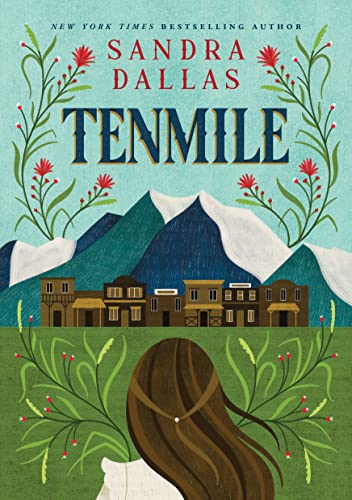
    Book cover of Tenmile by Sandra Dallas

    2. Tenmile

    🎂 Grades 3 to 6 · 📍 Colorado, 1880 · ✍️ Sandra Dallas, Sleeping Bear Press

    Sissy Carlson helps her father, the doctor of a remote gold-mining town, and starts to wonder what lies beyond it.

    👍 Good for kids who like thoughtful stories about a girl who wants more than her town can give her.

    More about Tenmile

    Tenmile (2022, about 240 pages) takes place in a remote Colorado mining town in 1880. Sissy Carlson helps her father, the town doctor. She wants to be a doctor herself, but her father tells her girls cannot be, and she also dreams of leaving town. When a mine owner hires her to tutor his son, she sees how differently rich and poor families live.

    Reviewers praise the sympathetic heroine and the carefully researched daily details, and call the story reflective and serious in places. Parents should know it deals with dangerous mine accidents, illness, poverty, child labor and a parent’s addiction, and that Sissy handles medical scenes that reviewers say include stitching wounds and delivering a baby. The publisher gives a reading level of grade 4 and an interest level of grades 3 to 6, and Kirkus suggests ages 8 to 12.


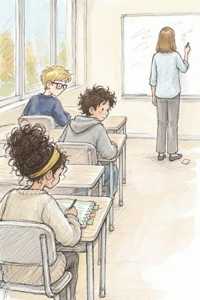
    Colour illustration from Tomorrow We'll Go Home: a girl in a yellow headband writes at her desk while a woman stands at a whiteboard (temporary picture, the real cover is coming)
    Picture from the book. Cover coming soon.

    3. Tomorrow We’ll Go Home (TRACE in Colorado, Book 2)

    🎂 Ages 9 to 12 · 📍 Denver and the Colorado gold rush · ✍️ T. A. Held

    This time they have a plan. The stone has a different one.

    Daniel packed a folder of facts, rope, matches and a blanket. Alex packed snacks. They aim for 1859, the start of the gold rush, but the stone drops them a year late, and somebody has chalked a warning under the two triangles: DON’T DO IT. Then the stone opens again, and it does not take them home.

    👍 Good for kids who like a race against a stranger with a secret.

    More about Tomorrow We’ll Go Home

    Daniel is the careful one. He has a folder of confirmed facts about the door in the cellar and a packing list that actually makes sense. Alex is the one who brought a backpack full of snacks. This time they choose the year, 1859, the start of the Colorado gold rush, and they go on purpose.

    Nothing works out the way the list said. The stone sets them down a year late, and under the two triangles somebody has written a message in chalk: DON’T DO IT. Who wrote it, and who was it for? In Denver, a polite man is paying more for gold than anybody else in town, and nobody asks why.

    Then the stone opens again, and it does not take them home. Where has it sent them now? And how many times can you say tomorrow we’ll go home before you stop believing it? It is Book 2 of The Riddle America Cannot Explain: TRACE in Colorado, for ages 9 to 12.


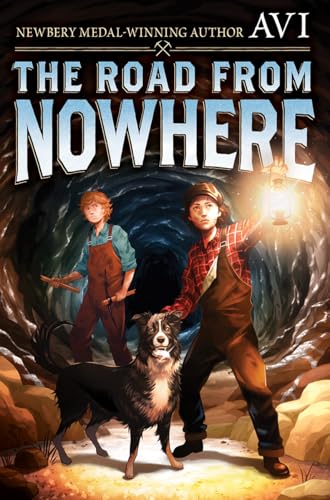
    Book cover of The Road from Nowhere by Avi

    4. The Road from Nowhere

    🎂 Ages 9 to 13 · 📍 Colorado silver camp, 1893 · ✍️ Avi, Scholastic Press (2026)

    Ollie, his brother and a friend look for silver in Gatchett’s Gulch, where a man named Elijah Gatchett says every ounce is his.

    👍 Good for kids who like a treasure hunt with a stubborn villain.

    More about The Road from Nowhere

    The Road from Nowhere (2026, about 271 pages) is set in 1893 in Gatchett’s Gulch, an isolated silver-mining camp of about forty people in Colorado. Ollie, who tells the story, wants to find silver to lift his family out of poverty. His father died in a mining accident, and his mother takes in laundry. When a cave full of silver is found, mine owner Elijah Gatchett claims all the land and silver and drives off independent prospectors. A geologist named Bertram Blake helps the kids try to stake a claim.

    School Library Journal gave it a starred review and described an immersive world, and Kirkus calls it a tense page-turner with cliffhangers. Parents should know there is peril, including a rattlesnake encounter and threats from the villain, and the father’s death is mentioned. One review says no violence is described. It is reviewed for ages 9 to 13 and grades 4 to 7.


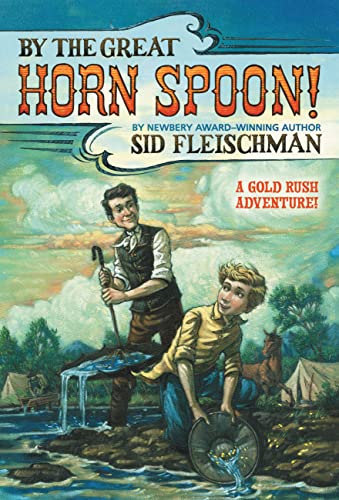
    Book cover of By the Great Horn Spoon! by Sid Fleischman

    5. By the Great Horn Spoon!

    🎂 Ages 8 to 12 · 📍 California Gold Rush, 1849 · ✍️ Sid Fleischman, Little, Brown

    A boy and his aunt’s butler stow away to California to earn back the family fortune in this comic gold-rush adventure.

    👍 Good for kids who want something funny and fast.

    More about By the Great Horn Spoon!

    First published in 1963 and illustrated by Eric von Schmidt, this is a light, funny classic of about 193 pages. Jack and Praiseworthy, his aunt’s butler, head to California in 1849 to earn money for Aunt Arabella after she loses her fortune. A thief steals their tickets, so they stow away and work for their passage, then run into highwaymen and a cast of gold-camp characters with names like Quartz Jackson and Cut-Eye Higgins.

    A review site calls it rollicking and recommends it as a family read-aloud for ages 8 to 12. Parents should know there is some casual historical racism that the reviewer says would be handled more carefully today, and one mild word for a donkey. The book was also made into a 1967 Disney film, The Adventures of Bullwhip Griffin.


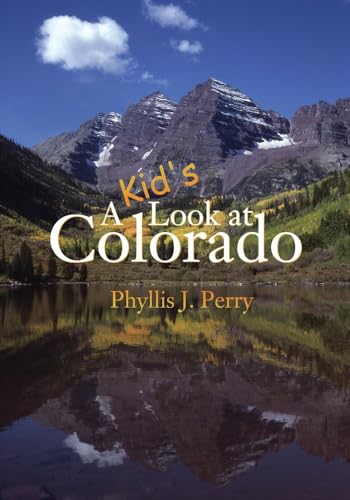
    Book cover of A Kid’s Look at Colorado by Phyllis Perry

    6. A Kid’s Look at Colorado

    📖 Nonfiction · 📍 Colorado · ✍️ Phyllis Perry, Fulcrum Publishing

    Ghost towns, early explorers, railroads and mining, and the state’s symbols and parks, with photographs and stories in every chapter.

    👍 Good for kids who ask lots of questions about where they live.

    More about A Kid’s Look at Colorado

    Published in 2005, this is a 216-page paperback with photographs and stories about the state’s characters in each chapter. It covers ghost towns, Native peoples, early explorers, railroading and mining, state symbols, national parks, wildlife and modern landmarks. The publisher calls it a must-have for young Colorado enthusiasts.

    It is a reference you can dip into, not a story to read in one go, so it works well next to a novel: read about the gold rush in Hard Gold, then look up what the real towns and railroads were like. We did not find a recommended age from the publisher.


    Still deciding?

    😂

    I want to laugh

    Try: By the Great Horn Spoon!

    ⛏️

    I want a long gold-rush journey

    Try: Hard Gold

    🕰️

    I want to be stuck in another time

    Try: Tomorrow We’ll Go Home

    🔍

    I like a treasure hunt and a stubborn villain

    Try: The Road from Nowhere

    🏔️

    I like quiet stories about growing up

    Try: Tenmile

    🗺️

    I just want the facts about Colorado

    Try: A Kid’s Look at Colorado

    📏 A note on reading levels. Age ranges on a book list are only a guide. A confident nine-year-old may be happy with a book marked 10 to 14, while a slower reader may enjoy a shorter story on the same subject. Read the first page together and let your child decide.

    ✅ About this list. We checked each title, author and ISBN on a library, bookseller or publisher page, and the descriptions come from publisher pages and reviews. Prices and editions change, so check the edition before you buy.

    This story comes from TRACE in Colorado by T. A. Held, a time-travel series for ages 9 to 12 with a What Was Real? page in every book.

    Read the book: Tomorrow We’ll Go Home (Book 2) · See all the TRACE in Colorado books

    Next post: When did Colorado become a state? The quiet day of August 1, 1876

  • The Wrong Choice

    The Wrong Choice

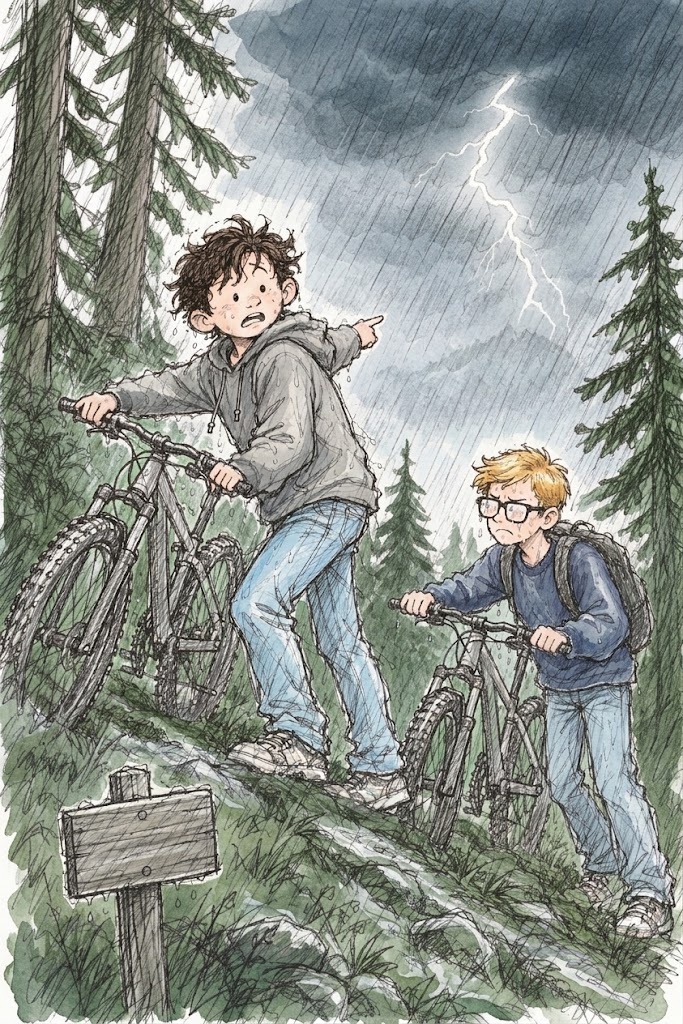
    Alex and Daniel push their bikes up a wet hillside in a thunderstorm

    Book 1 of 10 in TRACE in Colorado

    The Wrong Choice

    There are no cabins in the park. Daniel has seen the map.

    For ages 9 to 12. Set in Colorado, 1876.

    The Story

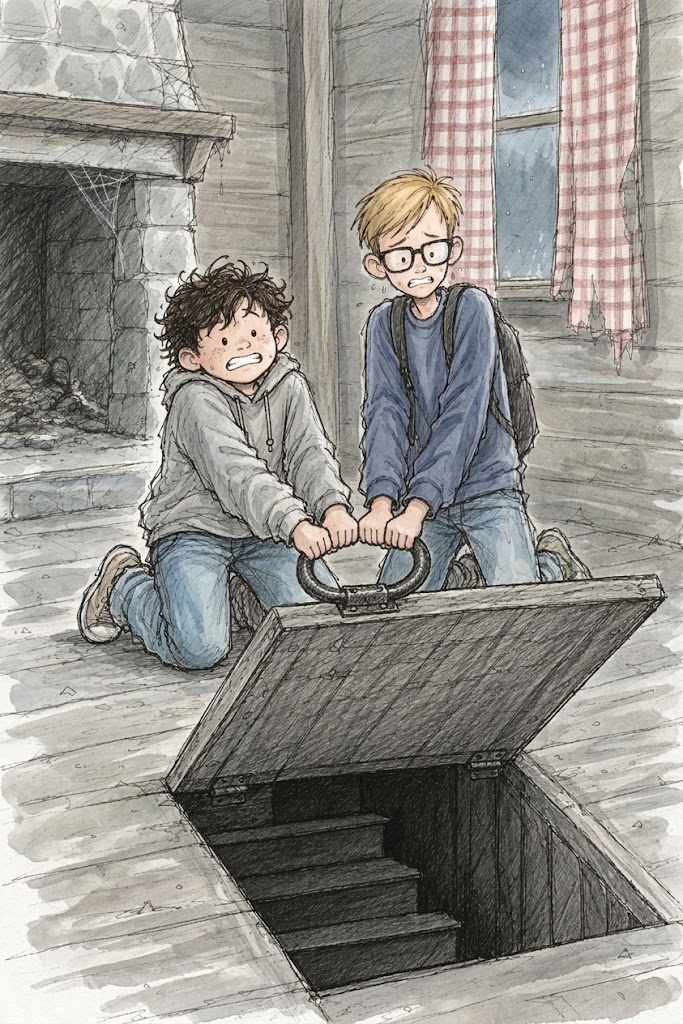
    Alex and Daniel only wanted to get out of the rain. Then Alex finds a door in the cabin floor, and in the cellar under it there’s a red rock with two triangles cut into it and an old journal lying open on a table. The floor begins to hum.

    The stone sets them down on a hill above Morrison in 1876, with no money, nowhere to sleep, and nobody who would ever believe where they came from.

    Somewhere along the way, they made the wrong choice. Now the stone won’t open, and the only way home is to find out what they did.

    Who can help two boys who aren’t supposed to be here? And how do you fix a mistake when you don’t even know you made it?

    “Cool? It’s hot enough to fry an egg on these boards.”

    Inside the Book

    Where It Happened

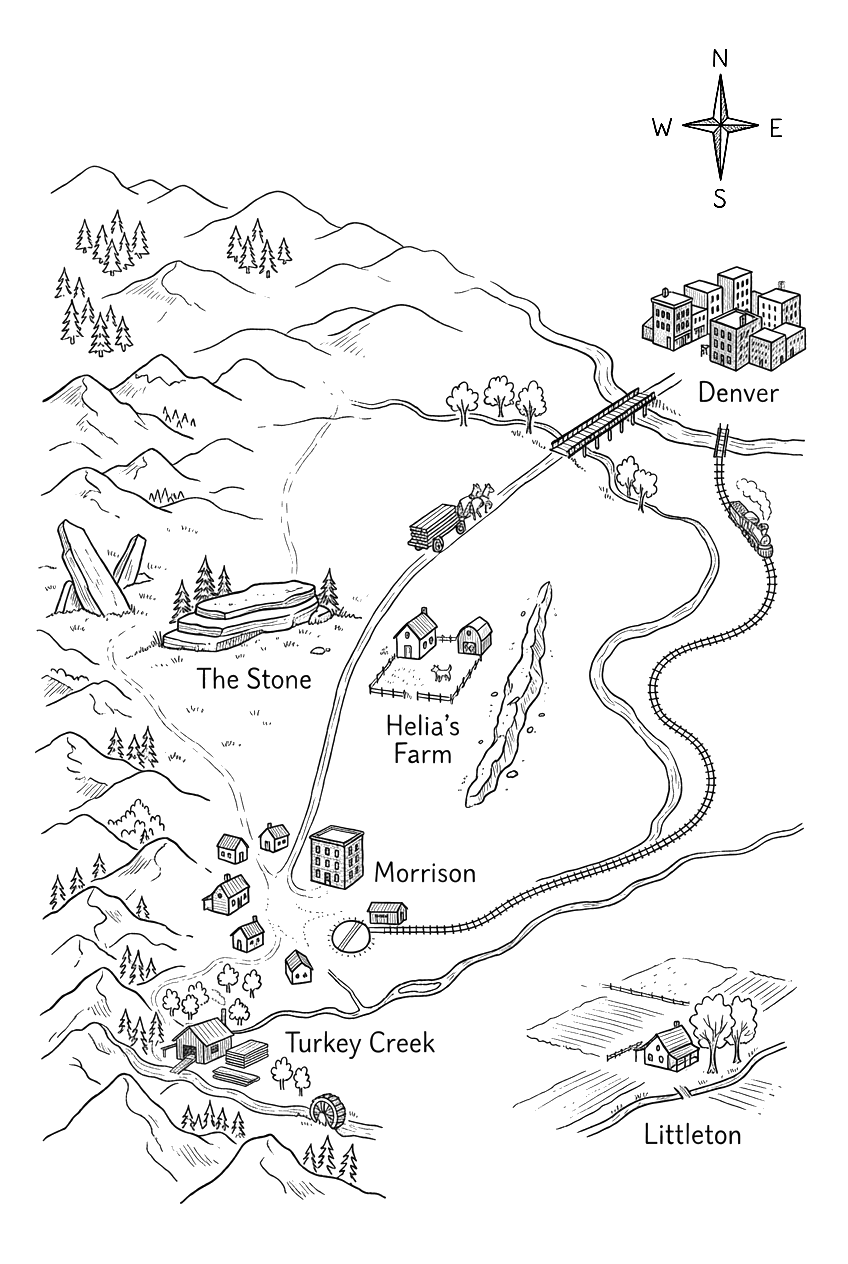
    Map for The Wrong Choice: the stone, Helia's farm, Morrison, Turkey Creek, Littleton and Denver in 1876

    Collect Them All

    Free to download and print at home. No sign-up needed.

    Alex lifts a wooden box over his head on the stage of a medicine show while a crowd watches

    Trivia Cards

    Six trivia cards about this book. Print them in color, cut, fold, and glue.

    How do I make my trivia cards? →

    Want a printed deck? Join the waitlist →

    The passport sticker for The Wrong Choice: 1876, with two lanterns

    Passport Stickers

    The sticker for this book’s page in your Time Traveler’s Passport: 1876.

    How do I use my sticker? →

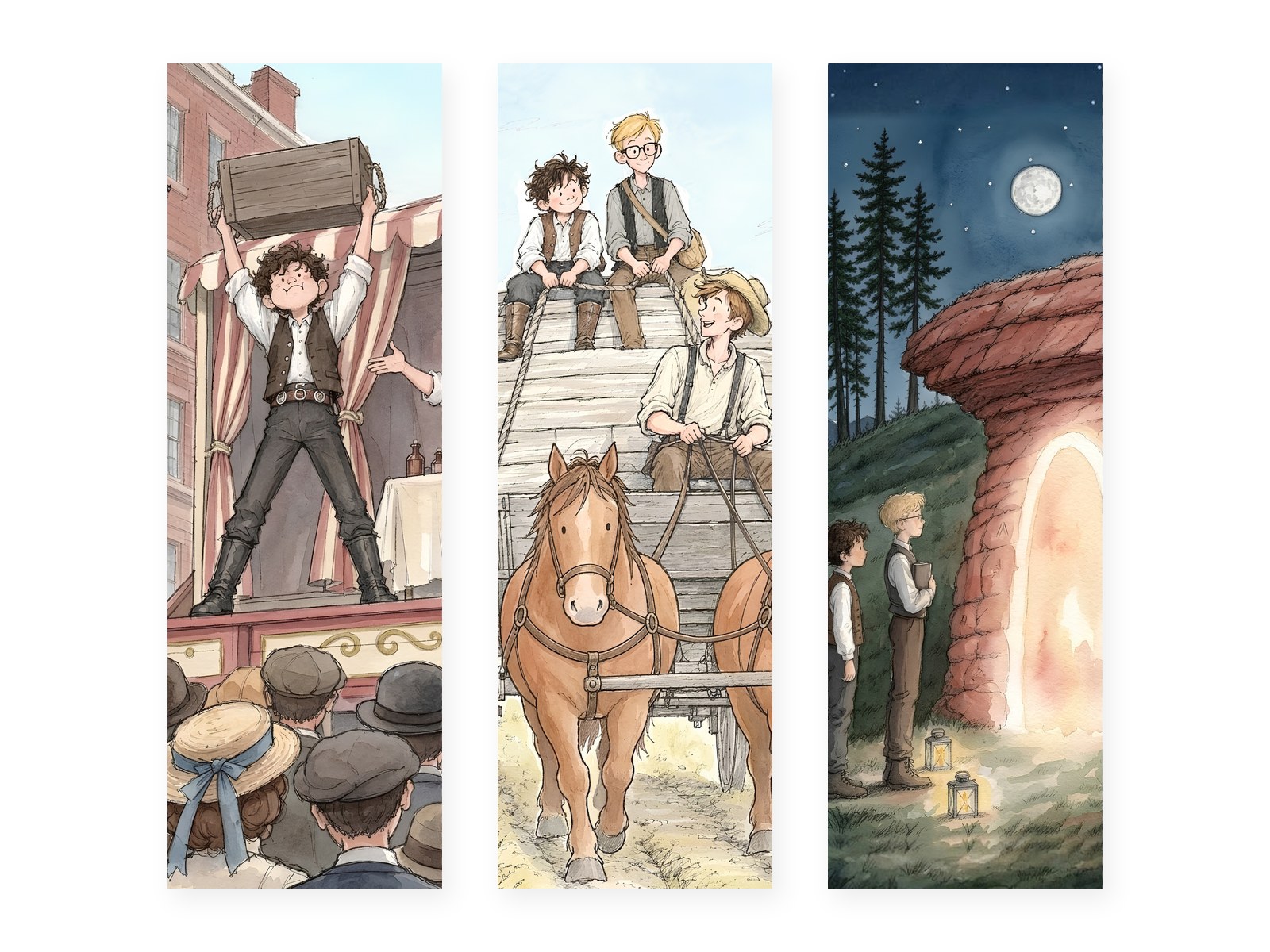
    Three bookmarks from The Wrong Choice: Alex lifting a box at the medicine show, the boys on Elias’s wagon, and the boys at the glowing rock

    Bookmarks

    Three bookmarks, each with a picture from the book on one side and a line from the story on the other. Print them in color, cut, fold, and glue.

    How do I make my bookmarks? →

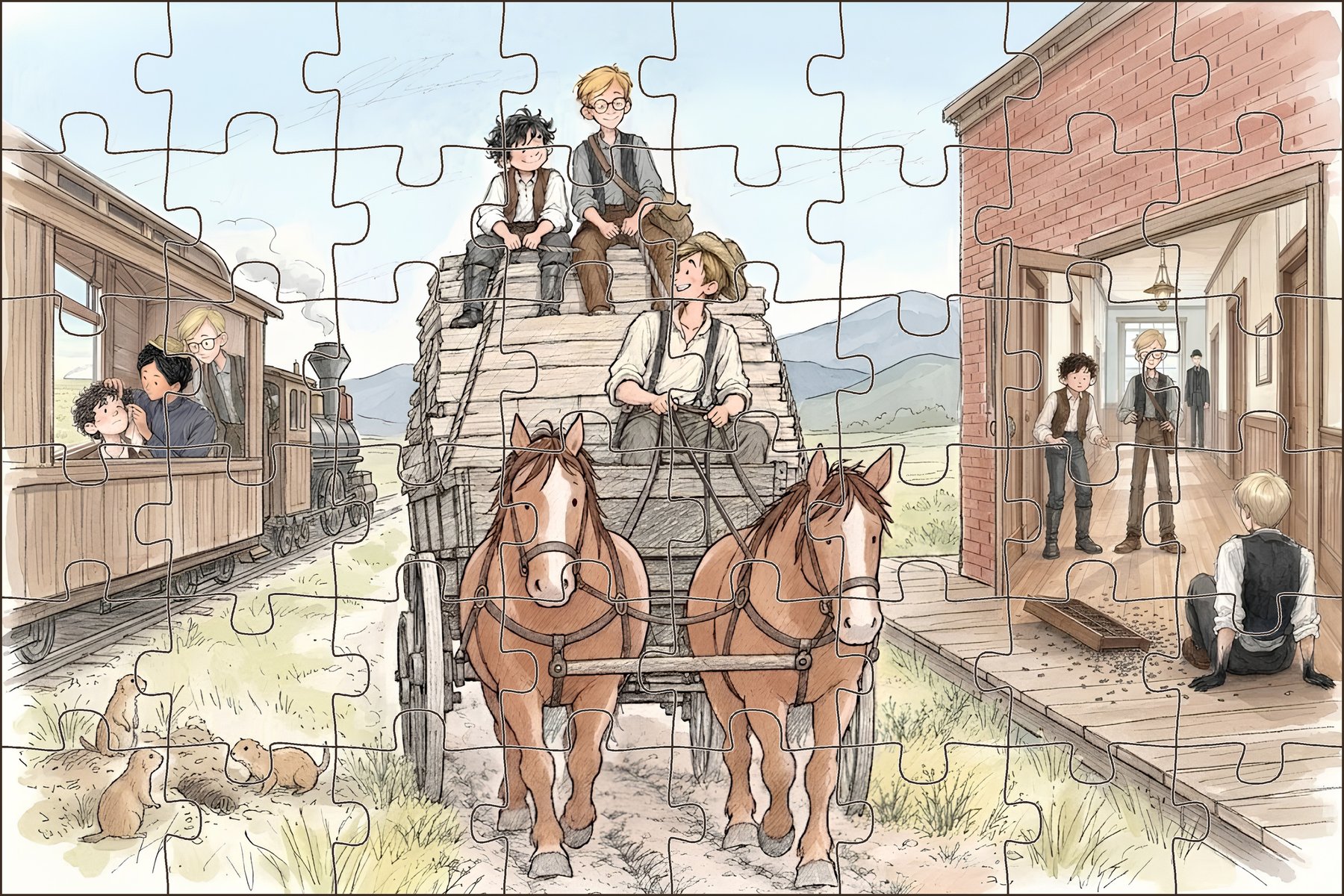
    A jigsaw puzzle picture: Elias drives the wagon with Alex and Daniel on top, a train on the left, and the newspaper office on the right

    Puzzle

    48 pieces, from a picture made just for this puzzle: Elias’s wagon, the train ride, and the spilled type at the newspaper office. Print it in color, glue it to card, and cut it out.

    How do I make my puzzle? →

    Alex and Daniel pull open a trapdoor in the floor of an old cabin

    Time Traveler’s Passport

    The full passport booklet, with a page for every book.

    How do I make my passport? →

    Alex and Daniel stand over spilled metal type in a long hallway

    Series Checklist

    All 10 books. Check off each one you read and each thing you collect.

    Want them printed? Order the printed pack in the shop.

    For Parents and Teachers

    Discussion Guide

    Questions and an activity for this book, for classrooms and book clubs. Free.

    Leave a Review

    Did your child enjoy the book? A short review on Amazon helps other families find it. Amazon only takes reviews from adults, so this one is for you.

    A Coupon for Your First Order

    Join the parents’ mailing list. We only email about new books and bonuses.

    Parents Sign-up

    Where to Buy

    Coming soon. The whole series comes out together.

    FormatStores
    PaperbackAmazon
    HardcoverAmazon
    eBookKindle