Last updated: November 2, 2026.
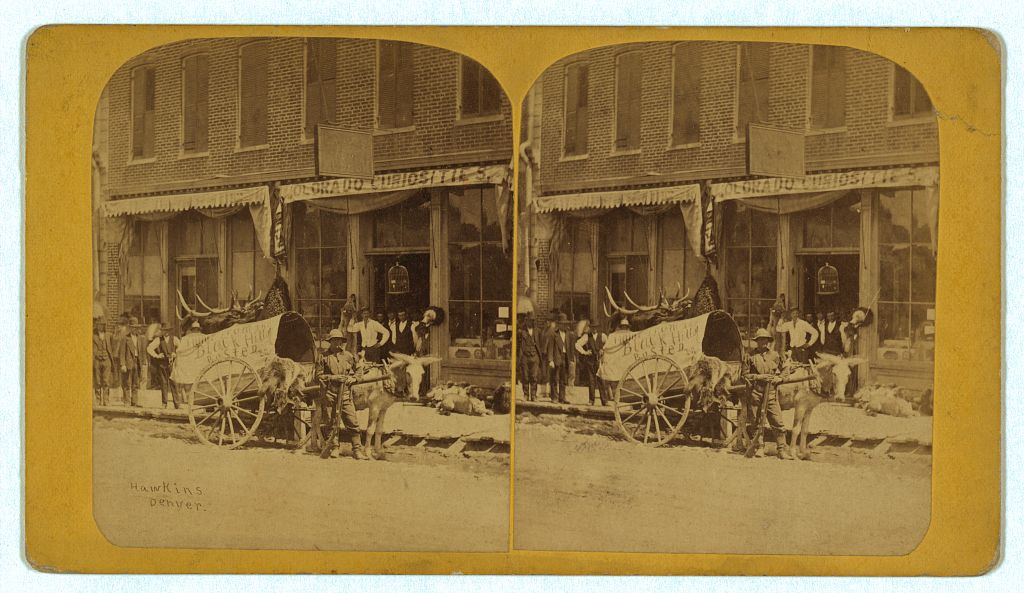
What was Denver like for kids in 1876? There were no cars, no electric lights and no sewers, but there were horse-drawn streetcars, gas lamps, telegraph wires and a building where miners’ gold was melted into bars. This post tours Denver in the year Colorado became a state, using only facts that historians have written down.
Quick facts
🚋
Streetcars
Denver’s first horsecar line opened on December 17, 1871, and ran from Seventh and Larimer to the Five Points neighborhood.
🪙
Gold
the U.S. Assay Office in Denver melted gold into stamped bars. It made no coins; coin-making began in Denver on February 1, 1906.
📡
Telegraph
the telegraph came to Denver in 1863.
🚰
Sewers
Denver began building a sewer system only in 1880.
💡 Did you know? The newspaper wrote in 1874 that since Denver was laid out, not one privy vault had been emptied. A privy is an outhouse, and the complaint shows how the city was growing faster than its plumbing.
Timeline: Denver, 1863 to 1906
1863
The telegraph reaches Denver, and the U.S. Assay Office opens.
Dec 17, 1871
Denver’s first horsecar line opens at Seventh and Larimer.
Oct 29, 1873
The Inter-Ocean Hotel opens.
June 20, 1874
Railroad tracks reach Morrison.
Aug 1, 1876
Colorado becomes a state.
1880
Denver begins building a sewer system.
Feb 1, 1906
Coin-making begins at the Denver Mint.
Getting around: the horsecar
In 1876 a person in Denver could ride a streetcar, but the car was pulled by horses, not powered by electricity. The first horsecar line opened on December 17, 1871. It started at Seventh and Larimer Street and ran to the Five Points neighborhood. Sources disagree about small details such as exact street names and what the fare was in 1876, so we will not guess. What is clear is that Denver was a city where you could ride on rails behind a horse.
If you wanted to go to Morrison, you could take a train. The Denver, South Park and Pacific Railroad reached Morrison on June 20, 1874, and began regular service between Denver and Morrison on July 3, 1874. It ran on narrow-gauge tracks, which are tracks set closer together than usual.
After dark: gas lamps
Streets were lit by gas lamps, and a person had to light each lamp by hand. Elias Ammons, who later became governor, did exactly this job as a boy during his school years. You can read his story in our post about Elias Ammons.
Gold, but not coins
Denver sat near the gold fields, and miners brought their gold to town. The U.S. Assay Office opened in 1863 in a two-story brick building built by the bank Clark, Gruber & Co., at what is now the corner of Sixteenth and Market Streets. Its job was to melt and assay gold, which means testing how pure it was. Then the office returned the gold to its owner as a bar stamped with its weight and fineness.
Many people think a mint makes coins from the beginning. Not this one. The Denver office only melted and tested gold. Coin-making began on February 1, 1906, thirty years after Colorado became a state.
No sewers yet
Cities in 1876 did not have the plumbing we expect today. Denver did not start building a sewer system until 1880. Before that, people used privies, which were outhouses behind buildings. The Denver Public Library has a Rocky Mountain News article from February 8, 1874, complaining that since the city was laid out, not a single privy vault had been emptied. Today we think about clean water and sewers without noticing them, but they are among the biggest changes in city life.
A fancy hotel and fast news
Denver also had a grand hotel. The Inter-Ocean Hotel, built by Barney Ford at Blake and Sixteenth Streets, opened in 1873 as a four-story building and was called the finest hotel in Denver. You can read more in our post about hotels in 1876.
News came to Denver by telegraph. The wires had arrived in 1863, and in 1876 the news that Colorado had become a state came that way too. Read about it in How did news travel in 1876?.
Try this at home
- Which would you miss most: electric lights, a car, or a flush toilet? Why?
- A horsecar needed horses. What would a city street sound and smell like with hundreds of horses?
- Why might a government office melt gold into bars instead of making coins?
What is real and what is made up
The facts above are real history. The Wrong Choice is a made-up time-travel story that begins in Morrison in 1876, and the boys in it are not real. Each book in the series ends with a What Was Real? page that sorts the facts from the story.
This story comes from TRACE in Colorado by T. A. Held, a time-travel series for ages 9 to 12 with a What Was Real? page in every book.
Read the book: The Wrong Choice (Book 1) · See all the TRACE in Colorado books
Previous post: Elias Ammons: the Denver boy who lit street lamps and became governor of Colorado
Next post: How did news travel in 1876? Telegraphs, newspapers and printer’s devils
Sources
- Denver Tramway, Wikipedia (first horsecar line, December 17, 1871)
- Denver Mint, Wikipedia (assay office, stamped bars, coinage began February 1, 1906)
- Denver Mint, Colorado Encyclopedia
- Denver, South Park and Pacific Railroad, Wikipedia
- Denver County, History of Colorado, Biographies: Ammons, Elias Milton (published 1918)
- How Early Denver Dealt With Its Garbage, Denver Public Library
- Denver Medical Society, Wikipedia (sewer construction began in 1880)
- Barney Ford, Colorado Encyclopedia (Inter-Ocean Hotel)
- Telecommunications in Colorado, Telecommunications History Group
- 16th Street, Denver (photograph, about 1875), Library of Congress
Leave a Reply