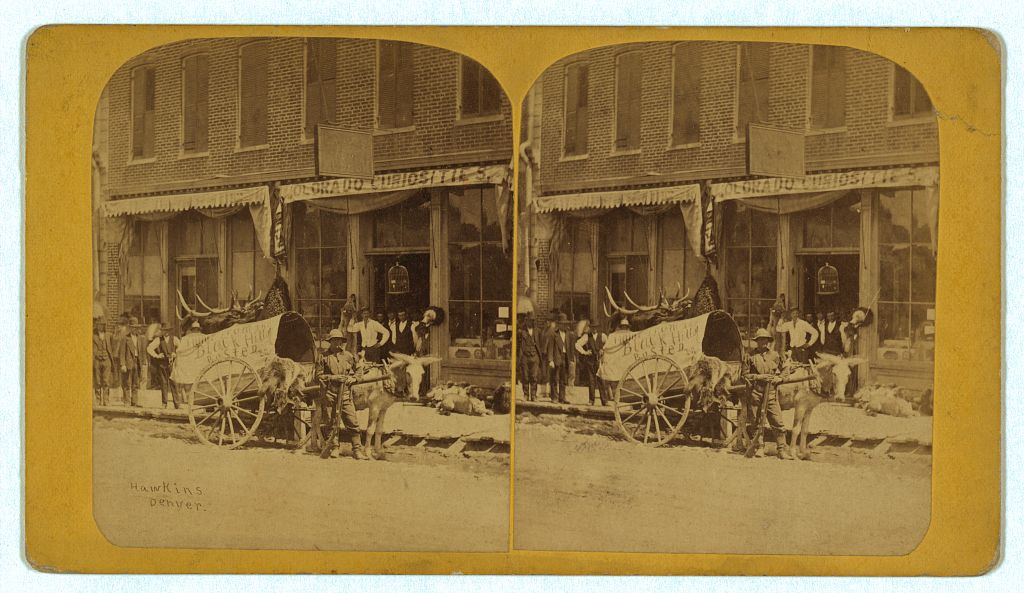
Author: nechamauser

  • Clark, Gruber & Co.: the Denver bankers who made their own gold coins in 1860

    Last updated: November 3, 2026.

    Did a bank in Denver really make its own gold coins? Yes. In the summer of 1860, a bank called Clark, Gruber & Co. struck gold coins in Denver, because the nearest government mint was far away. This post tells who the bankers were, how fast they worked, and how the story ended.

    Quick facts

    📅

    When

    the bank opened on July 10, 1860, and coining began about July 16.

    📍

    Where

    the corner of today’s 16th and Market Streets in Denver.

    🪙

    The coins

    $2.50, $5, $10 and $20 pieces, struck at 15 to 20 a minute.

    🏛️

    The end

    coining went on to the end of 1862 and made $594,305 in all.

    💡 Did you know? The 1860 coins held a little more than their face value in gold, and the $20 coin was slightly larger and heavier than the government’s. The $10 and $20 coins showed a stylized Pikes Peak that did not look much like the real mountain.

    Timeline: from gold dust to coins

    Late 1858

    Auraria, the town across the creek from Denver, is founded.

    Spring 1859

    The big wave of gold seekers arrives, in April and May.

    July 10, 1860

    Clark, Gruber & Co. opens as a bank.

    About July 16, 1860

    The first coins are struck.

    1861

    The Pikes Peak picture is dropped from the coins.

    End of 1862

    Coining stops.

    April 1863

    The government buys the building for $25,000.

    Why make coins in Denver?

    Miners paid for things with gold dust, which had to be weighed every time. Coins were easier. But in 1860 the nearest government mint, a place where official coins are made, was in San Francisco, which had opened in 1854. That is a very long way from Denver by wagon. A bank in Denver that could turn gold into coins had an easy customer list.

    Who were the bankers?

    Clark, Gruber & Co. belonged to three partners: the brothers Austin M. Clark and Milton E. Clark, and Emanuel H. Gruber. All three were real people. Austin Clark is one of the real names mentioned in Tomorrow We’ll Go Home.

    How fast did they work?

    The bank could strike fifteen to twenty coins a minute. One by one they dropped out of the press and into a bucket. Over about two and a half years the bank made $594,305 worth of coins.

    What happened to the building?

    In April 1863 the government bought the building for $25,000. Readers of Book 1 will know it later as the Assay Office.

    Try this at home

    • Fifteen coins a minute: how many is that in ten minutes? In an hour?
    • Why do you think the bankers put a mountain on their coins?
    • Why would a miner prefer coins to gold dust?

    What is real and what is made up

    The bank, the partners, the coin sizes and the numbers above are real history. Tomorrow We’ll Go Home is a made-up time-travel adventure that visits Denver in 1860. Its What Was Real? page explains which parts of Denver in 1860 come from real history.

    This story comes from TRACE in Colorado by T. A. Held, a time-travel series for ages 9 to 12 with a What Was Real? page in every book.

    Read the book: Tomorrow We’ll Go Home (Book 2) · See all the TRACE in Colorado books

    Next post: The Mount Pisgah gold hoax of 1884
  • The Mount Pisgah gold hoax of 1884: 5,000 people and a fake gold mine

    Last updated: November 3, 2026.

    What was the Mount Pisgah hoax? In 1884, a hole in the ground near Cañon City, Colorado, was said to hold gold ore worth a fortune. It was a trick, and about 5,000 people fell for it. This post tells the story, and the surprise that came a few years later.

    Quick facts

    📅

    Year

    1884.

    📍

    Where

    about 45 miles from Cañon City, Colorado.

    🪙

    The claim

    ore said to be worth $2,000 a ton.

    👥

    The crowd

    about 5,000 people poured into Cañon City to buy supplies.

    💡 Did you know? Real gold was found in the same part of Colorado a few years later, at a place called Cripple Creek.

    Timeline: a fake mine and a real one

    1884

    The Mount Pisgah hoax. About 5,000 people rush to Cañon City.

    October 1890

    Bob Womack finds rich ore at Cripple Creek. Few people believe him.

    April 1891

    The Cripple Creek mining district is organized.

    What does it mean to salt a mine?

    To salt a mine means to put gold into a hole in the ground so that it looks rich, then sell it or the dream of it. The Mount Pisgah hole was salted. Samples from it were said to assay at $2,000 a ton. To assay means to test ore to find out how much gold is in it.

    Why did 5,000 people come?

    People believed the news and wanted to be early. Before they could dig anywhere, they needed tools, food and tents, so thousands poured into Cañon City to buy supplies. The people who sold supplies did well, no matter what was in the hole.

    Why this matters later

    When Bob Womack found real gold at Cripple Creek in 1890, many people remembered Mount Pisgah and did not believe him. You can read that story in our post about Bob Womack and Cripple Creek.

    Try this at home

    • Why do you think people believed the news about Mount Pisgah?
    • Who really made money in the Mount Pisgah rush?
    • How can you check if a story is true before you act on it?

    What is real and what is made up

    The hoax, the numbers and the crowd are real history. Tomorrow We’ll Go Home is a made-up time-travel adventure, and the Mount Pisgah story is one of the real events its What Was Real? page explains.

    This story comes from TRACE in Colorado by T. A. Held, a time-travel series for ages 9 to 12 with a What Was Real? page in every book.

    Read the book: Tomorrow We’ll Go Home (Book 2) · See all the TRACE in Colorado books

    Previous post: Clark, Gruber & Co.: the Denver bankers who made their own gold coins in 1860

    Next post: Bob Womack and the gold of Cripple Creek

  • Bob Womack and the gold of Cripple Creek: the man nobody believed

    Last updated: November 3, 2026.

    Who found gold at Cripple Creek? A cowboy and prospector named Bob Womack. In October 1890 he found rich ore in Poverty Gulch, but people had been fooled before and did not believe him. This post tells how his find became the last great Colorado gold rush.

    Quick facts

    📅

    Found

    October 1890, in Poverty Gulch (the El Paso lode).

    😕

    Nobody believed him

    the Mount Pisgah hoax of 1884 made people careful.

    🪙

    The sale

    he sold his claim for a few hundred dollars ($300 or $500, sources differ).

    💰

    The total

    more than $77 million in gold by 1901.

    💡 Did you know? Winfield Scott Stratton staked a claim called the Independence on July 4, 1891, and became the district’s first millionaire.

    Timeline: from one find to a boom town

    Oct 1890

    Bob Womack finds rich ore in Poverty Gulch.

    Feb to May 1891

    Eighteen claims are filed.

    April 1891

    The mining district is organized.

    End of May 1891

    A camp of twenty or thirty tents.

    July 1891

    A post office. Stratton stakes the Independence on July 4.

    End of 1891

    Between 600 and 800 people live in the district.

    1892

    About 5,000 people.

    By 1901

    More than $77 million in gold.

    Why did nobody believe him?

    Seven years earlier, the Mount Pisgah hoax had sent thousands of people after a fake mine. When Womack said he had found real gold, many people thought it was another trick. Read about that in the Mount Pisgah post.

    What happened to Womack?

    He sold his claim for a few hundred dollars. Sources disagree on whether it was $300 or $500, so we will not pick one. The ground he sold turned out to be worth far more.

    How did a camp grow so fast?

    In spring 1891 a camp of twenty or thirty tents stood at Cripple Creek. By the end of that year 600 to 800 people lived there, and by 1892 about 5,000. It was the last great Colorado gold rush.

    Try this at home

    • Why was it hard for people to trust Womack?
    • Would you have sold your claim for a few hundred dollars? Why or why not?
    • How does one hoax change how people hear the next big story?

    What is real and what is made up

    Bob Womack, the find, the dates and the numbers are real history. Tomorrow We’ll Go Home is a made-up time-travel adventure, and its boys arrive at Cripple Creek in May 1891, when the camp was just twenty or thirty tents.

    This story comes from TRACE in Colorado by T. A. Held, a time-travel series for ages 9 to 12 with a What Was Real? page in every book.

    Read the book: Tomorrow We’ll Go Home (Book 2) · See all the TRACE in Colorado books

    Previous post: The Mount Pisgah gold hoax of 1884
    Next post: How did people look for gold at Cripple Creek in 1891?

  • For parents and teachers: a discussion guide to The Wrong Choice and life in 1876

    Last updated: November 2, 2026.

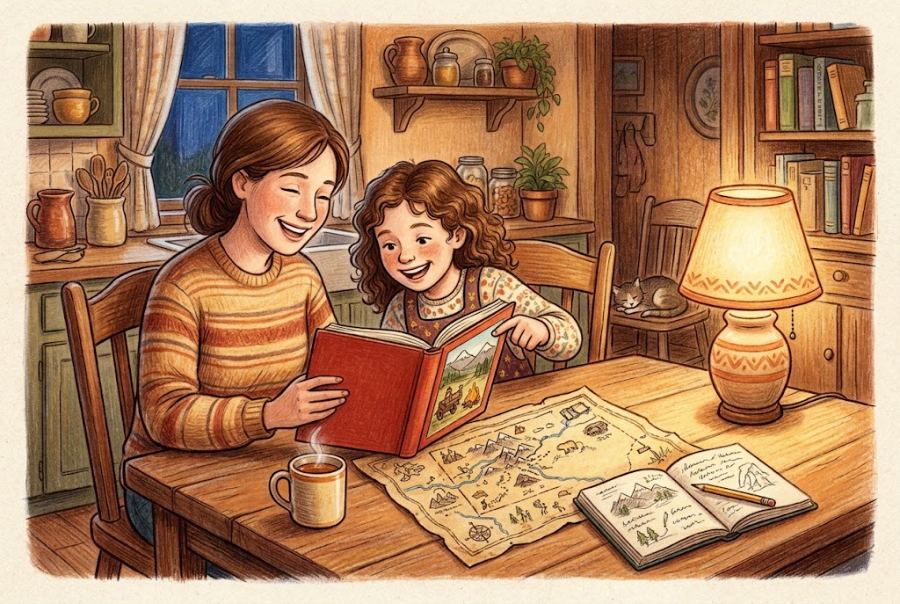
    Is there a good way to talk with kids about a time-travel book set in 1876? This guide for parents and teachers has discussion questions, new words and printable extras for The Wrong Choice, Book 1 of the TRACE in Colorado series. It is written for readers about 9 to 12.

    Colour pencil illustration of a parent and child reading a red book together at a kitchen table with an old map of Colorado

    Quick facts

    📚

    Book

    The Wrong Choice by T. A. Held, Book 1 of The Riddle America Cannot Explain: TRACE in Colorado.

    🎂

    Age

    9 to 12.

    📍

    Setting

    Morrison and Denver, Colorado, in 1876.

    📚

    In every book

    a What Was Real? page that separates the facts from the fiction.

    💡 Did you know? In Colorado’s social studies standards, grade 8 covers U.S. history from the American Revolution through Reconstruction, so a story set in 1876 sits near the end of that period.

    About the book

    Two boys, Alex and Daniel, run from a storm into a cabin that is not on any map. A journal in the cellar and a red stone with two triangles pull them back to 1876, with no money and nowhere to sleep. Somewhere along the way they make the wrong choice, and now they must find out what it was. The story is made up, but the history around it is real.

    Questions to talk about

    • The boys arrive with no money and nowhere to sleep. What would you do first?
    • Why might it be hard to explain to people in 1876 where you came from?
    • The book’s title is about a wrong choice. Can you think of a time when you made a choice and only later understood it?
    • What does it feel like to be new in a place where you do not know the rules?
    • Which things about daily life in 1876 would you miss most from today?
    • Why does a book that ends with a What Was Real? page help readers trust the history?

    New words in 1876

    📚

    Statehood

    becoming a state. Colorado became a state on August 1, 1876.

    📚

    Centennial

    a hundredth anniversary. Colorado is the Centennial State.

    📚

    Telegraph

    a machine that sent messages as clicks along a wire.

    📚

    Assay

    to test how pure a metal is.

    📚

    Teamster

    a person who drives a team of animals pulling a wagon.

    📚

    Toll road

    a road that charges a fee to use it.

    📚

    Locust

    a kind of grasshopper that can fly in huge swarms.

    Read the history behind the story

    These short history posts match the book and make good reading for class or home: When did Colorado become a state?, Elias Ammons, Denver for kids in 1876, How news travelled in 1876, The grasshopper plague, Hauling lumber near Morrison, Hotels in Denver in 1876 and a Denver 1876 trivia quiz.

    Free printable extras

    The site has printable bonuses for readers. Find out how to use them here: bookmarks, puzzle, trivia cards and time-traveler passport.

    Classroom ideas

    • Make a timeline with 1859, 1863, 1874 and 1876 and add events from the history posts.
    • Choose one real job from 1876, such as lamplighter or teamster, and write a short diary entry from that person’s day.
    • Compare how news travelled in 1876 with how it travels today.

    What is real and what is made up

    The boys and their adventure are made up. The history in the book, and the history in our posts, is real. Every book ends with a What Was Real? page so readers can tell the difference.

    How to use this guide

    Before reading, ask your child what they already know about 1876, and what might be hard for two boys who arrive with no money. While reading, stop now and then to ask what the boys know and what they do not. After reading, turn to the What Was Real? page at the end of the book and ask which facts surprised your child. This simple routine works well at home, in a classroom or in a library reading group.

    This story comes from TRACE in Colorado by T. A. Held, a time-travel series for ages 9 to 12 with a What Was Real? page in every book.

    Read the book: The Wrong Choice (Book 1) · See all the TRACE in Colorado books

    Previous post: Trivia quiz: Denver in 1876 (3 questions with answers)

  • Trivia quiz: Denver in 1876 (3 questions with answers)

    Last updated: November 2, 2026.

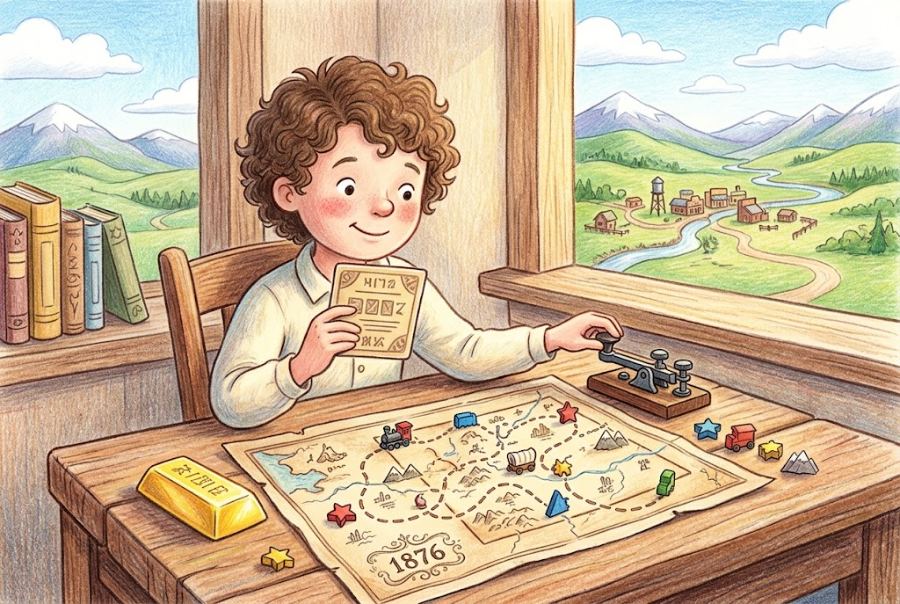
    How much do you know about Denver in 1876? Try this three-question quiz about the year Colorado became a state. Pick A, B or C, then tap “Show the answer” to check. Every answer comes from real history, and each one has a short explanation so you learn something even if you guessed wrong.

    Quick facts

    📆

    Year

    1876, when Colorado joined the United States.

    📍

    Place

    Denver and the towns around it.

    ❓

    Questions

    Three, each with three choices.

    ⏱️

    Time

    About five minutes.

    💡 Did you know? The telegraph came to Denver in 1863, so people in 1876 already used wires to send news.

    🏛️

    Question 1: Colorado becomes a state

    On August 1, 1876, Colorado became a state. Which number state was it?

    A) The 13th

    B) The 38th

    C) The 50th

    Show the answer

    B. Colorado was the 38th state, so thirty-seven states had joined before it. President Ulysses S. Grant signed the proclamation on August 1, 1876. The 13th state was one of the original thirteen, and the number 50 belongs to a much later state.

    🪙

    Question 2: Gold in Denver

    The U.S. Assay Office in Denver took in miners’ gold. What did it do with the gold?

    A) Melted it into bars

    B) Made it into coins

    C) Sent it to Washington

    Show the answer

    A. The assay office melted and tested gold, then returned it to its owner as a bar stamped with its weight and fineness. It did not make coins. Coin-making began in Denver on February 1, 1906.

    📡

    Question 3: The telegraph

    How did telegraph operators read the messages they received?

    A) From colored lights

    B) From flags waved on a hill

    C) By ear, from the clicks

    Show the answer

    C. Experienced telegraph operators learned to read the code by sound. The machine was changed into a sounder that clicked loudly, so operators could listen to a message instead of reading marks on paper.

    How did you do?

    Show the scoring

    Three points: Expert Time Traveler. Two points: Good Explorer. One point: you have a lot of history to look forward to. Teachers can read the questions to a class and have students hold up a card with a letter.

    Bonus facts behind the questions

    📡

    American Morse

    The telegraph used American Morse, also called Railroad Morse, which is different from the International Morse code used later.

    📰

    First edition

    The Rocky Mountain News printed its first edition on April 23, 1859, and began publishing daily in 1860.

    🚋

    Horsecar

    Denver’s first horsecar line opened on December 17, 1871, and ran from Seventh and Larimer to the Five Points neighborhood.

    🏷️

    Centennial State

    The name was printed in the Denver Times on February 27, 1875, before Colorado was a state.

    Talk about it

    • Which answer surprised you most, and why?
    • If the assay office did not make coins, who do you think used the stamped bars?
    • What would be harder: reading a message by listening to clicks, or reading it on paper?

    Want more?

    Read our post on the day Colorado became a state, learn how news travelled in 1876, or tour Denver for kids in 1876. There are also printable trivia cards on the site; see the trivia cards page.

    What is real and what is made up

    The facts in this quiz are real. The Wrong Choice, a time-travel adventure that begins in Morrison in 1876, is a made-up story, and its What Was Real? page explains which parts come from history.

    Colour pencil illustration of a curly-haired kid at a desk with a quiz card, a telegraph key, a gold bar and a map of Colorado used as a board game

    This story comes from TRACE in Colorado by T. A. Held, a time-travel series for ages 9 to 12 with a What Was Real? page in every book.

    Read the book: The Wrong Choice (Book 1) · See all the TRACE in Colorado books

    Previous post: What was a fancy hotel like in Denver in 1876? The Inter-Ocean and the Tremont House

    Next post: For parents and teachers: a discussion guide to The Wrong Choice and life in 1876

  • What was a fancy hotel like in Denver in 1876? The Inter-Ocean and the Tremont House

    Last updated: November 2, 2026.

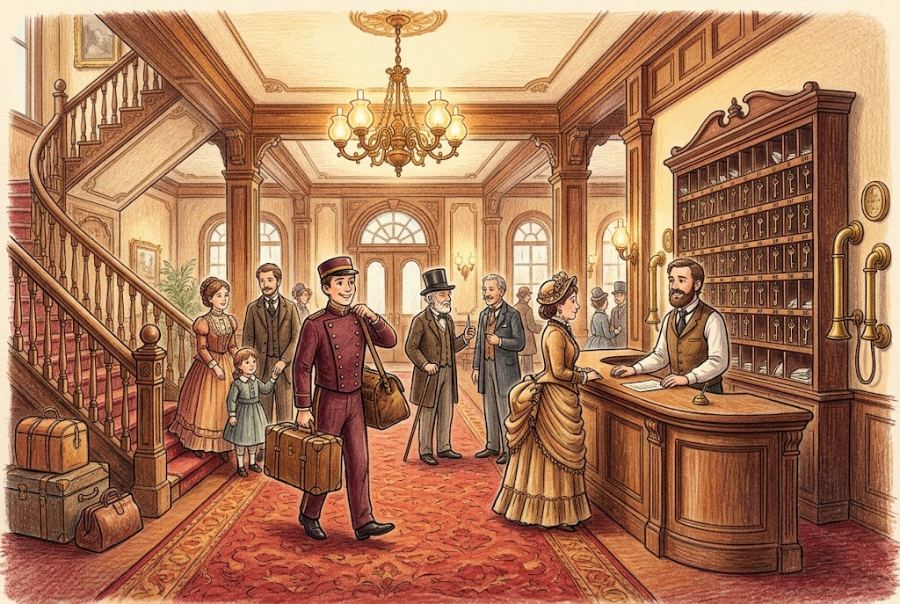
    Where would you sleep and eat if you arrived in Denver in 1876? A fancy traveler might choose the Inter-Ocean Hotel, with its bronze chandeliers and speaking tubes. This post tells what historians know about Denver’s hotels, and it is honest about the one thing we could not find: the menu.

    Colour pencil illustration of a grand 1870s Denver hotel lobby with a half-circle desk, a key rack and a bellboy carrying a trunk

    Quick facts

    🏨

    The Inter-Ocean Hotel

    it opened on October 29, 1873, at 16th and Blake Streets in Denver. Barney Ford built it, and it was a four-story building.

    🏨

    The Tremont House

    it began in late 1859 near Cherry Creek as an alcohol-free boardinghouse called the Temperance Hotel.

    🦪

    Oysters

    ice-cooled railroad cars let oysters be served daily in large cities and small towns.

    ❓

    Missing

    we found no menu or meal price for a Denver hotel in 1876.

    💡 Did you know? The Inter-Ocean was used for about 100 years. It was torn down in 1973 to make a parking lot.

    Timeline: two famous Denver hotels

    Late 1859

    The Temperance Hotel opens near Cherry Creek. It is later renamed the Tremont House.

    1872

    Barney Ford buys lots at Blake and Sixteenth Streets.

    Oct 29, 1873

    The Inter-Ocean Hotel opens.

    1876

    John Wesley Smith buys the Inter-Ocean.

    1912

    A flood fills the Tremont House with mud, and it is torn down.

    1973

    The Inter-Ocean is demolished for a parking lot.

    1988-89

    Archaeologists dig at the Tremont House site and find about 26,000 objects.

    The Inter-Ocean Hotel

    The Inter-Ocean was built by Barney Ford, who bought the lots at Blake and Sixteenth Streets in 1872. It opened in 1873 as the finest hotel in Denver. It had a Second Empire style, which means a building with a mansard roof, a roof with steep sides. William Byers, the editor of the Rocky Mountain News, praised it as the finest hotel in the territory.

    Inside, the second floor had bronze chandeliers, velvet drapes and lace curtains. The front desk was a half circle. Behind it hung a rack of keys made of black walnut. The hotel also had a call system, with wires to every room, and speaking tubes on each floor, so a guest could talk to the desk without walking downstairs. In 1876, a man named John Wesley Smith bought the hotel.

    The Tremont House

    Another famous hotel stood closer to Cherry Creek. It opened in late 1859 as a boardinghouse that did not allow alcohol, called the Temperance Hotel. It was later renamed the Tremont House. By the 1880s it had lost some of its fame. A flood in 1912 filled it with mud and sand, and it was torn down that year. In 1988 and 1989 archaeologists dug at the site and found about 26,000 objects. The site now lies under Speer Boulevard.

    What did people eat?

    Here is the honest part. We know a lot about the buildings but nothing about a particular Denver hotel dinner in 1876. We found no menu and no price for that year. What we do know is how food traveled. Ice-cooled railroad cars changed how food was moved, and oysters began to be served daily in big cities and small towns across the country. A guest at a good hotel might have found food that came from far away. We cannot say that a certain Denver hotel served oysters on a certain night, so we will not say it.

    Why say what we do not know?

    A good historian says “I don’t know” when the record is silent. When a writer of a made-up story fills in details, they should be marked as made up. That is why each TRACE in Colorado book ends with a What Was Real? page.

    Try this at home

    • What would you ask the hotel desk through a speaking tube?
    • A hotel bought by a new owner in 1876 had been open only three years. Why might owners change so quickly?
    • If you found a hotel menu from 1876, what would you look for first?

    What is real and what is made up

    The hotels above are real. In The Wrong Choice, two boys from today arrive in 1876 with no money and nowhere to sleep, but their story is made up. The book ends with a What Was Real? page that sorts the facts from the story.

    This story comes from TRACE in Colorado by T. A. Held, a time-travel series for ages 9 to 12 with a What Was Real? page in every book.

    Read the book: The Wrong Choice (Book 1) · See all the TRACE in Colorado books

    Previous post: How did people haul lumber and stone near Morrison in the 1870s?

    Next post: Trivia quiz: Denver in 1876 (3 questions with answers)

  • How did people haul lumber and stone near Morrison in the 1870s?

    Last updated: November 2, 2026.

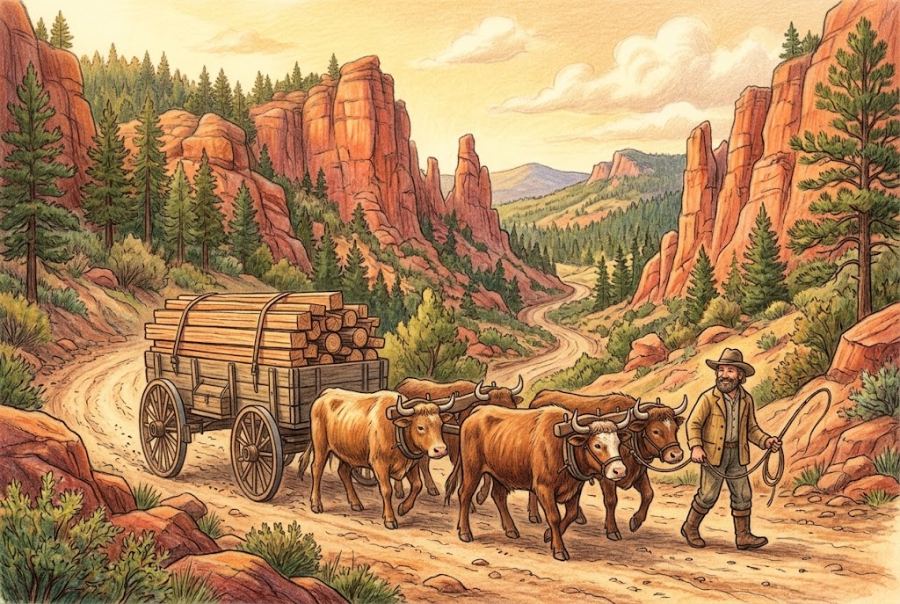
    How did people move lumber and stone around Morrison, Colorado in the 1870s? They used teams of oxen and horses on wagon roads, some of which charged a toll, and after 1874 they also used a narrow-gauge train. This post explains how a lumber wagon worked, who paid to use the roads, and why Morrison was a busy little town.

    Colour pencil illustration of a lumber wagon pulled by oxen on a red-rock canyon road near Morrison, Colorado

    Quick facts

    ⛰️

    Morrison

    George Morrison laid out the town in 1874 and founded the Morrison Stone, Lime, and Town Co.

    🚂

    The train

    the Denver, South Park and Pacific Railroad reached Morrison on June 20, 1874. Its tracks were narrow gauge, set 3 feet apart.

    🛣️

    Toll roads

    toll roads ran through Bear Creek Canyon and Turkey Creek Canyon. One list gives a toll of 25 cents for a team and wagon.

    🐂

    Oxen

    a team of oxen walked about 2 miles an hour.

    💡 Did you know? Red Rocks Park, near Morrison, was once known as the Garden of the Angels.

    Timeline: Morrison in the 1870s

    1874

    George Morrison plats the town of Morrison.

    June 20, 1874

    Railroad tracks reach Morrison.

    July 3, 1874

    Regular train service begins between Denver and Morrison.

    1876

    Colorado becomes a state.

    A town built on stone

    Morrison grew because of what lay under the ground. George Morrison platted the town in 1874, and he founded the Morrison Stone, Lime, and Town Co. The area had a red sandstone quarry, and workers also produced lime and gypsum, materials used in building. The railroad brought building stone and other products of Morrison’s quarries into Denver.

    When the Denver, South Park and Pacific Railroad reached Morrison on June 20, 1874, regular train service started on July 3. After the Panic of 1873, which was a big money crisis, and after crop losses in 1874 to 1876, the railroad did not build farther for years. So in the 1870s Morrison was a busy place at the end of the tracks.

    Wagons and toll roads

    Not everything went by train. People who lived up the canyons used wagons. A Jefferson County history brochure says toll roads, which are roads that charge a fee, were first authorized by territorial lawmakers. Toll roads ran through Bear Creek Canyon and Turkey Creek Canyon, near Morrison. The brochure lists fees such as 25 cents for a team and wagon, 10 cents for each horse, and 5 cents for each sheep, goat or hog. It does not date those exact prices to the 1870s, so treat them as an example of how tolls worked, not as the price in a particular year.

    Oxen are not horses

    A team of oxen worked very differently from horses. On the overland trails, the driver walked on the left side of the team and used his voice, body language and a whip to guide the animals. The National Park Service says the usual pace was about two miles an hour. At that speed a trip of ten miles takes five hours. A driver had a long day just to deliver a load.

    Trees from the hills

    Higher up Bear Creek, logging drew settlers to the area that became Evergreen. A half-dozen sawmills worked along upper Bear Creek. A load of lumber from the hills meant long hours for a teamster, which is a person who drives a team of animals pulling a wagon.

    A real teenager with oxen

    Elias Ammons, who later became governor of Colorado, did this kind of work. He drove oxen hauling cordwood to limekilns, the ovens that burned limestone to make lime. You can read about him in our post on Elias Ammons.

    One thing we do not know is where he was in the summer of 1876, so we cannot say what he hauled that year.

    Try this at home

    • Ten miles at two miles an hour takes five hours. How long would it take you to walk ten miles?
    • Why would a road charge a toll, and who would not want to pay it?
    • Why is a train better for heavy stone than an ox team? Is a wagon ever better?

    What is real and what is made up

    The towns, the roads and the railroad above are real. The story of The Wrong Choice, in which two boys from today land on a hill above Morrison in 1876, is made up. The book ends with a What Was Real? page that sorts the facts from the story.

    This story comes from TRACE in Colorado by T. A. Held, a time-travel series for ages 9 to 12 with a What Was Real? page in every book.

    Read the book: The Wrong Choice (Book 1) · See all the TRACE in Colorado books

    Previous post: The grasshopper plague of 1876: when swarms ate Colorado’s crops

    Next post: What was a fancy hotel like in Denver in 1876? The Inter-Ocean and the Tremont House

  • The grasshopper plague of 1876: when swarms ate Colorado’s crops

    Last updated: November 2, 2026.

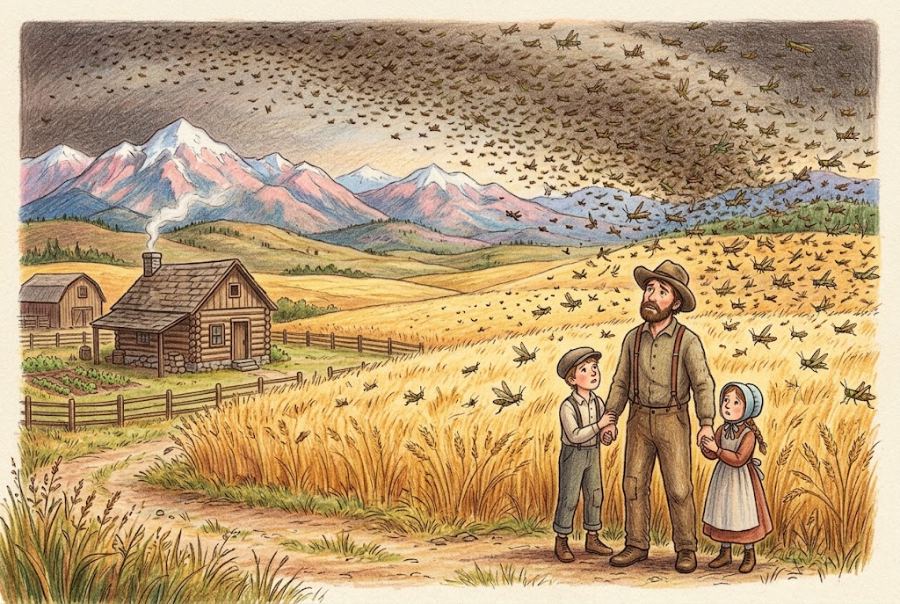
    What was the grasshopper plague in Colorado in 1876? From 1874 to 1876, giant swarms of grasshoppers, called Rocky Mountain locusts, ate crops across the plains. Colorado farmers faced the plague three years in a row. This post tells what happened, what the government did, and a surprising end to the story.

    Colour pencil illustration of a huge cloud of grasshoppers over a Colorado wheat field while a farmer and his two children watch

    Quick facts

    📅

    When

    swarms hit Colorado three years running, and the last great swarm came in 1876. Across the West, the last major swarms were from about 1873 to 1877.

    📍

    Where

    Colorado, Kansas, Minnesota, Missouri, Nebraska and other states.

    🤝

    Help

    Congress voted money to help farmers who had lost their crops.

    😄

    The joke

    farmers said the locusts ate everything but the mortgage.

    💡 Did you know? The Rocky Mountain locust is now extinct. The last specimen anyone collected was in 1904, in Colorado.

    Timeline: three bad years and a long goodbye

    1874

    Swarms of Rocky Mountain locusts ravage crops on the plains.

    Jan 1875

    Congress sets aside money to buy seed for farmers.

    1876

    The last great swarm reaches Colorado, in the summer Colorado becomes a state.

    1904

    The last Rocky Mountain locust specimen is collected, in Colorado.

    2014

    The IUCN formally declares the species extinct.

    Clouds of insects

    Today a grasshopper is a small insect in the grass. The Rocky Mountain locust was a type of grasshopper that sometimes gathered in huge swarms and flew across the land. When a swarm landed on a farm, the insects could eat the crops down to the ground. For a family that grew its own food and sold the rest, that could mean a hungry winter.

    Three years in a row

    Colorado farmers were hit by swarms in 1874, 1875 and 1876. People found it hard to keep going, because a farmer who loses a crop must still pay for seed, tools and land. Farmers joked bitterly that the locusts ate everything but the mortgage. A mortgage is a loan used to buy land. The joke means that the insects ate the crops but the debt remained.

    What did the government do?

    The plague was serious enough that Congress acted. Congress voted money to help people on the western frontier who had been left destitute by the grasshoppers. In January 1875, it also set aside money to buy seed, so farmers could plant again. Sources give different dollar amounts for the different relief laws, so we will not print a number.

    The newspaper and the grasshoppers

    When Colorado became a state on August 1, 1876, newspapers were also writing about the swarm. The Rocky Mountain News joked that anyone who hoped statehood would end the grasshopper problem had slipped up. You can read the whole story in our post about the day Colorado became a state.

    A mystery with a real ending

    After the late 1870s, the great swarms stopped. The last specimen of the Rocky Mountain locust was collected in 1904, in Colorado. Less than thirty years after the biggest swarms, the species seemed to be gone. In 2014 the IUCN, the group that keeps the world list of endangered species, formally declared the Rocky Mountain locust extinct. Scientists still talk about why such a huge insect population could disappear so fast. We could not find one answer that is agreed upon, so we will not claim one.

    Try this at home

    • Why would a farmer need money for seed after a swarm ate the crop?
    • The joke about the mortgage is dark humor. Why do you think people tell jokes in hard times?
    • A species with millions of insects went extinct. What does that tell us about nature?

    What is real and what is made up

    The grasshoppers, the relief laws and the extinction are real history. The Wrong Choice is a made-up time-travel adventure that begins in Morrison in 1876. Its What Was Real? page explains which parts of its world come from the real history of that year.

    Not only a Colorado problem

    The swarms were not a Colorado problem alone. Across the West, the last major swarms came between about 1873 and 1877 in Colorado, Kansas, Minnesota, Missouri, Nebraska and other states. A farmer on the plains who read about help in Washington was reading about a problem shared by thousands of other families. That is one reason Congress, which had to answer to all of those states, took notice.

    This story comes from TRACE in Colorado by T. A. Held, a time-travel series for ages 9 to 12 with a What Was Real? page in every book.

    Read the book: The Wrong Choice (Book 1) · See all the TRACE in Colorado books

    Previous post: How did news travel in 1876? Telegraphs, newspapers and printer’s devils

    Next post: How did people haul lumber and stone near Morrison in the 1870s?

  • How did news travel in 1876? Telegraphs, newspapers and printer’s devils

    Last updated: November 2, 2026.

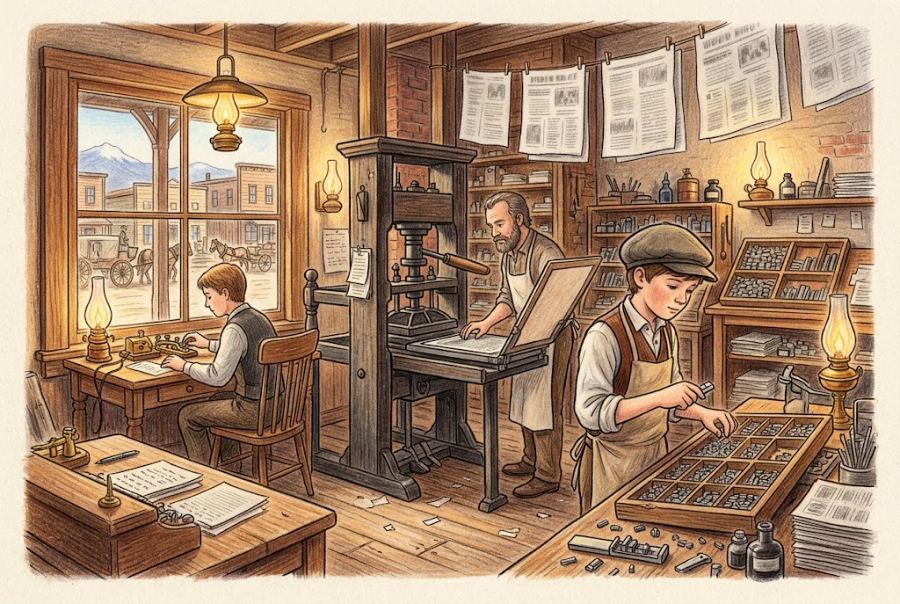
    How did news travel in 1876? There were no phones, no radio and no internet. News came through telegraph wires, and the story reached readers in a newspaper that was set in type by hand. This post explains how a message crossed the country, how a newspaper was made, and the strange words printers used.

    Colour pencil illustration of an 1870s Denver print shop: a boy sorting metal type, a wooden printing press, and a telegraph operator by the window

    Quick facts

    📰

    The Rocky Mountain News

    it printed its first edition on April 23, 1859, became a daily paper in 1860, and has been a morning paper since July 1870.

    📡

    The telegraph

    it came to Denver in 1863.

    📡

    Morse code

    American railroads and telegraph lines used American Morse, also called Railroad Morse, which is different from the International Morse code used later.

    👂

    Reading by ear

    telegraph operators learned to read the code by sound.

    💡 Did you know? A printer’s apprentice was called a printer’s devil. One of his jobs was sorting type that had been spilled and mixed up.

    Timeline: how the news got faster

    April 23, 1859

    William Byers prints the first Rocky Mountain News.

    1860

    The paper begins publishing daily.

    1863

    The telegraph comes to Denver.

    July 1870

    The News becomes a morning paper.

    Aug 1-2, 1876

    The statehood telegram arrives and is printed.

    The telegraph: messages by wire

    The telegraph sent messages as electrical clicks along a wire. The telegraph came to Denver in 1863, so by 1876 news from Washington could arrive over the wire. Operators used a code of short and long signals. In the United States this was American Morse, also called Railroad Morse. It looked a bit different from the International Morse that people learn today. Some letters had gaps inside them, and a dash could be shorter than in International Morse.

    Early telegraph machines made marks on paper. Operators found they could understand the code just by listening to the clicks, so the machine was redesigned into a sounder that clicked loudly with no paper tape. Experienced operators read messages by ear.

    The newspaper: the Rocky Mountain News

    William Byers printed the first Rocky Mountain News on April 23, 1859. It started as a weekly. It began publishing daily editions in 1860, and since July 1870 it was a morning paper. Because a morning paper is read at breakfast, the work of putting it together happened the night before.

    When the telegraph brought a story, such as the news that Colorado had become a state, the newspaper printed it. The statehood telegram from Washington was dated August 1, 1876, and appeared in Colorado papers on August 2. You can read more in our post about the day Colorado became a state.

    Printers and their strange words

    Printing in 1876 meant arranging small metal letters, called type, into lines and pages. Printers used special words for their work:

    • Pied type: when type was spilled or mixed up, printers said it was pied, or pi. Pie is an old printers’ word for letters that have been jumbled.
    • The hellbox: a box where broken or used pieces of type were thrown.
    • The printer’s devil: a young apprentice in a printing shop. A printer’s devil sorted type from the hellbox back into the job case, the tray where each kind of letter belongs.

    It sounds like a scary job, but it was a real training job for a young person.

    Fast and slow at the same time

    A telegram could cross the country in a short time, but a newspaper reader still waited for the paper to be set in type and printed. News was fast compared to a letter, and slow compared to today. A story that arrived late at night might appear in the paper the next morning.

    Try this at home

    • How do you find out the news today? How would your day change if the only way was a paper that arrives once a morning?
    • Try writing your name in clicks: one short click and one long click. What problems do you run into?
    • Why do you think printers made funny names like hellbox and devil?

    What is real and what is made up

    The newspapers, the telegraph and the printing words above are real. The story of The Wrong Choice, which begins in Morrison in 1876, is made up. The book ends with a What Was Real? page that explains the history behind it.

    This story comes from TRACE in Colorado by T. A. Held, a time-travel series for ages 9 to 12 with a What Was Real? page in every book.

    Read the book: The Wrong Choice (Book 1) · See all the TRACE in Colorado books

    Previous post: What was Denver like for kids in 1876? Horsecars, gas lamps and gold bars

    Next post: The grasshopper plague of 1876: when swarms ate Colorado’s crops

  • What was Denver like for kids in 1876? Horsecars, gas lamps and gold bars

    Last updated: November 2, 2026.

    What was Denver like for kids in 1876? There were no cars, no electric lights and no sewers, but there were horse-drawn streetcars, gas lamps, telegraph wires and a building where miners’ gold was melted into bars. This post tours Denver in the year Colorado became a state, using only facts that historians have written down.

    Old photograph of 16th Street in Denver, about 1875
    16th Street, Denver, about 1875. Library of Congress, Prints and Photographs Division (no known restrictions on publication).

    Quick facts

    🚋

    Streetcars

    Denver’s first horsecar line opened on December 17, 1871, and ran from Seventh and Larimer to the Five Points neighborhood.

    🪙

    Gold

    the U.S. Assay Office in Denver melted gold into stamped bars. It made no coins; coin-making began in Denver on February 1, 1906.

    📡

    Telegraph

    the telegraph came to Denver in 1863.

    🚰

    Sewers

    Denver began building a sewer system only in 1880.

    💡 Did you know? The newspaper wrote in 1874 that since Denver was laid out, not one privy vault had been emptied. A privy is an outhouse, and the complaint shows how the city was growing faster than its plumbing.

    Timeline: Denver, 1863 to 1906

    1863

    The telegraph reaches Denver, and the U.S. Assay Office opens.

    Dec 17, 1871

    Denver’s first horsecar line opens at Seventh and Larimer.

    Oct 29, 1873

    The Inter-Ocean Hotel opens.

    June 20, 1874

    Railroad tracks reach Morrison.

    Aug 1, 1876

    Colorado becomes a state.

    1880

    Denver begins building a sewer system.

    Feb 1, 1906

    Coin-making begins at the Denver Mint.

    Getting around: the horsecar

    In 1876 a person in Denver could ride a streetcar, but the car was pulled by horses, not powered by electricity. The first horsecar line opened on December 17, 1871. It started at Seventh and Larimer Street and ran to the Five Points neighborhood. Sources disagree about small details such as exact street names and what the fare was in 1876, so we will not guess. What is clear is that Denver was a city where you could ride on rails behind a horse.

    If you wanted to go to Morrison, you could take a train. The Denver, South Park and Pacific Railroad reached Morrison on June 20, 1874, and began regular service between Denver and Morrison on July 3, 1874. It ran on narrow-gauge tracks, which are tracks set closer together than usual.

    After dark: gas lamps

    Streets were lit by gas lamps, and a person had to light each lamp by hand. Elias Ammons, who later became governor, did exactly this job as a boy during his school years. You can read his story in our post about Elias Ammons.

    Gold, but not coins

    Denver sat near the gold fields, and miners brought their gold to town. The U.S. Assay Office opened in 1863 in a two-story brick building built by the bank Clark, Gruber & Co., at what is now the corner of Sixteenth and Market Streets. Its job was to melt and assay gold, which means testing how pure it was. Then the office returned the gold to its owner as a bar stamped with its weight and fineness.

    Many people think a mint makes coins from the beginning. Not this one. The Denver office only melted and tested gold. Coin-making began on February 1, 1906, thirty years after Colorado became a state.

    No sewers yet

    Cities in 1876 did not have the plumbing we expect today. Denver did not start building a sewer system until 1880. Before that, people used privies, which were outhouses behind buildings. The Denver Public Library has a Rocky Mountain News article from February 8, 1874, complaining that since the city was laid out, not a single privy vault had been emptied. Today we think about clean water and sewers without noticing them, but they are among the biggest changes in city life.

    A fancy hotel and fast news

    Denver also had a grand hotel. The Inter-Ocean Hotel, built by Barney Ford at Blake and Sixteenth Streets, opened in 1873 as a four-story building and was called the finest hotel in Denver. You can read more in our post about hotels in 1876.

    News came to Denver by telegraph. The wires had arrived in 1863, and in 1876 the news that Colorado had become a state came that way too. Read about it in How did news travel in 1876?.

    Try this at home

    • Which would you miss most: electric lights, a car, or a flush toilet? Why?
    • A horsecar needed horses. What would a city street sound and smell like with hundreds of horses?
    • Why might a government office melt gold into bars instead of making coins?

    What is real and what is made up

    The facts above are real history. The Wrong Choice is a made-up time-travel story that begins in Morrison in 1876, and the boys in it are not real. Each book in the series ends with a What Was Real? page that sorts the facts from the story.

    This story comes from TRACE in Colorado by T. A. Held, a time-travel series for ages 9 to 12 with a What Was Real? page in every book.

    Read the book: The Wrong Choice (Book 1) · See all the TRACE in Colorado books

    Previous post: Elias Ammons: the Denver boy who lit street lamps and became governor of Colorado

    Next post: How did news travel in 1876? Telegraphs, newspapers and printer’s devils