Author: nechamauser

  • How was Red Rocks Amphitheatre built? The story of the 1941 opening

    Last updated: November 4, 2026.

    Who built Red Rocks, and when did it open? The famous stone theater near Morrison, Colorado, was dedicated on June 15, 1941, after years of work.

    Before it was a concert hall, the place was a park of tall red rocks with some very fancy names.

    Quick facts

    🏞️

    Old name

    At first the place was called the Garden of the Angels.

    🛠️

    Builders

    Workers from the Civilian Conservation Corps and the Works Progress Administration helped build it.

    📅

    Dedicated

    June 15, 1941, with a performance by Helen Jepson.

    🎟️

    Seats

    It holds 9,525 people.

    💡 Did you know? Red Rocks sits about 6,450 feet above sea level and is owned and run by the city of Denver, about ten miles from the middle of the city.

    Red Rocks through time

    1820

    An Army expedition led by Stephen Long finds the area again.

    1872

    Marion Burts becomes the first recorded owner of the Garden of the Angels.

    1878

    Leonard Eicholtz turns the land into a park.

    May 31, 1906

    Publisher John Brisben Walker opens a show at the Garden of the Titans, the earliest documented performance.

    1927

    Denver buys the area for $54,133.

    1936

    Construction of the amphitheater begins.

    June 15, 1941

    The amphitheater is formally dedicated.

    From angels to titans

    The place first had the name Garden of the Angels. In 1872 Marion Burts became the first recorded owner, and he sold it to Leonard Eicholtz, who made it a park in 1878. About thirty years later a magazine editor named John Brisben Walker bought it and renamed it the Garden of the Titans. He held shows there, and the first one we know of was on May 31, 1906.

    The city steps in

    In 1927 George Cranmer, the manager of Denver parks, convinced the city to buy the area from Walker for $54,133. Cranmer then persuaded Mayor Benjamin Stapleton to build on what Walker had begun.

    A New Deal theater

    The city hired a Denver architect named Burnham F. Hoyt and worked with Stanley E. Morse. Labor and materials came from two New Deal programs, the Civilian Conservation Corps and the Works Progress Administration. Construction began in 1936. The amphitheater was formally dedicated on June 15, 1941, with a performance by Helen Jepson.

    Why is it special?

    The theater sits between huge red rock walls, so the stage is made by nature. Many traveling musicians call Red Rocks the most spectacular outdoor venue in the United States. Performances have been held there for over a century, including the rainy night in 1983 that we told in another post.

    A visit today

    Red Rocks is in Morrison, Colorado, and is still run by the city of Denver. If you go, check its official website for events and visiting rules before you travel.

    Words to know

    • Amphitheater: an open-air theater where the seats curve around a stage.
    • Dedicated: officially opened with a ceremony, as Red Rocks was on June 15, 1941.
    • New Deal: a set of government programs in the 1930s that gave people jobs building things like parks, roads and theaters.
    • Civilian Conservation Corps: one of those programs. Its workers built many parks and trails across the country.

    Questions to talk about

    • Why might the city have wanted to buy the land in 1927 instead of letting a private owner keep it?
    • The place had three names in its story: Garden of the Angels, Garden of the Titans and Red Rocks. Which do you like best, and why?
    • What do you think it was like to sit in the first audience in 1941?

    One more thing to know

    John Brisben Walker also built a funicular railway called the Mount Morrison Cable Incline. It carried tourists from the lower part of the park up to the top of Mount Morrison and ran for about five years, starting in 1909. Long before the stone theater existed, people already came here for the view.

    Try this at home

    Build a model of a natural theater out of a cardboard box and paper. Where would the stage go, and where would the audience sit? Draw a timeline of the dates above.

    What is real and what is made up

    The names, owners, dates, builders and the June 15, 1941 dedication are real history.

    The characters and the stone in TRACE in Colorado are made up. The book only uses Red Rocks as a real place in its Colorado world.

    This story comes from TRACE in Colorado by T. A. Held, a time-travel series for ages 9 to 12 with a What Was Real? page in every book.

    Read the book: Opening Soon (Book 3) · See all the TRACE in Colorado books

    Previous post: The rainy night at Red Rocks: what happened when U2 played in 1983

    Next post: How was Camp Hale built in 1942? The ski soldiers’ town in the mountains
  • Why was Denver’s new airport always “opening soon”? The story of 1993 to 1995

    Last updated: November 4, 2026.

    Why did the new Denver airport keep being “opening soon” for a year and a half? Because it really did not open when everyone said it would. Here is what happened, in plain words.

    In the early 1990s Denver was building one of the biggest airports in the country, out on the flat prairie east of the city. The plan said it would open in October 1993. Newspapers, pilots and families all waited. Then the date moved, and moved again.

    Quick facts

    📅

    Opened

    Denver International Airport opened on February 28, 1995. That was 16 months later than planned.

    💰

    Cost

    About $4.8 billion, nearly $2 billion more than the budget.

    🧳

    Baggage plan

    Over 17 miles of track and 4,000 little carts were meant to move every suitcase by computer.

    📍

    Place

    About 24 miles from the middle of Denver, on land annexed from Adams County.

    💡 Did you know? When the airport finally opened, a long line of de-icing trucks, baggage tugs and other vehicles drove the whole 22 miles from the old airport to the new one in a convoy.

    The airport timeline

    1988

    Voters in Adams County approve giving Denver 54 square miles of land for a new airport.

    September 1989

    Ground is broken.

    October 29, 1993

    The date first planned for opening.

    December 1993

    The opening is pushed back. It moves again to March 1994 and then May 1994.

    April 1994

    Reporters watch a test of the baggage system. It goes badly.

    February 28, 1995

    The airport finally opens.

    Why build a new airport at all?

    The old airport, Stapleton, had little room to grow. Its runways were too close together, so planes had long delays in bad weather. Federico Peña was elected mayor of Denver in 1983 and worked out a deal to build somewhere new. In 1988 voters in Adams County agreed to give Denver 54 square miles of land. The airport would sit far from established neighborhoods, but it would also be far from downtown. The federal government put in $500 million, and builders broke ground in September 1989.

    The baggage system that was supposed to be magic

    One airline, United, did not want to move because of the high fees. It agreed only if the new airport had an automated baggage system. The idea was simple and exciting: suitcases would ride on little carts along twisting tracks, and sensors and computers would send each one to the right plane.

    A government report from the time describes how big this was. The original system had over 17 miles of track, 4,000 carts, thousands of electric motors and photocells, and more than 150 computers. Photocells and radio readers were meant to steer every cart to the right place.

    Building something that big and new was very hard. It had to work before a single passenger could use the airport.

    The day the bags flew

    In April 1994 the city invited reporters to watch the first test. Instead of a smooth show, they saw clothes and other things scattered under the tracks, and carts that sometimes tossed luggage right off the system. A Denver Post story called the machine a “baggage mangler.” After that embarrassing day the mayor canceled the planned May opening.

    One reason it was so hard: a government report said the system had software and mechanical problems and had not passed the tests needed to be called ready. In earlier tests, bags had been misloaded or sent to the wrong place, or had fallen out of carts and jammed the system.

    A backup plan

    The airport built a regular, old-fashioned baggage system as a backup. The automated system stayed a headache for years, and it was finally shut down in September 2005. Workers carried bags the ordinary way.

    Opening day at last

    The night before the opening, snow flurries and fog settled on the airport and cut how far people could see. The airport opened anyway on February 28, 1995. Construction had needed about 11,000 workers. The first plane to leave was United Flight 1062 to Kansas City, and the first to arrive was United Flight 1474 from Colorado Springs.

    Try this at home

    Ask a grown-up: have you ever waited for something that kept being “soon”? Make a calendar like the timeline above for a project of your own, and mark each time the date moves.

    What is real and what is made up

    The airport, the delays, the April 1994 baggage test and the opening date of February 28, 1995 are real history.

    The stone, the cabin and the three kids in TRACE in Colorado are made up. The book only uses the real airport as part of its 1993 world.

    This story comes from TRACE in Colorado by T. A. Held, a time-travel series for ages 9 to 12 with a What Was Real? page in every book.

    Read the book: Opening Soon (Book 3) · See all the TRACE in Colorado books

    Previous post: Mystery and riddle books for kids who love puzzles and secrets

    Next post: The rainy night at Red Rocks: what happened when U2 played in 1983

  • Mystery and riddle books for kids who love puzzles and secrets

    Last updated: November 4, 2026.

    Five books for readers who love puzzles, secrets and mysteries: a game with sixteen strangers, a stolen painting, a time-travel mystery in Colorado, two kids who run away to a museum and a team of four children on a secret mission. Each one has a closer look underneath, and a quick chooser at the bottom if you cannot decide.

    What these books have in common

    Every book on this list is built around a puzzle, a secret or a question that the characters must solve. Two of them, The Westing Game (1978) and From the Mixed-Up Files of Mrs. Basil E. Frankweiler (1967), won the Newbery Medal. Chasing Vermeer was published in 2004 and The Mysterious Benedict Society in 2007.

    Opening Soon adds time travel and real Colorado history to the mix. In each TRACE in Colorado book the places and events are real, and a What Was Real? page at the end tells which parts are history and which are made up.

    How to choose

    Read the short description on each card first. Then open the “More about” part underneath to see who wrote the book, when it came out and what happens at the start. The chooser at the bottom matches each book to a kind of reader.

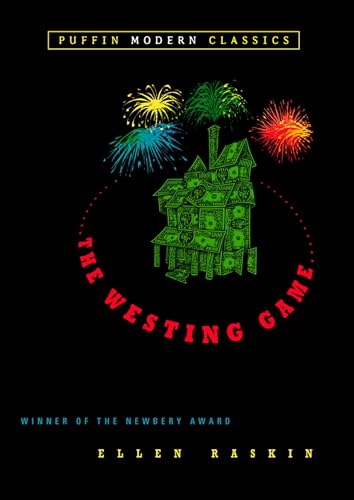
    Book cover of The Westing Game by Ellen Raskin

    1. The Westing Game

    🎂 Newbery Medal winner · 📅 First published 1978 · ✍️ Ellen Raskin, Dutton

    Sixteen strangers get invitations to rent apartments in a new building, and a puzzling game begins.

    👍 Good for kids who love clues, riddles and a cast of odd neighbors.

    More about The Westing Game

    The Westing Game was published by Dutton on May 1, 1978, and won the Newbery Medal. A 2012 survey published by School Library Journal ranked it ninth among children’s novels of all time.

    The story begins on the Fourth of July, when sixteen strangers receive personal invitations to rent apartments in the new Sunset Towers. It was adapted as the 1997 film Get a Clue, also released as The Westing Game.


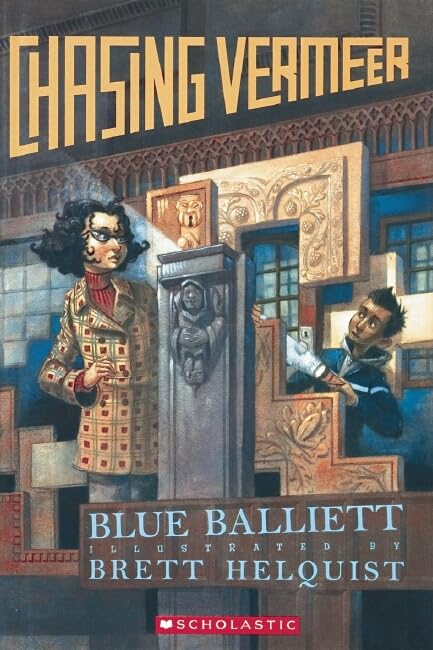
    Book cover of Chasing Vermeer by Blue Balliett

    2. Chasing Vermeer

    🎂 Art mystery · 📅 Published 2004 · ✍️ Blue Balliett, illustrated by Brett Helquist

    A famous painting is stolen, and two kids from Chicago try to get it back.

    👍 Good for kids who enjoy puzzles about art and clues hidden in plain sight.

    More about Chasing Vermeer

    Chasing Vermeer is set in Hyde Park, Chicago, near the University of Chicago. It follows two children, Calder Pillay and Petra Andalee.

    After the painting A Lady Writing by Johannes Vermeer is stolen on its way to the Art Institute of Chicago, Calder and Petra work together to recover it. The thief publishes advertisements in the newspaper saying he will give the painting back if the community can find out which paintings under Vermeer’s name were really painted by him.


    3. Opening Soon (TRACE in Colorado, Book 3)

    🎂 Ages 9 to 12 · 📍 Colorado, 1993 to 1995 · ✍️ T. A. Held

    Somebody is sending messages to the past, and he is the one who reads them.

    👍 Good for kids who like time travel, secret chalk messages and a giant airport that is always opening soon.

    More about Opening Soon (TRACE in Colorado, Book 3)

    Opening Soon is the third book in The Riddle America Cannot Explain: TRACE in Colorado, a time-travel series by T. A. Held. Each book has a What Was Real? page that tells which parts are real history and which parts are made up.

    Alex, Daniel and Maya arrive in the cellar of a Colorado cabin in August 1993. An old man named Walter lives upstairs. Somebody writes messages on the stone in chalk and signs them D.W., and each one tells something nobody could know yet. Some are about a box of sensors, and some are about Denver’s giant new airport, which is always opening soon and never opens. Then the three get split up. Read the real story behind the airport here: Why was Denver’s new airport always opening soon?.


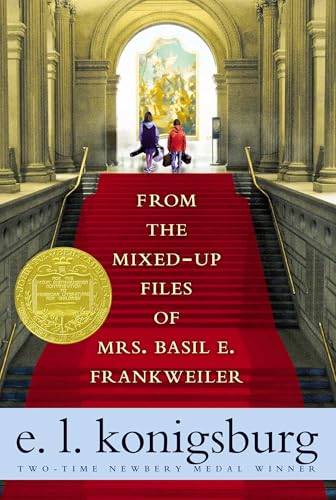
    Book cover of From the Mixed-Up Files of Mrs. Basil E. Frankweiler by E. L. Konigsburg

    4. From the Mixed-Up Files of Mrs. Basil E. Frankweiler

    🎂 Newbery Medal winner · 📅 Published 1967 · ✍️ E. L. Konigsburg, Atheneum

    Two siblings run away from home to a famous museum.

    👍 Good for kids who like secrets, hiding places and big old buildings.

    More about From the Mixed-Up Files of Mrs. Basil E. Frankweiler

    The book follows siblings Claudia and Jamie Kincaid as they run away from home to the Metropolitan Museum of Art in New York City. Atheneum published it in 1967, and it won the Newbery Medal in 1968.

    The story opens with a letter from Mrs. Basil E. Frankweiler to her lawyer.


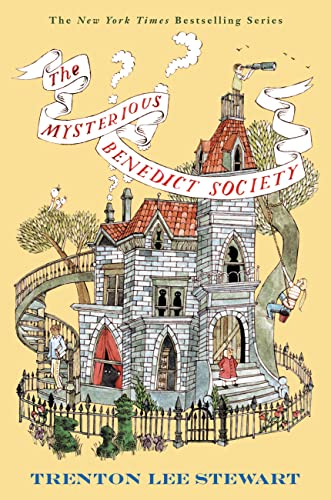
    Book cover of The Mysterious Benedict Society by Trenton Lee Stewart

    5. The Mysterious Benedict Society

    🎂 First of a series · 📅 Published 2007 · ✍️ Trenton Lee Stewart

    Four children are gathered by an eccentric man to stop his twin brother.

    👍 Good for kids who like puzzles, teamwork and a long adventure with several books.

    More about The Mysterious Benedict Society

    The series follows four children gathered together by the eccentric Mr. Benedict: Reynie Muldoon, Sticky Washington, Kate Wetherall and Constance Contraire. They work together to stop Ledroptha Curtain, Mr. Benedict’s twin brother, from taking over the world.

    The first three books came out once a year from 2007 to 2009, and a fourth followed about a decade later.


    Which one should you pick?

    This is a short list, and more books will be added over time. If you have a favorite mystery for kids, tell us.

    This story comes from TRACE in Colorado by T. A. Held, a time-travel series for ages 9 to 12 with a What Was Real? page in every book.

    Read the book: Opening Soon (Book 3) · See all the TRACE in Colorado books

    Next post: Why was Denver’s new airport always “opening soon”? The story of 1993 to 1995

  • Denver in the 1990s quiz for kids: airport, rain and snacks

    Last updated: November 4, 2026.

    Do you know what happened at Denver’s new airport, at Red Rocks in the rain, and to a soda that looked like water? Try our quiz, then tap a question to see the answer.

    The questions come from the trivia cards for the book Opening Soon, and every answer has been checked against a real source.

    Quick facts

    ❓

    Questions

    Seven, each with three choices: A, B or C.

    🎯

    How to play

    Pick your answer first, then tap the question.

    📚

    Topics

    The Denver airport, Red Rocks and a famous soda.

    🏆

    Score

    6 or 7 right means you are a history star.

    💡 Did you know? The Denver airport was supposed to open in October 1993, but it opened on February 28, 1995.

    How to play

    Read each question and think of your answer. Then tap the question to open the box and see if you were right. Ask a friend or a grown-up to play along.

    The quiz

    1. Which airline said it would move to the new Denver airport only if it had an automated baggage system? A) United Airlines B) Delta C) Southwest

    A. United. The airport agreed to build the automated baggage system as a condition.

    2. How much track did the original baggage system have? A) About 2 miles B) More than 17 miles C) About 100 miles

    B. A government report says the original system had over 17 miles of track and 4,000 carts.

    3. In April 1994 the city showed the baggage system to reporters. What happened? A) Clothes and other things were scattered under the tracks. B) It worked perfectly. C) The lights went out.

    A. The carts often tossed luggage off the system, and the mayor canceled the planned May opening.

    4. When did the airport finally open? A) December 1993 B) May 1994 C) February 28, 1995

    C. It opened 16 months late.

    5. U2 played Red Rocks on June 5, 1983. About how many fans came to the sold-out show? A) Almost all of them B) About half C) Only ten

    B. The theater holds about 9,000 and was sold out, but only about 4,400 came because of the rain and flash flood warnings.

    6. What did the singer, Bono, climb up on during the show? A) A lighting rig B) A tree C) A rock tower

    A. He climbed a lighting rig and showed a white flag during one song.

    7. What was strange about Crystal Pepsi, introduced in 1992? A) It was blue. B) It was clear, like water. C) It tasted like oranges.

    B. It was a clear cola. It was introduced on April 13, 1992, and its first run was over by 1994.

    Bonus facts

    • The old airport, Stapleton, closed on February 27, 1995, one day before the new airport opened.
    • About 11,000 workers helped build the new airport.
    • The first plane to leave the new airport was United Flight 1062 to Kansas City. The first plane to arrive was United Flight 1474 from Colorado Springs.
    • The new airport sits roughly one mile above sea level.
    • Red Rocks Amphitheatre holds 9,525 people and was dedicated on June 15, 1941.
    • The concert film U2 Live at Red Rocks came out in 1984 and was directed by Gavin Taylor.

    How did you do?

    • 0 to 2 right: a good start. Read the posts below and try again.
    • 3 to 5 right: well done. You know your Denver history.
    • 6 or 7 right: history star!

    Think about it

    The airport story has a lesson that is useful in real life: big plans can take longer than expected, and testing finds problems before they reach everyone. Which question in the quiz surprised you the most? Why do you think the people building the airport kept going even after the bad test in April 1994?

    Want to learn more?

    Read the full stories: Why was Denver’s new airport always opening soon? and The rainy night at Red Rocks. You can also see how Red Rocks was built in How was Red Rocks Amphitheatre built?.

    What is real and what is made up

    The facts in the questions are real history.

    The characters and the stone in TRACE in Colorado are made up.

    This story comes from TRACE in Colorado by T. A. Held, a time-travel series for ages 9 to 12 with a What Was Real? page in every book.

    Read the book: Opening Soon (Book 3) · See all the TRACE in Colorado books

    Previous post: From 1941 to 1994: the real history behind Walter’s Journal

    Next post: For parents and teachers: a discussion guide for Opening Soon

  • For parents and teachers: a gold rush discussion guide

    Last updated: November 3, 2026.

    How can you talk with a child about the Colorado gold rush? This guide gives questions to discuss, words to learn and a real place to read about: Denver’s Union Depot. It uses only checked history and gives no story spoilers.

    Quick facts

    👧

    Age

    written for ages 9 to 12.

    💬

    Talk about

    money, trust, trade and travel.

    📚

    Words

    mint, assay, hoax, claim.

    🚉

    Real place

    Denver’s Union Depot, opened June 1, 1881.

    💡 Did you know? Union Depot opened on June 1, 1881. It was built of limestone and rhyolite, was nearly 500 feet long and had a clock tower in the middle. It burned on March 18, 1894 and was rebuilt.

    Questions to talk about

    Use these after reading any post in the series.

    New words

    Mint: a place where official coins are made. Assay: to test ore to see how much gold it holds. Hoax: a trick that fools many people. Claim: the land a prospector has the right to mine.

    Denver in 1891

    In the early 1890s Denver had cable cars from the end of 1888, the first electric lines soon after, and horsecars still running. A child arriving at Union Depot would see streetcars running down the middle of the street.

    Try this at home

    • Why did Denver need its own coins in 1860?
    • Why did nobody believe Bob Womack in 1890?
    • How can you tell whether a big news story is true?
    • Why do prices go down when more of something arrives?
    • What would you bring to a gold camp if you could only carry one bag?

    What is real and what is made up

    The facts in these posts come from checked history. Tomorrow We’ll Go Home is a made-up time-travel adventure, and the What Was Real? page in the book separates the real from the invented.

    This story comes from TRACE in Colorado by T. A. Held, a time-travel series for ages 9 to 12 with a What Was Real? page in every book.

    Read the book: Tomorrow We’ll Go Home (Book 2) · See all the TRACE in Colorado books

    Previous post: Trivia: a Colorado gold rush quiz

  • Trivia: a Colorado gold rush quiz (9 questions with answers)

    Last updated: November 3, 2026.

    How much do you know about the Colorado gold rush? Try these nine questions about Denver in 1860, the bankers who made coins, a famous hoax and the gold of Cripple Creek. Click each question to see the answer.

    Quick facts

    ❓

    Questions

    nine in all.

    🪙

    Topics

    coins, flour, a hoax and a gold camp.

    ⏱️

    Time

    about five minutes.

    🏆

    Best score

    try for nine out of nine.

    The quiz

    Click a question to see the answer.

    1. Where did Denver begin? A) Where Cherry Creek meets the Platte, B) At the foot of Pikes Peak, C) On a lake shore

    A. Across the creek was a second town, Auraria, started at the end of 1858.

    2. Where did the Rocky Mountain News building stand in 1860? A) On a hill, B) On stilts in a dry creek, C) Inside a bank

    B. It stood on stilts in the dry bed of Cherry Creek.

    3. Before more wagons arrived from Utah, what did 100 pounds of flour cost in Denver in 1860? A) One dollar, B) Five dollars, C) Fifteen dollars

    C. When more flour arrived, the price fell to eight dollars.

    4. Why did Denver miners need the coins Clark, Gruber & Co. made? A) Paper money was not allowed, B) Nobody wanted gold dust, C) The nearest mint was in San Francisco

    C. So a bank right in Denver started making coins.

    5. About how many coins could the bank make in one minute? A) One or two, B) Fifteen to twenty, C) About five hundred

    B. One by one the coins dropped out of the press.

    6. Which mountain was on the bank’s $10 and $20 coins? A) Pikes Peak, B) Longs Peak, C) Mount Elbert

    A. It did not look much like the real mountain, and by 1861 it was gone from the coins.

    7. About how many people rushed to Cañon City in the Mount Pisgah hoax of 1884? A) 50, B) 500, C) 5,000

    C. About 5,000 people came to buy supplies.

    8. Who found rich ore at Cripple Creek in October 1890? A) Bob Womack, B) Clark, Gruber, C) Winfield Scott Stratton

    A. Bob Womack. Stratton staked the Independence on July 4, 1891.

    9. How much did a Cripple Creek miner earn for an eight-hour day in the early 1890s? A) 10 cents, B) $3, C) $50

    B. About $3 a day.

    What is real and what is made up

    Every answer here is real history, checked for this series. Tomorrow We’ll Go Home is a made-up time-travel adventure, and the quiz questions come from the trivia cards that go with it.

    This story comes from TRACE in Colorado by T. A. Held, a time-travel series for ages 9 to 12 with a What Was Real? page in every book.

    Read the book: Tomorrow We’ll Go Home (Book 2) · See all the TRACE in Colorado books

    Previous post: The Swiss Cottage in Morrison: from hotel to college

    Next post: For parents and teachers: a gold rush discussion guide

  • The Swiss Cottage in Morrison: from hotel to college

    Last updated: November 3, 2026.

    What was the Swiss Cottage in Morrison, Colorado? It was a building that was first a hotel and then a college. Sacred Heart College used it from 1884 to 1888. This post tells the story and adds a fun fact about Morrison’s old newspapers.

    Quick facts

    🏨

    First

    a hotel.

    🎓

    Then

    Sacred Heart College, from 1884 to 1888.

    📰

    Newspapers

    four papers used 408 Bear Creek Avenue between 1889 and 1917.

    📍

    Where

    Morrison, Colorado.

    💡 Did you know? The Morrison Bud, one of those papers, ran until 1900.

    The building

    The Swiss Cottage, also known as Evergreen House, stood in Morrison. It was a hotel before it became a college. Sacred Heart College used it from 1884 to 1888.

    Morrison’s newspapers

    From 1889 to 1917, four papers used the building at 408 Bear Creek Avenue, one after another: The Bud, The Jefferson, the Morrison Independent and the Morrison Monitor. The Monitor was the last, around 1915.

    Getting to Denver

    A trip from Morrison to Denver is about 16 miles. In the early 1890s the usual Western train fare was about 3 cents a mile, so a ticket would cost about 48 cents. That is an estimate, not a record of the real fare.

    Try this at home

    • Why might a hotel turn into a school?
    • What building in your town has had more than one job?
    • How many miles is a round trip between Morrison and Denver?

    What is real and what is made up

    The Swiss Cottage, its years as a college and the newspapers are real history. Tomorrow We’ll Go Home is a made-up time-travel adventure that visits Morrison in 1891, when the Morrison Bud was still printing.

    This story comes from TRACE in Colorado by T. A. Held, a time-travel series for ages 9 to 12 with a What Was Real? page in every book.

    Read the book: Tomorrow We’ll Go Home (Book 2) · See all the TRACE in Colorado books

    Previous post: Wild food you could find near Morrison in May

    Next post: Trivia: a Colorado gold rush quiz

  • Wild food you could find near Morrison, Colorado in May

    Last updated: November 3, 2026.

    What wild food grows near Morrison, Colorado in May? Wild onion, dandelion, curly dock and young cattail shoots. This post tells what travelers could find in spring, what was not ready yet, and how to start a fire with a spark.

    Quick facts

    🧅

    Wild onion

    a spring plant that smells like an onion.

    🌼

    Dandelion

    the leaves can be eaten.

    🌿

    Curly dock

    a plant with long wavy-edged leaves.

    🌱

    Cattail

    the young shoots in spring.

    💡 Did you know? Currants ripen in July and August and pine nuts in the fall, so a hungry traveler in May could not rely on them.

    Why May is tricky

    In May the plants are just starting to grow. Berries and nuts are not ready, so spring food is mostly young leaves and shoots. A person in 1891 who ran out of food near Morrison would have to look for green things beside streams.

    What about fire?

    To cook anything, you need fire. A spark comes from striking steel against a hard stone such as quartz or flint. A chip of white quartz works.

    A safety note

    Never eat a wild plant unless an adult who knows plants says it is safe. Some wild plants are poisonous.

    Try this at home

    • Why would berries and nuts not be ready in May?
    • Name two things you would need to cook a wild meal.
    • Why is it important to have an adult check wild plants?

    What is real and what is made up

    The plants and the ripening times are real. Tomorrow We’ll Go Home is a made-up time-travel adventure; its characters use the same wild food and a chip of white quartz to make a spark.

    This story comes from TRACE in Colorado by T. A. Held, a time-travel series for ages 9 to 12 with a What Was Real? page in every book.

    Read the book: Tomorrow We’ll Go Home (Book 2) · See all the TRACE in Colorado books

    Previous post: What did food cost in Denver in 1860?

    Next post: The Swiss Cottage in Morrison: from hotel to college

  • What did food cost in Denver in 1860?

    Last updated: November 3, 2026.

    What did food cost in Denver in 1860? A lot. Everything had to come by wagon over long distances, so flour, potatoes and eggs were expensive. This post shows some real prices and how they changed.

    Quick facts

    🌾

    Flour

    $15 a hundred pounds at first, then $8 in October 1860.

    🥔

    Potatoes and onions

    25 cents a pound in 1859.

    🥚

    Eggs

    75 cents a dozen in 1859.

    🍞

    A loaf

    a loaf for two bits (25 cents) fits.

    💡 Did you know? Denver began where Cherry Creek runs into the South Platte River. In 1860 the Rocky Mountain News office stood on stilts in the dry bed of Cherry Creek. The flood of 1864 destroyed it.

    Timeline: Denver’s first years

    Late 1858

    Auraria is founded across the creek from Denver.

    April and May 1859

    The big wave of gold seekers arrives.

    1860

    Flour costs $15 a hundred pounds.

    October 1860

    Utah wagons arrive and the price falls to $8.

    1864

    The flood destroys the newspaper building in the creek bed.

    Why was food so expensive?

    Almost nothing was grown near the gold fields yet. Food had to be hauled in by wagon, so a sack of flour cost many times what it cost back home. When Utah shipments arrived in the fall of 1860, there was more flour to buy and the price dropped from $15 to $8 for a hundred pounds.

    Compare it with wages

    Pay in the gold fields could be good, but prices ate much of it. Later, in the early 1890s, a Cripple Creek miner earned about $3 for an eight-hour day. Prices are always tied to how far goods must travel.

    Try this at home

    • If flour cost $15 for 100 pounds, how much was one pound?
    • Why did the price drop once more flour arrived?
    • What food in your kitchen came from far away?

    What is real and what is made up

    The flour prices, the 1859 prices and the Cherry Creek setting are real history. Tomorrow We’ll Go Home is a made-up time-travel adventure that visits Denver in 1860; the price of one loaf in the story fits the real prices of the time.

    This story comes from TRACE in Colorado by T. A. Held, a time-travel series for ages 9 to 12 with a What Was Real? page in every book.

    Read the book: Tomorrow We’ll Go Home (Book 2) · See all the TRACE in Colorado books

    Previous post: How did people look for gold at Cripple Creek in 1891?

    Next post: Wild food you could find near Morrison in May

  • How did people look for gold at Cripple Creek in 1891?

    Last updated: November 3, 2026.

    How did prospectors find gold at Cripple Creek in 1891? Near the surface the gold was free gold, loose in weathered rock, so a person with a shovel and a pan could find it. This post explains how that worked and how people and supplies got there before any railroad.

    Quick facts

    ⛏️

    Free gold

    near the surface gold lay loose in weathered rock.

    🪙

    Deeper down

    the gold was locked inside minerals called tellurides.

    🛞

    Getting there

    a wagon and stage road from Florissant, where the railroad ended.

    🚂

    Railroads

    none reached Cripple Creek until 1894.

    💡 Did you know? A Cripple Creek miner earned about $3 for an eight-hour day in the early 1890s.

    Surface gold first

    Small deposits near the surface came first. People dug up surface dirt and washed it in a pan. The water carries away the light dirt, and the heavy gold stays at the bottom. Those small finds led prospectors to the rich veins in the rock below.

    Why deeper gold was harder

    Deeper in the ground the gold was locked inside minerals called tellurides. It could not simply be washed out. That kind of gold needed mining and later a mill. For the first people in 1891, the easy surface gold was the way in.

    How did supplies arrive?

    The Colorado Midland railroad reached Florissant in 1886 or 1887 (sources differ). From there a wagon and stage road linked the district to the railroad until the Midland Terminal reached Cripple Creek in 1895. The Florence & Cripple Creek railroad arrived in 1894. So in May 1891 a supply wagon fits the real history.

    Try this at home

    • Why does the heavy gold stay in the pan while the light dirt washes away?
    • Why do you think the surface gold was found before the deep veins?
    • What would you pack for a trip by wagon to a camp of twenty tents?

    What is real and what is made up

    Free gold, tellurides, the Florissant road and the railroad dates are real history. Tomorrow We’ll Go Home is a made-up time-travel adventure; the wagon fare in the story was arranged for the story and is not a real price.

    This story comes from TRACE in Colorado by T. A. Held, a time-travel series for ages 9 to 12 with a What Was Real? page in every book.

    Read the book: Tomorrow We’ll Go Home (Book 2) · See all the TRACE in Colorado books

    Previous post: Bob Womack and the gold of Cripple Creek

    Next post: What did food cost in Denver in 1860?