Tag: book-1

  • What to Read After I Survived: Six Books for Kids Who Love Real History

    Last updated: November 17, 2026.

    Your kid finished every I Survived book in the library and wants more. What now? Here are six books for kids who love a real event, a kid caught right in the middle of it, short chapters, and the true facts at the end. Each one has a short card, a closer look underneath, and a quick chooser at the bottom.

    Lauren Tarshis’s I Survived books drop a kid into a real disaster, from the Great Molasses Flood of 1919 to the Great Chicago Fire of 1871. The books below keep that same mix of danger and real history. Some are about disasters, two are about time travel, and one is true history with no made-up story at all.

    What I Survived fans usually love

    • A real event: a storm, an earthquake, a famous speech, a long journey.
    • A kid at the center: someone their own age who has to be brave.
    • Fast chapters: books that are easy to finish.
    • The true story at the end: a section that explains what really happened.

    Where (and when) these books go: a quick timeline

    • 1620: the Mayflower sails to America. History Smashers: The Mayflower
    • 1850: a wagon train on the Oregon Trail. Ranger in Time: Rescue on the Oregon Trail
    • 1863: Abraham Lincoln at Gettysburg. Flashback Four: The Lincoln Project
    • 1876: Colorado, the year it became a state. The Wrong Choice
    • 1906: the San Francisco earthquake. The Earth Dragon Awakes
    • 1980: a night of tornadoes in Nebraska. Night of the Twisters

    The books

    1. Rescue on the Oregon Trail (Ranger in Time #1)

    📖 Chapter book · ✍️ Kate Messner, pictures by Kelley McMorris · Scholastic · 144 pages · ages 7 to 10
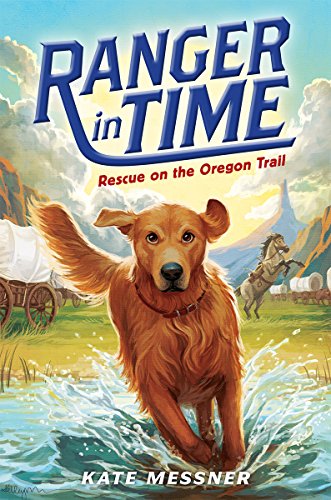
    Cover of Rescue on the Oregon Trail by Kate Messner

    Ranger is a golden retriever trained for search and rescue. He digs up an old first-aid kit and lands in 1850, on a wagon train heading west.

    👍 Good for kids who love dogs and want the next step after I Survived, with a little time travel mixed in.

    More about Ranger in Time

    Ranger helps a boy named Sam Abbott and his family on the 2,000-mile trip from Independence, Missouri, to the Oregon Territory. He finds Sam’s lost little sister and warns of dangers from rattlesnakes to stampedes. Publishers Weekly suggests it for ages 7 to 10, and an author’s note at the end explains the real history, just like the facts section in an I Survived book. It is the first book in the Ranger in Time series.

    2. Night of the Twisters

    📖 Disaster novel · ✍️ Ivy Ruckman · first published 1984 · 160 pages in paperback
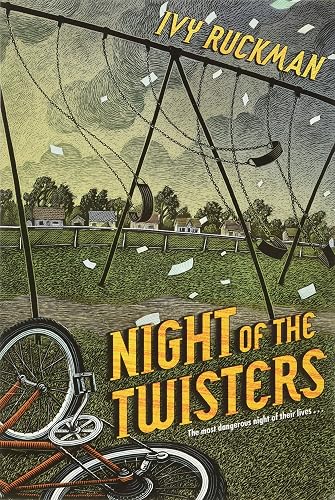
    Cover of Night of the Twisters by Ivy Ruckman

    A tornado watch on a June evening in Grand Island, Nebraska, doesn’t worry twelve-year-old Dan Hatch. Then the siren starts to wail.

    👍 Good for kids who loved I Survived the Joplin Tornado and want a whole night of wind, sirens and courage.

    More about Night of the Twisters

    Dan, his baby brother and his best friend Arthur have only seconds to get to the basement before the twister hits. When they climb out, the house is gone, and Dan has to search for his parents. The story is told by Dan himself, and it is based on a real event: the tornadoes that hit Grand Island, Nebraska, on June 3, 1980.

    3. The Earth Dragon Awakes

    📖 Historical fiction · ✍️ Laurence Yep · HarperCollins, 2006 · 128 pages · ages 8 to 12
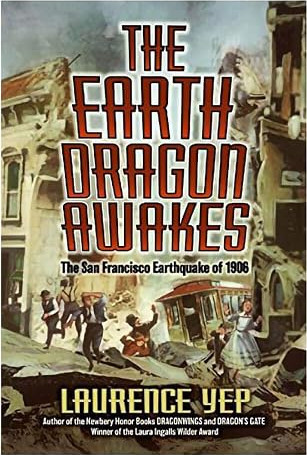
    Cover of The Earth Dragon Awakes by Laurence Yep

    Two boys, Henry and Chin, live through the great San Francisco earthquake of 1906, the morning the whole city shook.

    👍 Good for kids who want a short, fast disaster story with two very different heroes.

    More about The Earth Dragon Awakes

    Henry Travis is eight. Chin is nine, the son of the man who works in Henry’s house. The earthquake destroys Henry’s home and the building where Chin lives, and the two boys have to be brave for their families. Short chapters of real facts about the earthquake come between the chapters of the story. Kirkus Reviews lists it for ages 8 to 12.

    4. Flashback Four #1: The Lincoln Project

    📖 Time-travel adventure · ✍️ Dan Gutman · HarperCollins · 256 pages · ages 8 to 12
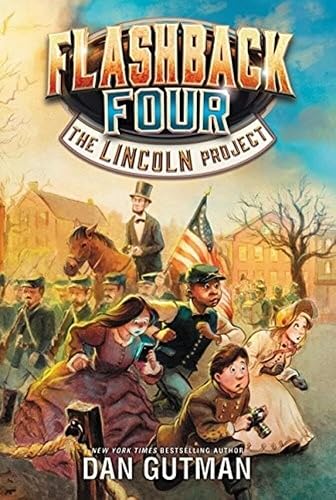
    Cover of Flashback Four: The Lincoln Project by Dan Gutman

    Four very different kids are picked by a mysterious billionaire to travel through time and photograph moments in history that nobody ever photographed.

    👍 Good for kids who like teams, funny scenes and real photographs in the middle of the story.

    More about Flashback Four

    In the first book, the four kids go to 1863 to catch Abraham Lincoln giving the Gettysburg Address. They have to ask the right questions, meet the right people, take the picture and not get caught. The back of the book separates fact from fiction, and there are real black-and-white photographs throughout. The series goes on to the Titanic, Pompeii and Alexander Hamilton.

    5. History Smashers: The Mayflower

    📖 Nonfiction with comics · ✍️ Kate Messner, illustrated by Dylan Meconis · Random House, 2020 · 224 pages · ages 8 to 12
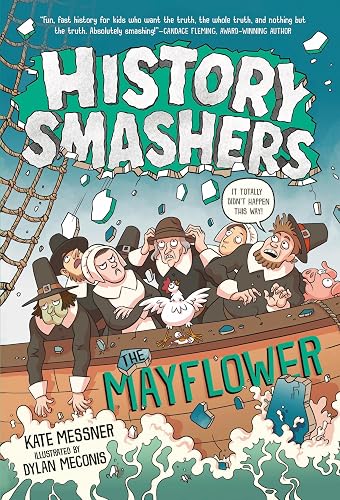
    Cover of History Smashers: The Mayflower by Kate Messner

    The true story of the Pilgrims, the Wampanoag people and the “first Thanksgiving,” with the myths smashed and the real facts left standing.

    👍 Good for kids who always read the facts section first, and for anyone reading in the weeks before Thanksgiving.

    More about History Smashers: The Mayflower

    This one is not a story. It starts in England, follows the Pilgrims across the ocean in 1620, and tells what really happened between the newcomers and the Wampanoag. It uses real quotes from the time, plus comic panels and pictures. Publishers Weekly, Kirkus Reviews and the publisher all list it for ages 8 to 12. Kate Messner also writes the Ranger in Time books (number 1 above).

    6. The Wrong Choice (TRACE in Colorado, Book 1)

    📖 Time-travel mystery · ✍️ T. A. Held · The Riddle America Cannot Explain: TRACE in Colorado · ages 9 to 12

    Alex and Daniel only wanted to get out of the rain. Then Alex finds a door in the cabin floor, and a red rock in the cellar sets them down in Colorado in 1876.

    👍 Good for kids who want two boys stuck in the real past, a mystery to solve, and a What Was Real? page at the end.

    More about The Wrong Choice

    In the cellar under the cabin there’s a red rock with two triangles cut into it, and an old journal lying open on a table. The floor begins to hum. The stone sets the boys down on a hill above Morrison in 1876, with no money, nowhere to sleep, and nobody who would ever believe where they came from.

    Somewhere along the way, they made the wrong choice. Now the stone won’t open, and the only way home is to find out what they did. Like an I Survived book, every TRACE in Colorado book ends with the real history: a What Was Real? page that shows which parts were true.

    The Wrong Choice is Book 1 of The Riddle America Cannot Explain: TRACE in Colorado by T. A. Held. Want the true story first? Read about the day Colorado became a state, Elias Ammons, the boy who lit Denver’s street lamps and the grasshopper plague of 1876. Then try the Denver in 1876 quiz.

    How to choose

    • For a younger reader who loves animals: Ranger in Time.
    • For a kid who wants the scariest storm: Night of the Twisters.
    • For a quick read with facts between the chapters: The Earth Dragon Awakes.
    • For a kid who likes funny teams and real photos: Flashback Four.
    • For the kid who only wants what really happened: History Smashers.
    • For a mystery lover who wants time travel, real Colorado history and a What Was Real? page: The Wrong Choice.

    Talk about it

    Which real event from history would you most want to see with your own eyes, if you knew you would be safe? What would you take with you? And who would you want next to you?

    More book lists

    Want more real history? Pick a time: the 1870s, the 1920s, World War II, the Cold War or the 1980s and 1990s. Want time travel? Try books for kids who love Magic Tree House or time-travel books with a girl hero. Or a topic: gold rush books, dinosaur books, Colorado and the West adventure books, mystery and riddle books or heist and detective books.

    This list comes from TRACE in Colorado by T. A. Held, a time-travel series for ages 9 to 12 with a What Was Real? page in every book.

    Read the book: The Wrong Choice (Book 1) · See all the TRACE in Colorado books

  • Books for Kids Set in the 1870s: A City on Fire, Grasshopper Summers and Dinosaur Bones

    Last updated: November 14, 2026.

    Looking for books for kids set in the 1870s? Here are six chapter books, novels and one picture-book biography about the years when the American West was still being settled: a city on fire, prairie farms eaten by grasshoppers, a lawman in Indian Territory, a brand-new state called Colorado, and the first dinosaur bones dug out of a Colorado hill. Each one has a short card, a closer look underneath, and a quick chooser at the bottom.

    One is a true biography, one is a classic based on the author’s own childhood, and two are time-travel mysteries that end with a page about what was real.

    The 1870s in six books: a quick timeline

    • October 1871: Chicago, Illinois. I Survived the Great Chicago Fire, 1871
    • 1874: a new farm in the Dakota Territory. Grasshopper Summer
    • 1874 to 1876: Plum Creek, near Walnut Grove, Minnesota. On the Banks of Plum Creek
    • 1875: Indian Territory, today Oklahoma. Bad News for Outlaws
    • 1876: Morrison and Denver, the year Colorado became a state. The Wrong Choice
    • Summer 1877: a dinosaur dig above Morrison, Colorado. Who Drew Us?

    The books

    1. I Survived the Great Chicago Fire, 1871

    📖 Historical chapter book · ✍️ Lauren Tarshis · illustrated by Scott Dawson · Scholastic, 2015 · 112 pages · ages 7 to 10

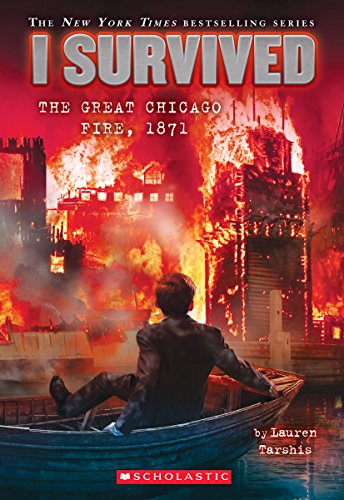
    Cover of I Survived the Great Chicago Fire, 1871 by Lauren Tarshis

    Oscar Starling never wanted to come to Chicago. Now the whole city is burning, and he is trapped in the middle of the Great Chicago Fire.

    👍 Good for kids who want a fast, scary, true-disaster story they can finish in a weekend.

    More about I Survived the Great Chicago Fire, 1871

    In October 1871 a fire swept through Chicago and burned a huge part of the city. In this book from the I Survived series, Oscar has to race the flames. Scholastic lists it for ages 7 to 10 (grades 2 to 5). There is also a graphic novel version.

    2. Grasshopper Summer

    📖 Historical novel · ✍️ Ann Turner · illustrated by Erika Meltzer · Aladdin · 176 pages · ages 8 to 12

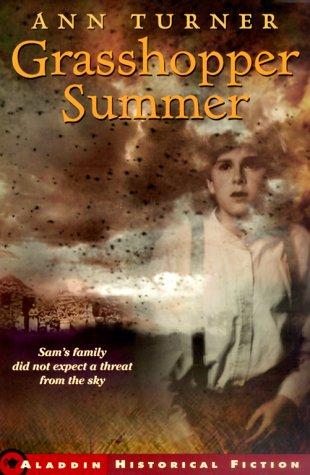
    Cover of Grasshopper Summer by Ann Turner

    1874. Eleven-year-old Sam White’s family leaves Kentucky for a new farm in the Dakota Territory. Then the grasshoppers come.

    👍 Good for kids who like pioneer stories, a boy who has to grow up fast, and a family that won’t give up.

    More about Grasshopper Summer

    Sam’s family moves west from Kentucky to the Dakota Territory to start over. They build a new home on the prairie, and then a cloud of grasshoppers arrives and eats the crops they were counting on. Simon & Schuster lists it for ages 8 to 12 (grades 3 to 7).

    Grasshoppers didn’t only hit the Dakotas. Two years later, in 1876, swarms ate crops in Colorado too. Read about the grasshopper plague of 1876 in Colorado.

    3. On the Banks of Plum Creek

    📖 Classic novel · ✍️ Laura Ingalls Wilder · Little House books · first published 1937 · Newbery Honor Book

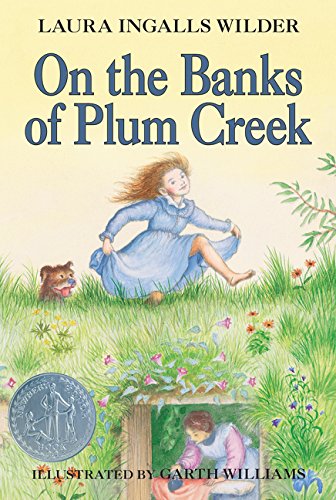
    Cover of On the Banks of Plum Creek by Laura Ingalls Wilder

    Laura’s family moves to a house dug into the bank of a creek in Minnesota. Pa plants a big wheat crop, and then the grasshoppers come.

    👍 Good for kids who love family stories, farm life and a classic to read aloud together.

    More about On the Banks of Plum Creek

    This Little House book follows Laura Ingalls in the 1870s near Walnut Grove, Minnesota. The family lives in a dugout by Plum Creek, Laura goes to school and meets Nellie Oleson, and the locust plague of 1874 destroys the wheat crop the family was waiting for. It was a Newbery Honor Book in 1938. If your reader likes it, Grasshopper Summer tells about the same grasshoppers from a boy’s side.

    4. Bad News for Outlaws: The Remarkable Life of Bass Reeves, Deputy U.S. Marshal

    📖 Picture-book biography · ✍️ Vaunda Micheaux Nelson · illustrated by R. Gregory Christie · Carolrhoda, 2009 · 40 pages · ages 7 to 10

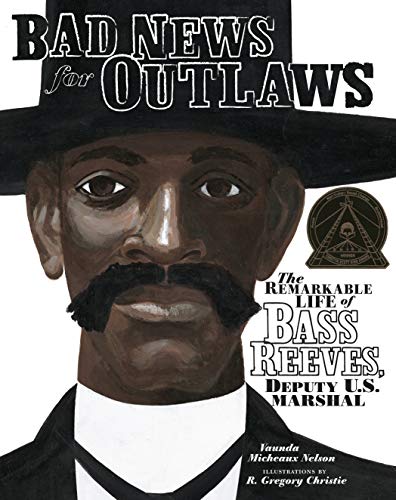
    Cover of Bad News for Outlaws by Vaunda Micheaux Nelson

    Bass Reeves was born into slavery, escaped, and became a famous lawman of the Old West.

    👍 Good for kids who want a true Wild West hero and a short book with big pictures.

    More about Bad News for Outlaws

    In 1875 Bass Reeves was hired as a deputy U.S. marshal in Indian Territory, the land that is now Oklahoma, and he served for more than thirty years. This picture-book biography tells his life story with paintings by R. Gregory Christie. Kirkus lists it for ages 7 to 10. It is a true story, so it is a good pick for a kid who asks, “Did that really happen?”

    5. The Wrong Choice (TRACE in Colorado, Book 1)

    📖 Time-travel mystery · ✍️ T. A. Held · The Riddle America Cannot Explain: TRACE in Colorado · ages 9 to 12

    A red stone in a cellar sets Alex and Daniel down on a hill above Morrison, Colorado, in 1876, with no money and no way home.

    👍 Good for kids who want a time-travel mystery with real 1876 history behind it.

    More about The Wrong Choice

    Alex and Daniel only wanted to get out of the rain. Then Alex finds a door in the cabin floor, and in the cellar under it there’s a red rock with two triangles cut into it and an old journal lying open on a table. The floor begins to hum.

    The stone sets them down above Morrison in 1876, with nowhere to sleep and nobody who would ever believe where they came from. Somewhere along the way, they made the wrong choice. Now the stone won’t open, and the only way home is to find out what they did.

    The Wrong Choice is Book 1 of The Riddle America Cannot Explain: TRACE in Colorado by T. A. Held, and it ends with a What Was Real? page. Curious about the real 1876? Read when Colorado became a state and what Denver was like for kids in 1876.

    6. Who Drew Us? (TRACE in Colorado, Book 5)

    📖 Time-travel mystery · ✍️ T. A. Held · The Riddle America Cannot Explain: TRACE in Colorado · ages 9 to 12

    An old notebook has a drawing of Alex and Daniel lifting a giant bone, in 1877. They have never been to 1877.

    👍 Good for kids who love dinosaurs, secrets and a mystery set at a real fossil dig.

    More about Who Drew Us?

    On a field trip to Dinosaur Ridge, Alex and Daniel find an old notebook in a room marked STAFF ONLY. Inside is a pencil drawing of two boys lifting a giant bone, and next to them a girl with a bucket. Zoe from science class follows them all the way down the cellar steps, and before the stone takes them anywhere near 1877, it has something much older to show them.

    In the summer of 1877, men are digging the first dinosaur bones out of a hill above Morrison, and two professors back East will pay almost anything to get them. Somebody on that hill is selling secrets, and when a bone disappears, everybody looks at the three new kids from Kansas.

    Who Drew Us? is Book 5 of TRACE in Colorado by T. A. Held. Want the true story? Read about the 1877 dinosaur rush near Morrison and the Bone Wars explained for kids.

    How to choose

    • For a younger reader (7 to 10) who likes action: I Survived the Great Chicago Fire, 1871.
    • For a kid who wants a true cowboy-era hero: Bad News for Outlaws.
    • For a pioneer-story fan: Grasshopper Summer.
    • For reading aloud as a family: On the Banks of Plum Creek.
    • For a mystery lover who wants time travel and a What Was Real? page: The Wrong Choice.
    • For a dinosaur fan: Who Drew Us?

    More book lists

    Want another decade? Try books for kids set in the 1920s, books for kids set in the 1980s and 1990s, World War II books for kids, Cold War books for kids or time-travel books for kids who love Magic Tree House. Or pick a topic: dinosaur books, gold rush books, Colorado and the West adventure books, heist and detective books or mystery and riddle books.

    This list comes from TRACE in Colorado by T. A. Held, a time-travel series for ages 9 to 12 with a What Was Real? page in every book.

    Read the books: The Wrong Choice (Book 1) · Who Drew Us? (Book 5) · See all the TRACE in Colorado books

  • Time-Travel Books for Kids Who Love Magic Tree House

    Last updated: November 11, 2026.

    Is your child hooked on Magic Tree House and asking for “another book where kids go back in time”? Here are five time-travel books for kids, from first chapter books to longer adventures. Each one has a short card, a closer look underneath, and a quick chooser at the bottom.

    Every book on this list sends its heroes to a real moment in the past: a dinosaur valley, King Arthur’s court, the Oregon Trail, a 1909 World Series, and Colorado in 1876.

    What these books have in common

    In each book, an ordinary kid (or an ordinary dog) finds a way into the past: a tree house full of books, a mysterious blue book, a buried first-aid kit, an old baseball card, or a red stone in a cellar. Once they are there, the only way home is to solve a problem in that time and place. Along the way, readers pick up real history without noticing it.

    The books

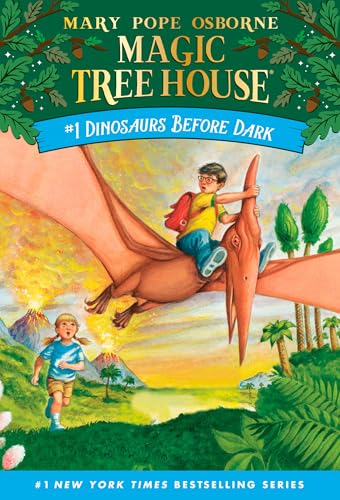
    1. Dinosaurs Before Dark (Magic Tree House #1)

    📖 Early chapter book · ✍️ Mary Pope Osborne · Random House, 1992

    Cover of Dinosaurs Before Dark by Mary Pope Osborne

    Jack and Annie find a tree house full of books in the woods near their town. One book about dinosaurs, one wish, and the adventure begins.

    👍 Good for kids who are just starting chapter books and want short, fast adventures they can finish in one sitting.

    More about Magic Tree House

    Magic Tree House is the series most families start with. Brother and sister Jack and Annie live in the made-up town of Frog Creek, Pennsylvania, and the magic tree house takes them to the place in whatever book they point at. In Books 1 to 28, the librarian Morgan le Fay sends them on their trips; from Book 29 on, the Merlin Missions are longer and some take place in fantasy worlds like Camelot. The series began in 1992 and is still going, so a child who loves it has a long shelf ahead.

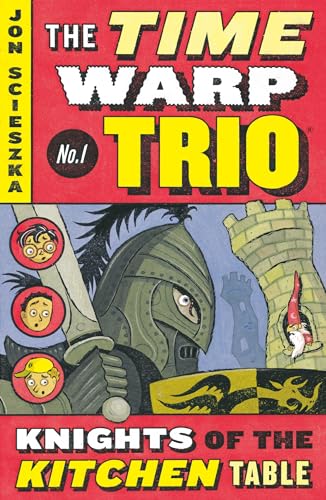
    2. Knights of the Kitchen Table (The Time Warp Trio #1)

    📖 Funny chapter book · ✍️ Jon Scieszka, pictures by Lane Smith · Viking, 1991

    Cover of Knights of the Kitchen Table by Jon Scieszka

    Joe gets a strange blue birthday present called The Book. One wrong word, and Joe, Sam and Fred land in King Arthur’s Camelot, with knights and dragons.

    👍 Good for kids who like jokes on every page and want time travel that is silly as well as exciting.

    More about The Time Warp Trio

    The Book comes from Joe’s uncle, a magician called Joe the Magnificent. It sends the three friends from Brooklyn to different times and places, and the only way back is to find The Book again wherever they have landed. The series ran from 1991 to 2006 and was later made into an animated TV show. It suits kids who already read Magic Tree House on their own and are ready for more humor.

    3. Rescue on the Oregon Trail (Ranger in Time #1)

    📖 Chapter book · ✍️ Kate Messner, pictures by Kelley McMorris · Scholastic, 144 pages

    Cover of Rescue on the Oregon Trail by Kate Messner

    Ranger is a golden retriever trained for search and rescue. He digs up an old first-aid kit and lands in 1850, on a wagon train heading west.

    👍 Good for kids who love dogs and want an exciting pioneer story with real history in it.

    More about Ranger in Time

    Publishers Weekly describes how Ranger helps a boy named Sam Abbott and his family on the 2,000-mile trip from Independence, Missouri, to the Oregon Territory. Ranger finds Sam’s lost little sister and warns of dangers from rattlesnakes to stampedes. Publishers Weekly suggests it for ages 7 to 10, and an author’s note at the end explains the real history behind the story. It is the first book in the Ranger in Time series.

    4. Honus & Me (Baseball Card Adventures #1)

    📖 Sports time-travel novel · ✍️ Dan Gutman · 1997

    Cover of Honus & Me by Dan Gutman

    Joe Stoshack knows everything about baseball, except how to play it well. Then he finds the most valuable baseball card in the world in a neighbor’s attic.

    👍 Good for kids who love sports and would rather meet a real baseball legend than a dragon.

    More about Honus & Me

    The card is a 1909 T-206 Honus Wagner. Holding it, Joe meets Honus Wagner himself and travels back with him to the World Series, where the great player helps Joe believe in himself. Publishers Weekly called it a “joyfully entertaining yarn.” It ends with a factual epilogue and old photographs of the real Honus Wagner, and it is the first of Dan Gutman’s Baseball Card Adventures.

    5. The Wrong Choice (TRACE in Colorado, Book 1)

    📖 Time-travel adventure · ✍️ T. A. Held · The Riddle America Cannot Explain: TRACE in Colorado · ages 9 to 12

    Alex and Daniel run from a storm into a cabin that isn’t on any map. A red stone in its cellar drops them in Colorado in 1876, and now it won’t take them home.

    👍 Good for kids who loved Magic Tree House and want a longer time-travel mystery with real Colorado history.

    More about The Wrong Choice

    There are no cabins in the park. Daniel has seen the map. But under the cabin floor there is a cellar with a red rock cut with two triangles, an old journal lying open on a table, and a floor that begins to hum. The stone sets the boys down on a hill above Morrison, Colorado, in 1876, with no money, nowhere to sleep, and nobody who would believe where they came from. Somewhere along the way they made the wrong choice, and the only way home is to find out what they did.

    The Wrong Choice is Book 1 of The Riddle America Cannot Explain: TRACE in Colorado by T. A. Held. Every book in the series can be read on its own, and every one ends with a What Was Real? page that separates the true history from the made-up story.

    Pick a year: more time-travel books in the TRACE in Colorado series

    Each TRACE in Colorado book visits a different moment in Colorado history. If your child already has a favorite period, start there:

    How to choose

    • For a brand-new chapter-book reader: Dinosaurs Before Dark.
    • For a kid who wants to laugh: Knights of the Kitchen Table.
    • For a dog lover: Rescue on the Oregon Trail.
    • For a sports fan: Honus & Me.
    • For a longer mystery with real history and a What Was Real? page: The Wrong Choice.

    More book lists by topic

    Looking for a time-travel book about one subject? Try dinosaur books for kids, gold rush books for kids, heist and detective books, mystery and riddle books, Cold War books or Colorado and the West adventure books. Want a girl in charge? See time-travel books for kids with a girl hero.

    This list comes from TRACE in Colorado by T. A. Held, a time-travel series for ages 9 to 12 with a What Was Real? page in every book.

    Read the book: The Wrong Choice (Book 1) · See all the TRACE in Colorado books

  • For parents and teachers: a discussion guide to The Wrong Choice and life in 1876

    Last updated: November 2, 2026.

    Is there a good way to talk with kids about a time-travel book set in 1876? This guide for parents and teachers has discussion questions, new words and printable extras for The Wrong Choice, Book 1 of the TRACE in Colorado series. It is written for readers about 9 to 12.

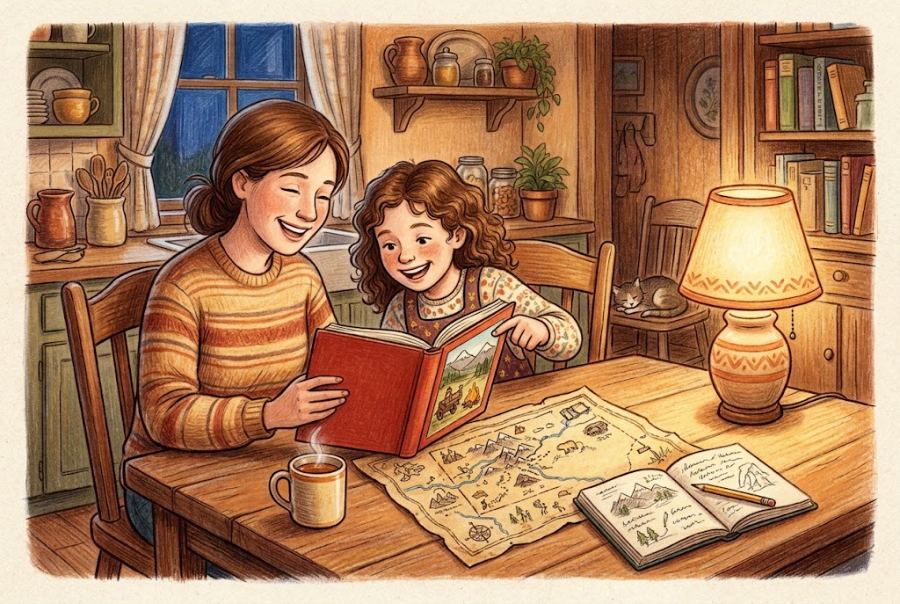
    Colour pencil illustration of a parent and child reading a red book together at a kitchen table with an old map of Colorado

    Quick facts

    📚

    Book

    The Wrong Choice by T. A. Held, Book 1 of The Riddle America Cannot Explain: TRACE in Colorado.

    🎂

    Age

    9 to 12.

    📍

    Setting

    Morrison and Denver, Colorado, in 1876.

    📚

    In every book

    a What Was Real? page that separates the facts from the fiction.

    💡 Did you know? In Colorado’s social studies standards, grade 8 covers U.S. history from the American Revolution through Reconstruction, so a story set in 1876 sits near the end of that period.

    About the book

    Two boys, Alex and Daniel, run from a storm into a cabin that is not on any map. A journal in the cellar and a red stone with two triangles pull them back to 1876, with no money and nowhere to sleep. Somewhere along the way they make the wrong choice, and now they must find out what it was. The story is made up, but the history around it is real.

    Questions to talk about

    • The boys arrive with no money and nowhere to sleep. What would you do first?
    • Why might it be hard to explain to people in 1876 where you came from?
    • The book’s title is about a wrong choice. Can you think of a time when you made a choice and only later understood it?
    • What does it feel like to be new in a place where you do not know the rules?
    • Which things about daily life in 1876 would you miss most from today?
    • Why does a book that ends with a What Was Real? page help readers trust the history?

    New words in 1876

    📚

    Statehood

    becoming a state. Colorado became a state on August 1, 1876.

    📚

    Centennial

    a hundredth anniversary. Colorado is the Centennial State.

    📚

    Telegraph

    a machine that sent messages as clicks along a wire.

    📚

    Assay

    to test how pure a metal is.

    📚

    Teamster

    a person who drives a team of animals pulling a wagon.

    📚

    Toll road

    a road that charges a fee to use it.

    📚

    Locust

    a kind of grasshopper that can fly in huge swarms.

    Read the history behind the story

    These short history posts match the book and make good reading for class or home: When did Colorado become a state?, Elias Ammons, Denver for kids in 1876, How news travelled in 1876, The grasshopper plague, Hauling lumber near Morrison, Hotels in Denver in 1876 and a Denver 1876 trivia quiz.

    Free printable extras

    The site has printable bonuses for readers. Find out how to use them here: bookmarks, puzzle, trivia cards and time-traveler passport.

    Classroom ideas

    • Make a timeline with 1859, 1863, 1874 and 1876 and add events from the history posts.
    • Choose one real job from 1876, such as lamplighter or teamster, and write a short diary entry from that person’s day.
    • Compare how news travelled in 1876 with how it travels today.

    What is real and what is made up

    The boys and their adventure are made up. The history in the book, and the history in our posts, is real. Every book ends with a What Was Real? page so readers can tell the difference.

    How to use this guide

    Before reading, ask your child what they already know about 1876, and what might be hard for two boys who arrive with no money. While reading, stop now and then to ask what the boys know and what they do not. After reading, turn to the What Was Real? page at the end of the book and ask which facts surprised your child. This simple routine works well at home, in a classroom or in a library reading group.

    This story comes from TRACE in Colorado by T. A. Held, a time-travel series for ages 9 to 12 with a What Was Real? page in every book.

    Read the book: The Wrong Choice (Book 1) · See all the TRACE in Colorado books

    Previous post: Trivia quiz: Denver in 1876 (3 questions with answers)

  • Trivia quiz: Denver in 1876 (3 questions with answers)

    Last updated: November 2, 2026.

    How much do you know about Denver in 1876? Try this three-question quiz about the year Colorado became a state. Pick A, B or C, then tap “Show the answer” to check. Every answer comes from real history, and each one has a short explanation so you learn something even if you guessed wrong.

    Quick facts

    📆

    Year

    1876, when Colorado joined the United States.

    📍

    Place

    Denver and the towns around it.

    ❓

    Questions

    Three, each with three choices.

    ⏱️

    Time

    About five minutes.

    💡 Did you know? The telegraph came to Denver in 1863, so people in 1876 already used wires to send news.

    🏛️

    Question 1: Colorado becomes a state

    On August 1, 1876, Colorado became a state. Which number state was it?

    A) The 13th

    B) The 38th

    C) The 50th

    Show the answer

    B. Colorado was the 38th state, so thirty-seven states had joined before it. President Ulysses S. Grant signed the proclamation on August 1, 1876. The 13th state was one of the original thirteen, and the number 50 belongs to a much later state.

    🪙

    Question 2: Gold in Denver

    The U.S. Assay Office in Denver took in miners’ gold. What did it do with the gold?

    A) Melted it into bars

    B) Made it into coins

    C) Sent it to Washington

    Show the answer

    A. The assay office melted and tested gold, then returned it to its owner as a bar stamped with its weight and fineness. It did not make coins. Coin-making began in Denver on February 1, 1906.

    📡

    Question 3: The telegraph

    How did telegraph operators read the messages they received?

    A) From colored lights

    B) From flags waved on a hill

    C) By ear, from the clicks

    Show the answer

    C. Experienced telegraph operators learned to read the code by sound. The machine was changed into a sounder that clicked loudly, so operators could listen to a message instead of reading marks on paper.

    How did you do?

    Show the scoring

    Three points: Expert Time Traveler. Two points: Good Explorer. One point: you have a lot of history to look forward to. Teachers can read the questions to a class and have students hold up a card with a letter.

    Bonus facts behind the questions

    📡

    American Morse

    The telegraph used American Morse, also called Railroad Morse, which is different from the International Morse code used later.

    📰

    First edition

    The Rocky Mountain News printed its first edition on April 23, 1859, and began publishing daily in 1860.

    🚋

    Horsecar

    Denver’s first horsecar line opened on December 17, 1871, and ran from Seventh and Larimer to the Five Points neighborhood.

    🏷️

    Centennial State

    The name was printed in the Denver Times on February 27, 1875, before Colorado was a state.

    Talk about it

    • Which answer surprised you most, and why?
    • If the assay office did not make coins, who do you think used the stamped bars?
    • What would be harder: reading a message by listening to clicks, or reading it on paper?

    Want more?

    Read our post on the day Colorado became a state, learn how news travelled in 1876, or tour Denver for kids in 1876. There are also printable trivia cards on the site; see the trivia cards page.

    What is real and what is made up

    The facts in this quiz are real. The Wrong Choice, a time-travel adventure that begins in Morrison in 1876, is a made-up story, and its What Was Real? page explains which parts come from history.

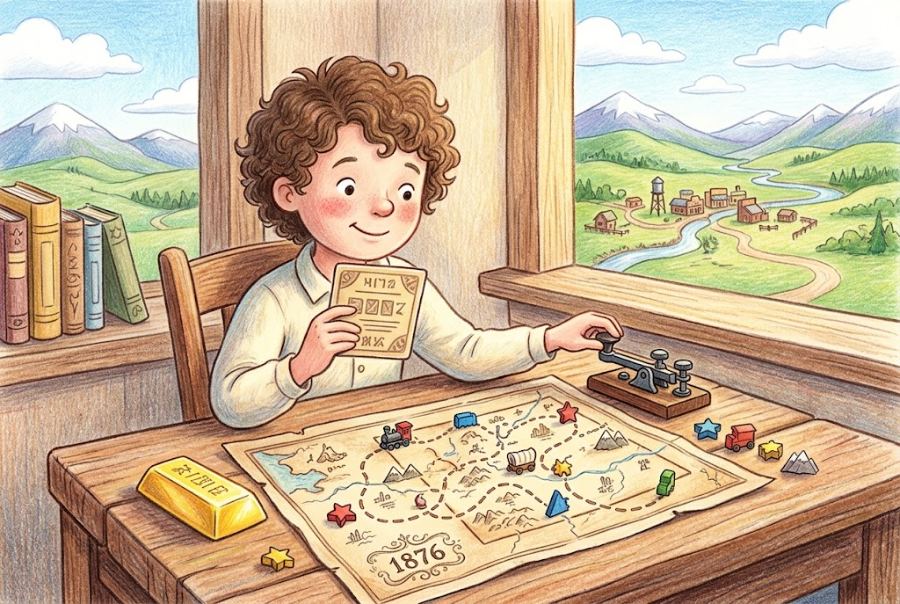
    Colour pencil illustration of a curly-haired kid at a desk with a quiz card, a telegraph key, a gold bar and a map of Colorado used as a board game

    This story comes from TRACE in Colorado by T. A. Held, a time-travel series for ages 9 to 12 with a What Was Real? page in every book.

    Read the book: The Wrong Choice (Book 1) · See all the TRACE in Colorado books

    Previous post: What was a fancy hotel like in Denver in 1876? The Inter-Ocean and the Tremont House

    Next post: For parents and teachers: a discussion guide to The Wrong Choice and life in 1876

  • What was a fancy hotel like in Denver in 1876? The Inter-Ocean and the Tremont House

    Last updated: November 2, 2026.

    Where would you sleep and eat if you arrived in Denver in 1876? A fancy traveler might choose the Inter-Ocean Hotel, with its bronze chandeliers and speaking tubes. This post tells what historians know about Denver’s hotels, and it is honest about the one thing we could not find: the menu.

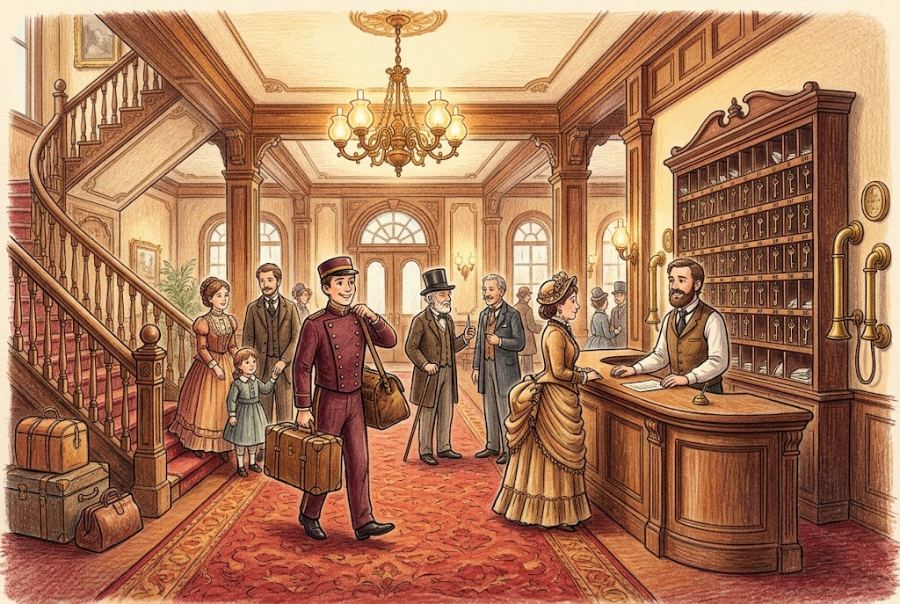
    Colour pencil illustration of a grand 1870s Denver hotel lobby with a half-circle desk, a key rack and a bellboy carrying a trunk

    Quick facts

    🏨

    The Inter-Ocean Hotel

    it opened on October 29, 1873, at 16th and Blake Streets in Denver. Barney Ford built it, and it was a four-story building.

    🏨

    The Tremont House

    it began in late 1859 near Cherry Creek as an alcohol-free boardinghouse called the Temperance Hotel.

    🦪

    Oysters

    ice-cooled railroad cars let oysters be served daily in large cities and small towns.

    ❓

    Missing

    we found no menu or meal price for a Denver hotel in 1876.

    💡 Did you know? The Inter-Ocean was used for about 100 years. It was torn down in 1973 to make a parking lot.

    Timeline: two famous Denver hotels

    Late 1859

    The Temperance Hotel opens near Cherry Creek. It is later renamed the Tremont House.

    1872

    Barney Ford buys lots at Blake and Sixteenth Streets.

    Oct 29, 1873

    The Inter-Ocean Hotel opens.

    1876

    John Wesley Smith buys the Inter-Ocean.

    1912

    A flood fills the Tremont House with mud, and it is torn down.

    1973

    The Inter-Ocean is demolished for a parking lot.

    1988-89

    Archaeologists dig at the Tremont House site and find about 26,000 objects.

    The Inter-Ocean Hotel

    The Inter-Ocean was built by Barney Ford, who bought the lots at Blake and Sixteenth Streets in 1872. It opened in 1873 as the finest hotel in Denver. It had a Second Empire style, which means a building with a mansard roof, a roof with steep sides. William Byers, the editor of the Rocky Mountain News, praised it as the finest hotel in the territory.

    Inside, the second floor had bronze chandeliers, velvet drapes and lace curtains. The front desk was a half circle. Behind it hung a rack of keys made of black walnut. The hotel also had a call system, with wires to every room, and speaking tubes on each floor, so a guest could talk to the desk without walking downstairs. In 1876, a man named John Wesley Smith bought the hotel.

    The Tremont House

    Another famous hotel stood closer to Cherry Creek. It opened in late 1859 as a boardinghouse that did not allow alcohol, called the Temperance Hotel. It was later renamed the Tremont House. By the 1880s it had lost some of its fame. A flood in 1912 filled it with mud and sand, and it was torn down that year. In 1988 and 1989 archaeologists dug at the site and found about 26,000 objects. The site now lies under Speer Boulevard.

    What did people eat?

    Here is the honest part. We know a lot about the buildings but nothing about a particular Denver hotel dinner in 1876. We found no menu and no price for that year. What we do know is how food traveled. Ice-cooled railroad cars changed how food was moved, and oysters began to be served daily in big cities and small towns across the country. A guest at a good hotel might have found food that came from far away. We cannot say that a certain Denver hotel served oysters on a certain night, so we will not say it.

    Why say what we do not know?

    A good historian says “I don’t know” when the record is silent. When a writer of a made-up story fills in details, they should be marked as made up. That is why each TRACE in Colorado book ends with a What Was Real? page.

    Try this at home

    • What would you ask the hotel desk through a speaking tube?
    • A hotel bought by a new owner in 1876 had been open only three years. Why might owners change so quickly?
    • If you found a hotel menu from 1876, what would you look for first?

    What is real and what is made up

    The hotels above are real. In The Wrong Choice, two boys from today arrive in 1876 with no money and nowhere to sleep, but their story is made up. The book ends with a What Was Real? page that sorts the facts from the story.

    This story comes from TRACE in Colorado by T. A. Held, a time-travel series for ages 9 to 12 with a What Was Real? page in every book.

    Read the book: The Wrong Choice (Book 1) · See all the TRACE in Colorado books

    Previous post: How did people haul lumber and stone near Morrison in the 1870s?

    Next post: Trivia quiz: Denver in 1876 (3 questions with answers)

  • How did people haul lumber and stone near Morrison in the 1870s?

    Last updated: November 2, 2026.

    How did people move lumber and stone around Morrison, Colorado in the 1870s? They used teams of oxen and horses on wagon roads, some of which charged a toll, and after 1874 they also used a narrow-gauge train. This post explains how a lumber wagon worked, who paid to use the roads, and why Morrison was a busy little town.

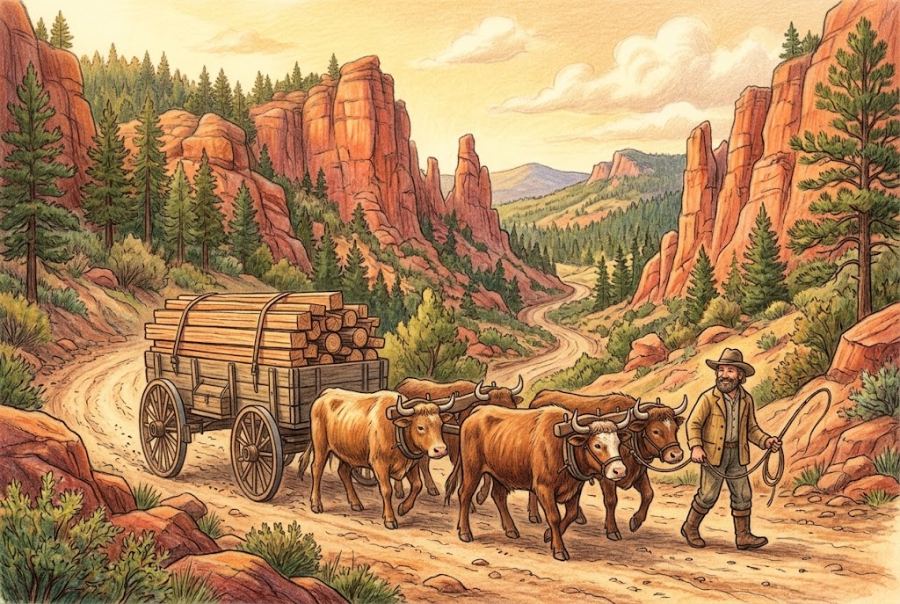
    Colour pencil illustration of a lumber wagon pulled by oxen on a red-rock canyon road near Morrison, Colorado

    Quick facts

    ⛰️

    Morrison

    George Morrison laid out the town in 1874 and founded the Morrison Stone, Lime, and Town Co.

    🚂

    The train

    the Denver, South Park and Pacific Railroad reached Morrison on June 20, 1874. Its tracks were narrow gauge, set 3 feet apart.

    🛣️

    Toll roads

    toll roads ran through Bear Creek Canyon and Turkey Creek Canyon. One list gives a toll of 25 cents for a team and wagon.

    🐂

    Oxen

    a team of oxen walked about 2 miles an hour.

    💡 Did you know? Red Rocks Park, near Morrison, was once known as the Garden of the Angels.

    Timeline: Morrison in the 1870s

    1874

    George Morrison plats the town of Morrison.

    June 20, 1874

    Railroad tracks reach Morrison.

    July 3, 1874

    Regular train service begins between Denver and Morrison.

    1876

    Colorado becomes a state.

    A town built on stone

    Morrison grew because of what lay under the ground. George Morrison platted the town in 1874, and he founded the Morrison Stone, Lime, and Town Co. The area had a red sandstone quarry, and workers also produced lime and gypsum, materials used in building. The railroad brought building stone and other products of Morrison’s quarries into Denver.

    When the Denver, South Park and Pacific Railroad reached Morrison on June 20, 1874, regular train service started on July 3. After the Panic of 1873, which was a big money crisis, and after crop losses in 1874 to 1876, the railroad did not build farther for years. So in the 1870s Morrison was a busy place at the end of the tracks.

    Wagons and toll roads

    Not everything went by train. People who lived up the canyons used wagons. A Jefferson County history brochure says toll roads, which are roads that charge a fee, were first authorized by territorial lawmakers. Toll roads ran through Bear Creek Canyon and Turkey Creek Canyon, near Morrison. The brochure lists fees such as 25 cents for a team and wagon, 10 cents for each horse, and 5 cents for each sheep, goat or hog. It does not date those exact prices to the 1870s, so treat them as an example of how tolls worked, not as the price in a particular year.

    Oxen are not horses

    A team of oxen worked very differently from horses. On the overland trails, the driver walked on the left side of the team and used his voice, body language and a whip to guide the animals. The National Park Service says the usual pace was about two miles an hour. At that speed a trip of ten miles takes five hours. A driver had a long day just to deliver a load.

    Trees from the hills

    Higher up Bear Creek, logging drew settlers to the area that became Evergreen. A half-dozen sawmills worked along upper Bear Creek. A load of lumber from the hills meant long hours for a teamster, which is a person who drives a team of animals pulling a wagon.

    A real teenager with oxen

    Elias Ammons, who later became governor of Colorado, did this kind of work. He drove oxen hauling cordwood to limekilns, the ovens that burned limestone to make lime. You can read about him in our post on Elias Ammons.

    One thing we do not know is where he was in the summer of 1876, so we cannot say what he hauled that year.

    Try this at home

    • Ten miles at two miles an hour takes five hours. How long would it take you to walk ten miles?
    • Why would a road charge a toll, and who would not want to pay it?
    • Why is a train better for heavy stone than an ox team? Is a wagon ever better?

    What is real and what is made up

    The towns, the roads and the railroad above are real. The story of The Wrong Choice, in which two boys from today land on a hill above Morrison in 1876, is made up. The book ends with a What Was Real? page that sorts the facts from the story.

    This story comes from TRACE in Colorado by T. A. Held, a time-travel series for ages 9 to 12 with a What Was Real? page in every book.

    Read the book: The Wrong Choice (Book 1) · See all the TRACE in Colorado books

    Previous post: The grasshopper plague of 1876: when swarms ate Colorado’s crops

    Next post: What was a fancy hotel like in Denver in 1876? The Inter-Ocean and the Tremont House

  • The grasshopper plague of 1876: when swarms ate Colorado’s crops

    Last updated: November 2, 2026.

    What was the grasshopper plague in Colorado in 1876? From 1874 to 1876, giant swarms of grasshoppers, called Rocky Mountain locusts, ate crops across the plains. Colorado farmers faced the plague three years in a row. This post tells what happened, what the government did, and a surprising end to the story.

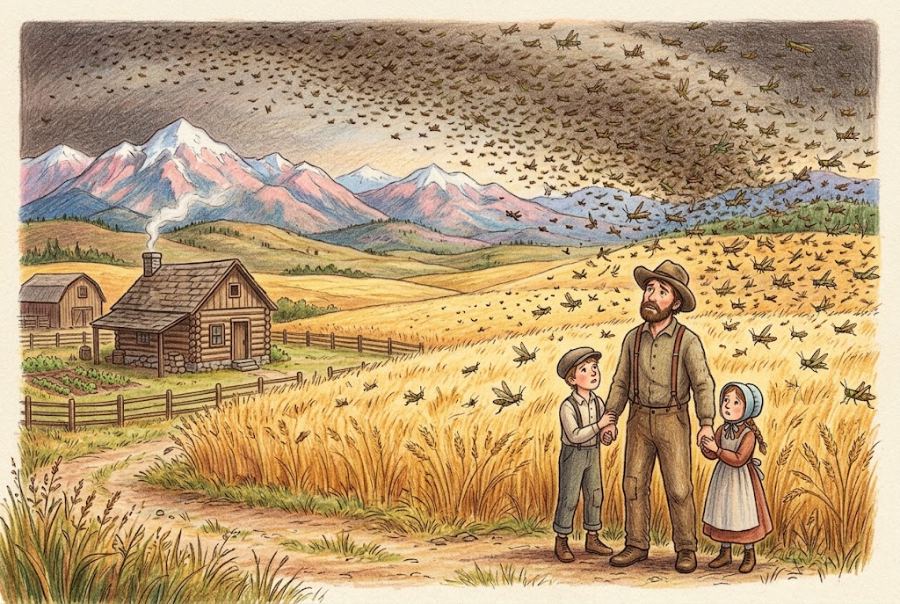
    Colour pencil illustration of a huge cloud of grasshoppers over a Colorado wheat field while a farmer and his two children watch

    Quick facts

    📅

    When

    swarms hit Colorado three years running, and the last great swarm came in 1876. Across the West, the last major swarms were from about 1873 to 1877.

    📍

    Where

    Colorado, Kansas, Minnesota, Missouri, Nebraska and other states.

    🤝

    Help

    Congress voted money to help farmers who had lost their crops.

    😄

    The joke

    farmers said the locusts ate everything but the mortgage.

    💡 Did you know? The Rocky Mountain locust is now extinct. The last specimen anyone collected was in 1904, in Colorado.

    Timeline: three bad years and a long goodbye

    1874

    Swarms of Rocky Mountain locusts ravage crops on the plains.

    Jan 1875

    Congress sets aside money to buy seed for farmers.

    1876

    The last great swarm reaches Colorado, in the summer Colorado becomes a state.

    1904

    The last Rocky Mountain locust specimen is collected, in Colorado.

    2014

    The IUCN formally declares the species extinct.

    Clouds of insects

    Today a grasshopper is a small insect in the grass. The Rocky Mountain locust was a type of grasshopper that sometimes gathered in huge swarms and flew across the land. When a swarm landed on a farm, the insects could eat the crops down to the ground. For a family that grew its own food and sold the rest, that could mean a hungry winter.

    Three years in a row

    Colorado farmers were hit by swarms in 1874, 1875 and 1876. People found it hard to keep going, because a farmer who loses a crop must still pay for seed, tools and land. Farmers joked bitterly that the locusts ate everything but the mortgage. A mortgage is a loan used to buy land. The joke means that the insects ate the crops but the debt remained.

    What did the government do?

    The plague was serious enough that Congress acted. Congress voted money to help people on the western frontier who had been left destitute by the grasshoppers. In January 1875, it also set aside money to buy seed, so farmers could plant again. Sources give different dollar amounts for the different relief laws, so we will not print a number.

    The newspaper and the grasshoppers

    When Colorado became a state on August 1, 1876, newspapers were also writing about the swarm. The Rocky Mountain News joked that anyone who hoped statehood would end the grasshopper problem had slipped up. You can read the whole story in our post about the day Colorado became a state.

    A mystery with a real ending

    After the late 1870s, the great swarms stopped. The last specimen of the Rocky Mountain locust was collected in 1904, in Colorado. Less than thirty years after the biggest swarms, the species seemed to be gone. In 2014 the IUCN, the group that keeps the world list of endangered species, formally declared the Rocky Mountain locust extinct. Scientists still talk about why such a huge insect population could disappear so fast. We could not find one answer that is agreed upon, so we will not claim one.

    Try this at home

    • Why would a farmer need money for seed after a swarm ate the crop?
    • The joke about the mortgage is dark humor. Why do you think people tell jokes in hard times?
    • A species with millions of insects went extinct. What does that tell us about nature?

    What is real and what is made up

    The grasshoppers, the relief laws and the extinction are real history. The Wrong Choice is a made-up time-travel adventure that begins in Morrison in 1876. Its What Was Real? page explains which parts of its world come from the real history of that year.

    Not only a Colorado problem

    The swarms were not a Colorado problem alone. Across the West, the last major swarms came between about 1873 and 1877 in Colorado, Kansas, Minnesota, Missouri, Nebraska and other states. A farmer on the plains who read about help in Washington was reading about a problem shared by thousands of other families. That is one reason Congress, which had to answer to all of those states, took notice.

    This story comes from TRACE in Colorado by T. A. Held, a time-travel series for ages 9 to 12 with a What Was Real? page in every book.

    Read the book: The Wrong Choice (Book 1) · See all the TRACE in Colorado books

    Previous post: How did news travel in 1876? Telegraphs, newspapers and printer’s devils

    Next post: How did people haul lumber and stone near Morrison in the 1870s?

  • How did news travel in 1876? Telegraphs, newspapers and printer’s devils

    Last updated: November 2, 2026.

    How did news travel in 1876? There were no phones, no radio and no internet. News came through telegraph wires, and the story reached readers in a newspaper that was set in type by hand. This post explains how a message crossed the country, how a newspaper was made, and the strange words printers used.

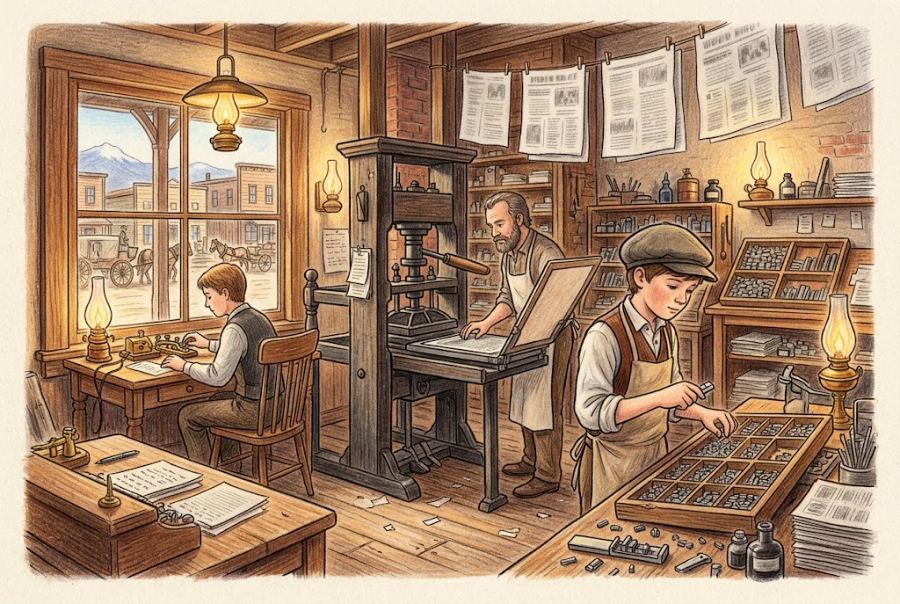
    Colour pencil illustration of an 1870s Denver print shop: a boy sorting metal type, a wooden printing press, and a telegraph operator by the window

    Quick facts

    📰

    The Rocky Mountain News

    it printed its first edition on April 23, 1859, became a daily paper in 1860, and has been a morning paper since July 1870.

    📡

    The telegraph

    it came to Denver in 1863.

    📡

    Morse code

    American railroads and telegraph lines used American Morse, also called Railroad Morse, which is different from the International Morse code used later.

    👂

    Reading by ear

    telegraph operators learned to read the code by sound.

    💡 Did you know? A printer’s apprentice was called a printer’s devil. One of his jobs was sorting type that had been spilled and mixed up.

    Timeline: how the news got faster

    April 23, 1859

    William Byers prints the first Rocky Mountain News.

    1860

    The paper begins publishing daily.

    1863

    The telegraph comes to Denver.

    July 1870

    The News becomes a morning paper.

    Aug 1-2, 1876

    The statehood telegram arrives and is printed.

    The telegraph: messages by wire

    The telegraph sent messages as electrical clicks along a wire. The telegraph came to Denver in 1863, so by 1876 news from Washington could arrive over the wire. Operators used a code of short and long signals. In the United States this was American Morse, also called Railroad Morse. It looked a bit different from the International Morse that people learn today. Some letters had gaps inside them, and a dash could be shorter than in International Morse.

    Early telegraph machines made marks on paper. Operators found they could understand the code just by listening to the clicks, so the machine was redesigned into a sounder that clicked loudly with no paper tape. Experienced operators read messages by ear.

    The newspaper: the Rocky Mountain News

    William Byers printed the first Rocky Mountain News on April 23, 1859. It started as a weekly. It began publishing daily editions in 1860, and since July 1870 it was a morning paper. Because a morning paper is read at breakfast, the work of putting it together happened the night before.

    When the telegraph brought a story, such as the news that Colorado had become a state, the newspaper printed it. The statehood telegram from Washington was dated August 1, 1876, and appeared in Colorado papers on August 2. You can read more in our post about the day Colorado became a state.

    Printers and their strange words

    Printing in 1876 meant arranging small metal letters, called type, into lines and pages. Printers used special words for their work:

    • Pied type: when type was spilled or mixed up, printers said it was pied, or pi. Pie is an old printers’ word for letters that have been jumbled.
    • The hellbox: a box where broken or used pieces of type were thrown.
    • The printer’s devil: a young apprentice in a printing shop. A printer’s devil sorted type from the hellbox back into the job case, the tray where each kind of letter belongs.

    It sounds like a scary job, but it was a real training job for a young person.

    Fast and slow at the same time

    A telegram could cross the country in a short time, but a newspaper reader still waited for the paper to be set in type and printed. News was fast compared to a letter, and slow compared to today. A story that arrived late at night might appear in the paper the next morning.

    Try this at home

    • How do you find out the news today? How would your day change if the only way was a paper that arrives once a morning?
    • Try writing your name in clicks: one short click and one long click. What problems do you run into?
    • Why do you think printers made funny names like hellbox and devil?

    What is real and what is made up

    The newspapers, the telegraph and the printing words above are real. The story of The Wrong Choice, which begins in Morrison in 1876, is made up. The book ends with a What Was Real? page that explains the history behind it.

    This story comes from TRACE in Colorado by T. A. Held, a time-travel series for ages 9 to 12 with a What Was Real? page in every book.

    Read the book: The Wrong Choice (Book 1) · See all the TRACE in Colorado books

    Previous post: What was Denver like for kids in 1876? Horsecars, gas lamps and gold bars

    Next post: The grasshopper plague of 1876: when swarms ate Colorado’s crops

  • What was Denver like for kids in 1876? Horsecars, gas lamps and gold bars

    Last updated: November 2, 2026.

    What was Denver like for kids in 1876? There were no cars, no electric lights and no sewers, but there were horse-drawn streetcars, gas lamps, telegraph wires and a building where miners’ gold was melted into bars. This post tours Denver in the year Colorado became a state, using only facts that historians have written down.

    Old photograph of 16th Street in Denver, about 1875
    16th Street, Denver, about 1875. Library of Congress, Prints and Photographs Division (no known restrictions on publication).

    Quick facts

    🚋

    Streetcars

    Denver’s first horsecar line opened on December 17, 1871, and ran from Seventh and Larimer to the Five Points neighborhood.

    🪙

    Gold

    the U.S. Assay Office in Denver melted gold into stamped bars. It made no coins; coin-making began in Denver on February 1, 1906.

    📡

    Telegraph

    the telegraph came to Denver in 1863.

    🚰

    Sewers

    Denver began building a sewer system only in 1880.

    💡 Did you know? The newspaper wrote in 1874 that since Denver was laid out, not one privy vault had been emptied. A privy is an outhouse, and the complaint shows how the city was growing faster than its plumbing.

    Timeline: Denver, 1863 to 1906

    1863

    The telegraph reaches Denver, and the U.S. Assay Office opens.

    Dec 17, 1871

    Denver’s first horsecar line opens at Seventh and Larimer.

    Oct 29, 1873

    The Inter-Ocean Hotel opens.

    June 20, 1874

    Railroad tracks reach Morrison.

    Aug 1, 1876

    Colorado becomes a state.

    1880

    Denver begins building a sewer system.

    Feb 1, 1906

    Coin-making begins at the Denver Mint.

    Getting around: the horsecar

    In 1876 a person in Denver could ride a streetcar, but the car was pulled by horses, not powered by electricity. The first horsecar line opened on December 17, 1871. It started at Seventh and Larimer Street and ran to the Five Points neighborhood. Sources disagree about small details such as exact street names and what the fare was in 1876, so we will not guess. What is clear is that Denver was a city where you could ride on rails behind a horse.

    If you wanted to go to Morrison, you could take a train. The Denver, South Park and Pacific Railroad reached Morrison on June 20, 1874, and began regular service between Denver and Morrison on July 3, 1874. It ran on narrow-gauge tracks, which are tracks set closer together than usual.

    After dark: gas lamps

    Streets were lit by gas lamps, and a person had to light each lamp by hand. Elias Ammons, who later became governor, did exactly this job as a boy during his school years. You can read his story in our post about Elias Ammons.

    Gold, but not coins

    Denver sat near the gold fields, and miners brought their gold to town. The U.S. Assay Office opened in 1863 in a two-story brick building built by the bank Clark, Gruber & Co., at what is now the corner of Sixteenth and Market Streets. Its job was to melt and assay gold, which means testing how pure it was. Then the office returned the gold to its owner as a bar stamped with its weight and fineness.

    Many people think a mint makes coins from the beginning. Not this one. The Denver office only melted and tested gold. Coin-making began on February 1, 1906, thirty years after Colorado became a state.

    No sewers yet

    Cities in 1876 did not have the plumbing we expect today. Denver did not start building a sewer system until 1880. Before that, people used privies, which were outhouses behind buildings. The Denver Public Library has a Rocky Mountain News article from February 8, 1874, complaining that since the city was laid out, not a single privy vault had been emptied. Today we think about clean water and sewers without noticing them, but they are among the biggest changes in city life.

    A fancy hotel and fast news

    Denver also had a grand hotel. The Inter-Ocean Hotel, built by Barney Ford at Blake and Sixteenth Streets, opened in 1873 as a four-story building and was called the finest hotel in Denver. You can read more in our post about hotels in 1876.

    News came to Denver by telegraph. The wires had arrived in 1863, and in 1876 the news that Colorado had become a state came that way too. Read about it in How did news travel in 1876?.

    Try this at home

    • Which would you miss most: electric lights, a car, or a flush toilet? Why?
    • A horsecar needed horses. What would a city street sound and smell like with hundreds of horses?
    • Why might a government office melt gold into bars instead of making coins?

    What is real and what is made up

    The facts above are real history. The Wrong Choice is a made-up time-travel story that begins in Morrison in 1876, and the boys in it are not real. Each book in the series ends with a What Was Real? page that sorts the facts from the story.

    This story comes from TRACE in Colorado by T. A. Held, a time-travel series for ages 9 to 12 with a What Was Real? page in every book.

    Read the book: The Wrong Choice (Book 1) · See all the TRACE in Colorado books

    Previous post: Elias Ammons: the Denver boy who lit street lamps and became governor of Colorado

    Next post: How did news travel in 1876? Telegraphs, newspapers and printer’s devils