Tag: book-5

  • Books for Kids Set in the 1870s: A City on Fire, Grasshopper Summers and Dinosaur Bones

    Last updated: November 14, 2026.

    Looking for books for kids set in the 1870s? Here are six chapter books, novels and one picture-book biography about the years when the American West was still being settled: a city on fire, prairie farms eaten by grasshoppers, a lawman in Indian Territory, a brand-new state called Colorado, and the first dinosaur bones dug out of a Colorado hill. Each one has a short card, a closer look underneath, and a quick chooser at the bottom.

    One is a true biography, one is a classic based on the author’s own childhood, and two are time-travel mysteries that end with a page about what was real.

    The 1870s in six books: a quick timeline

    • October 1871: Chicago, Illinois. I Survived the Great Chicago Fire, 1871
    • 1874: a new farm in the Dakota Territory. Grasshopper Summer
    • 1874 to 1876: Plum Creek, near Walnut Grove, Minnesota. On the Banks of Plum Creek
    • 1875: Indian Territory, today Oklahoma. Bad News for Outlaws
    • 1876: Morrison and Denver, the year Colorado became a state. The Wrong Choice
    • Summer 1877: a dinosaur dig above Morrison, Colorado. Who Drew Us?

    The books

    1. I Survived the Great Chicago Fire, 1871

    📖 Historical chapter book · ✍️ Lauren Tarshis · illustrated by Scott Dawson · Scholastic, 2015 · 112 pages · ages 7 to 10
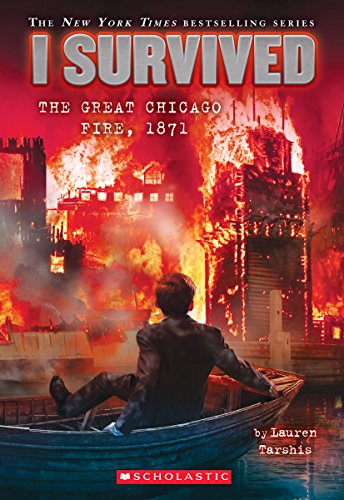
    Cover of I Survived the Great Chicago Fire, 1871 by Lauren Tarshis

    Oscar Starling never wanted to come to Chicago. Now the whole city is burning, and he is trapped in the middle of the Great Chicago Fire.

    👍 Good for kids who want a fast, scary, true-disaster story they can finish in a weekend.

    More about I Survived the Great Chicago Fire, 1871

    In October 1871 a fire swept through Chicago and burned a huge part of the city. In this book from the I Survived series, Oscar has to race the flames. Scholastic lists it for ages 7 to 10 (grades 2 to 5). There is also a graphic novel version.

    2. Grasshopper Summer

    📖 Historical novel · ✍️ Ann Turner · illustrated by Erika Meltzer · Aladdin · 176 pages · ages 8 to 12
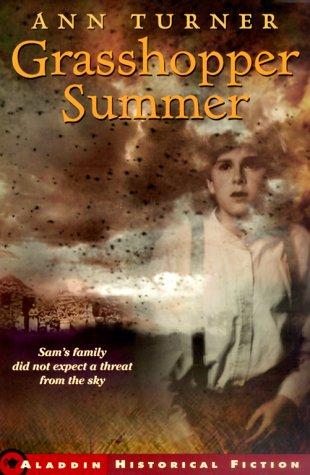
    Cover of Grasshopper Summer by Ann Turner

    1874. Eleven-year-old Sam White’s family leaves Kentucky for a new farm in the Dakota Territory. Then the grasshoppers come.

    👍 Good for kids who like pioneer stories, a boy who has to grow up fast, and a family that won’t give up.

    More about Grasshopper Summer

    Sam’s family moves west from Kentucky to the Dakota Territory to start over. They build a new home on the prairie, and then a cloud of grasshoppers arrives and eats the crops they were counting on. Simon & Schuster lists it for ages 8 to 12 (grades 3 to 7).

    Grasshoppers didn’t only hit the Dakotas. Two years later, in 1876, swarms ate crops in Colorado too. Read about the grasshopper plague of 1876 in Colorado.

    3. On the Banks of Plum Creek

    📖 Classic novel · ✍️ Laura Ingalls Wilder · Little House books · first published 1937 · Newbery Honor Book
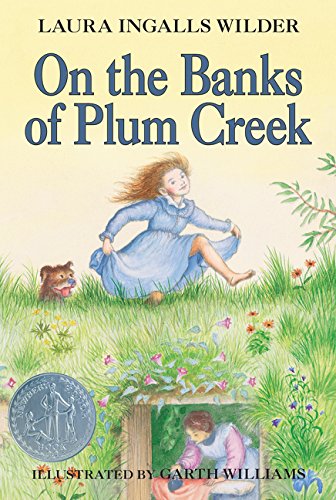
    Cover of On the Banks of Plum Creek by Laura Ingalls Wilder

    Laura’s family moves to a house dug into the bank of a creek in Minnesota. Pa plants a big wheat crop, and then the grasshoppers come.

    👍 Good for kids who love family stories, farm life and a classic to read aloud together.

    More about On the Banks of Plum Creek

    This Little House book follows Laura Ingalls in the 1870s near Walnut Grove, Minnesota. The family lives in a dugout by Plum Creek, Laura goes to school and meets Nellie Oleson, and the locust plague of 1874 destroys the wheat crop the family was waiting for. It was a Newbery Honor Book in 1938. If your reader likes it, Grasshopper Summer tells about the same grasshoppers from a boy’s side.

    4. Bad News for Outlaws: The Remarkable Life of Bass Reeves, Deputy U.S. Marshal

    📖 Picture-book biography · ✍️ Vaunda Micheaux Nelson · illustrated by R. Gregory Christie · Carolrhoda, 2009 · 40 pages · ages 7 to 10
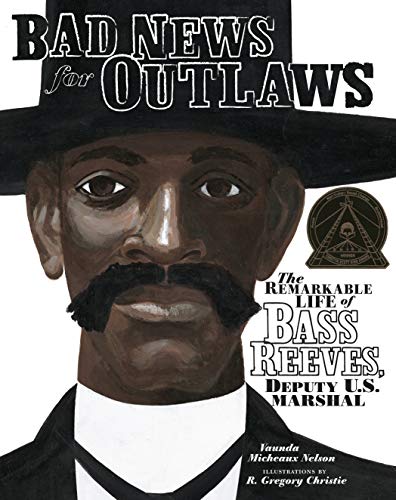
    Cover of Bad News for Outlaws by Vaunda Micheaux Nelson

    Bass Reeves was born into slavery, escaped, and became a famous lawman of the Old West.

    👍 Good for kids who want a true Wild West hero and a short book with big pictures.

    More about Bad News for Outlaws

    In 1875 Bass Reeves was hired as a deputy U.S. marshal in Indian Territory, the land that is now Oklahoma, and he served for more than thirty years. This picture-book biography tells his life story with paintings by R. Gregory Christie. Kirkus lists it for ages 7 to 10. It is a true story, so it is a good pick for a kid who asks, “Did that really happen?”

    5. The Wrong Choice (TRACE in Colorado, Book 1)

    📖 Time-travel mystery · ✍️ T. A. Held · The Riddle America Cannot Explain: TRACE in Colorado · ages 9 to 12

    A red stone in a cellar sets Alex and Daniel down on a hill above Morrison, Colorado, in 1876, with no money and no way home.

    👍 Good for kids who want a time-travel mystery with real 1876 history behind it.

    More about The Wrong Choice

    Alex and Daniel only wanted to get out of the rain. Then Alex finds a door in the cabin floor, and in the cellar under it there’s a red rock with two triangles cut into it and an old journal lying open on a table. The floor begins to hum.

    The stone sets them down above Morrison in 1876, with nowhere to sleep and nobody who would ever believe where they came from. Somewhere along the way, they made the wrong choice. Now the stone won’t open, and the only way home is to find out what they did.

    The Wrong Choice is Book 1 of The Riddle America Cannot Explain: TRACE in Colorado by T. A. Held, and it ends with a What Was Real? page. Curious about the real 1876? Read when Colorado became a state and what Denver was like for kids in 1876.

    6. Who Drew Us? (TRACE in Colorado, Book 5)

    📖 Time-travel mystery · ✍️ T. A. Held · The Riddle America Cannot Explain: TRACE in Colorado · ages 9 to 12

    An old notebook has a drawing of Alex and Daniel lifting a giant bone, in 1877. They have never been to 1877.

    👍 Good for kids who love dinosaurs, secrets and a mystery set at a real fossil dig.

    More about Who Drew Us?

    On a field trip to Dinosaur Ridge, Alex and Daniel find an old notebook in a room marked STAFF ONLY. Inside is a pencil drawing of two boys lifting a giant bone, and next to them a girl with a bucket. Zoe from science class follows them all the way down the cellar steps, and before the stone takes them anywhere near 1877, it has something much older to show them.

    In the summer of 1877, men are digging the first dinosaur bones out of a hill above Morrison, and two professors back East will pay almost anything to get them. Somebody on that hill is selling secrets, and when a bone disappears, everybody looks at the three new kids from Kansas.

    Who Drew Us? is Book 5 of TRACE in Colorado by T. A. Held. Want the true story? Read about the 1877 dinosaur rush near Morrison and the Bone Wars explained for kids.

    How to choose

    • For a younger reader (7 to 10) who likes action: I Survived the Great Chicago Fire, 1871.
    • For a kid who wants a true cowboy-era hero: Bad News for Outlaws.
    • For a pioneer-story fan: Grasshopper Summer.
    • For reading aloud as a family: On the Banks of Plum Creek.
    • For a mystery lover who wants time travel and a What Was Real? page: The Wrong Choice.
    • For a dinosaur fan: Who Drew Us?

    More book lists

    Want another decade? Try books for kids set in the 1920s, books for kids set in the 1980s and 1990s, World War II books for kids, Cold War books for kids or time-travel books for kids who love Magic Tree House. Or pick a topic: dinosaur books, gold rush books, Colorado and the West adventure books, heist and detective books or mystery and riddle books.

    This list comes from TRACE in Colorado by T. A. Held, a time-travel series for ages 9 to 12 with a What Was Real? page in every book.

    Read the books: The Wrong Choice (Book 1) · Who Drew Us? (Book 5) · See all the TRACE in Colorado books

  • Dinosaur books for kids who love real fossils and real history

    Last updated: November 6, 2026.

    Six dinosaur books for kids who want more than monsters: a time-travel mystery, a LEGO adventure, a first chapter book and two true stories about the scientists who dug up the bones. Each book has a closer look underneath, and a quick chooser at the bottom.

    What these books have in common

    Every book here has dinosaurs or fossils at its heart. Four are stories and two are nonfiction. Who Drew Us? sits in the middle: it is made up, but the 1877 dig near Morrison, Colorado, and the two professors who wanted the bones are real.

    How to choose

    Read the short description on each card, then open the “More about” part underneath.

    1. Dinosaurs Before Dark (Magic Tree House #1)

    📖 Time-travel chapter book · ✍️ Mary Pope Osborne · about ages 6 to 9

    Jack and Annie find a tree house full of books, and a wish takes them back to the time of the dinosaurs.

    👍 Good for kids who are just starting chapter books and want a short, fast dinosaur adventure.

    More about Dinosaurs Before Dark (Magic Tree House #1)

    Dinosaurs Before Dark is the first book in the Magic Tree House series by Mary Pope Osborne. Jack and Annie find a tree house, and it carries them back to the age of dinosaurs.

    The chapters are short, so it is a friendly first step into chapter books. The series also has nonfiction companion books for kids who want the facts.

    2. Dinosaur Club: The T-Rex Attack

    📖 Dinosaur adventure series · ✍️ Rex Stone

    The first book of the Dinosaur Club series, for readers who want one dinosaur story after another.

    👍 Good for kids who like series and want many books about the same topic.

    More about Dinosaur Club: The T-Rex Attack

    Dinosaur Club: The T-Rex Attack is by Rex Stone and belongs to the Dinosaur Club series. A series is handy when a reader finishes one book and asks for the next one right away.

    Check the description on the publisher’s page for the age range and the full story.

    3. Untold Dinosaur Tales #1: Dangerous Eggs-pedition!

    📖 LEGO Jurassic World chapter book · 📅 2022 · ✍️ Random House · ages 6 to 9

    Baby dinosaurs escape and a T. rex stirs up trouble in the LEGO Jurassic World.

    👍 Good for kids who already love LEGO and want a story with real chapters.

    More about Untold Dinosaur Tales #1: Dangerous Eggs-pedition!

    This is book 1 in the Untold Dinosaur Tales series. In it, Owen and Claire and the clumsy Asset Containment Unit try to set things right after baby dinosaurs escape.

    It is a 128-page chapter book, a good size for a reader who is ready to move up from picture books.

    4. Who Drew Us? (TRACE in Colorado, Book 5)

    🎫 Time-travel mystery · 📅 Set in 1877 · ✍️ T. A. Held · ages 9 to 12

    Alex and Daniel find a drawing of themselves in a notebook from 1877. They have never been there. So who drew them?

    👍 Good for kids who love mysteries, time travel and real history.

    More about Who Drew Us? (TRACE in Colorado, Book 5)

    Alex and Daniel come to Dinosaur Ridge on a field trip. In a room marked STAFF ONLY they find an old notebook with a pencil drawing of two boys lifting a giant bone, and a girl with a bucket next to them. Zoe from science class knows more about dinosaurs than the guides do, and more about Alex and Daniel than they would like.

    In the summer of 1877, men are digging the first dinosaur bones out of a hill above Morrison, and two professors back East will pay almost anything for them. When a bone disappears, everybody looks at the three new kids from Kansas. Who drew them? Who is selling the secrets? And what does Zoe know that she is not telling?

    Every TRACE in Colorado book ends with a What Was Real? page that separates the facts from the made-up parts.

    5. The Bone Wars: The True Story of an Epic Battle to Find Dinosaur Fossils

    📖 Nonfiction · ✍️ Jane Kurtz

    The true story of two scientists who raced each other to find the biggest dinosaur bones.

    👍 Good for kids who like true stories and want to know how museum skeletons came to be.

    More about The Bone Wars: The True Story of an Epic Battle to Find Dinosaur Fossils

    Jane Kurtz tells how O. C. Marsh and Edward Cope met in 1863 and became friends. Then Marsh found an error in Cope’s work, and they began to compete. They used code names and disguises and tried to keep their finds secret.

    It is a good book to read after Who Drew Us?, because the real dig near Morrison happened in the same years.

    6. Dinosaur Bone War: Cope and Marsh’s Fossil Feud

    📖 Nonfiction, Landmark Books · 📅 2006 · ✍️ Elizabeth Cody Kimmel

    Another telling of the same rivalry, from Random House’s Landmark Books series.

    👍 Good for kids who want a second version of the story, to see how the facts line up.

    More about Dinosaur Bone War: Cope and Marsh’s Fossil Feud

    Elizabeth Cody Kimmel’s book describes Cope as a charming man with a passion for old bones and Marsh as a stickler for procedure. They shared ideas until Marsh tried to poach Cope’s digging site, and then they became bitter enemies.

    Reading two versions of one story is a good way to practise telling facts from opinions.

    Quick chooser

    • Just starting chapter books: Dinosaurs Before Dark.
    • Want a series to binge: Dinosaur Club.
    • Love LEGO: Untold Dinosaur Tales.
    • Want time travel and real history: Who Drew Us?
    • Want the true story of the fossil feud: The Bone Wars or Dinosaur Bone War.

    Want the real history first?

    Start with Who found the first dinosaur bones near Morrison? or The Bone Wars explained for kids.

    This story comes from TRACE in Colorado by T. A. Held, a time-travel series for ages 9 to 12 with a What Was Real? page in every book.

    Read the book: Who Drew Us? (Book 5) · See all the TRACE in Colorado books

    Next post: The 1877 dinosaur rush near Morrison, Colorado

  • The 1877 dinosaur rush near Morrison, Colorado

    Last updated: November 6, 2026.

    In March 1877, two men were walking along a long, rocky ridge just north of the town of Morrison, Colorado. They were hunting for prints of old leaves in the stone. Instead, they found a huge bone. That bone started one of the biggest fossil hunts in American history.

    This post tells what really happened near Morrison in 1877: who found the bones, who wanted them, and how a small railroad town ended up in the middle of a famous feud between two professors.

    Quick facts

    🦴

    The first bone

    Most accounts say Arthur Lakes and Henry C. Beckwith found it on March 20, 1877, on the ridge just north of Morrison.

    📅

    Not completely sure

    Some researchers who studied Lakes’s own journal think the date may have been a few days later. Nobody can be completely sure.

    💰

    One hundred dollars

    Professor Marsh sent Lakes $100 after Lakes sent samples to Marsh’s rival, Professor Cope.

    📦

    About a ton

    Within a few weeks Lakes and Professor Mudge shipped about a ton of bones east, including the first Stegosaurus.

    💡 Did you know? Arthur Lakes wrote that one bone from a dinosaur’s backbone was almost as tall as he was.

    Morrison in 1877

    March 20

    Most accounts: Lakes and Beckwith find the first bone on the ridge north of Morrison.

    April

    Lakes starts working the Morrison quarries. He keeps going until May 1879.

    July 1

    Professor Marsh publishes Lakes’s finds, so the first bones had already reached Yale.

    October

    More crates go east to Yale.

    Later in 1877

    A ledge over the original quarry falls. More than 100 tons of rock land in the pit while the crew sleeps nearby. The exact date is not known.

    Who found the first bone?

    The men were Arthur Lakes, a teacher and minister, and Henry C. Beckwith, a retired naval officer. Other local men were with them. They were not looking for dinosaurs at all. They were looking for fossil leaves on the hogback, the long, tilted ridge of red and gray rock that runs along the edge of the mountains. When they found something far bigger than a leaf, Lakes understood that it was important.

    Why did two professors want the bones?

    In the 1870s two scientists were racing to find and name new dinosaurs. Othniel Charles Marsh worked at Yale. Edward Drinker Cope worked in Philadelphia. Each wanted the best fossils before the other one got them. We now call their race the Bone Wars.

    Lakes first wrote to Marsh. When Marsh did not answer, Lakes sent samples to Cope instead. That woke Marsh up. He sent Lakes $100, and Lakes then asked Cope to pass the bones on to Marsh. Marsh also sent his own helper, Professor Benjamin Mudge, to Colorado to make sure Lakes kept working for him.

    What did the quarries produce?

    Lakes opened many quarries along the ridge between 1877 and 1879. They gave scientists the first Stegosaurus, and early Apatosaurus and Allosaurus material. His best find at Morrison became a partial Apatosaurus skeleton that Marsh named Apatosaurus ajax.

    Lakes worked slowly and carefully. He let the fossils come out of the rock little by little. His crew carved out and carted away tons of rock, and some bones stayed in the ridge because they were too hard to get out.

    A dangerous job

    The rock above the first quarry was not stable. The ledge fell several times. On one night more than 100 tons of stone dropped into the pit while the crew slept nearby, and it took over a week to dig it out. Sources do not agree on exactly when this happened, but it was probably later in 1877.

    The artist who was also a digger

    Lakes painted as well as dug. His watercolors of the Morrison and Como Bluff digs are the only pictures made while the work was going on. The originals are at the Yale Peabody Museum. His field journals were later published in a book called Discovering Dinosaurs in the Old West.

    Why Morrison?

    The ridge here is made of layers of rock from the Late Jurassic, the age of Stegosaurus and Apatosaurus. Over millions of years the layers were tilted up on edge, so bones that were buried deep underground ended up close to the surface. A railroad ran from Morrison to Denver, which meant crates of bones could leave town without a long wagon ride.

    Today the same ridge is called Dinosaur Ridge, and you can walk along it. Read more in Visiting Dinosaur Ridge.

    What is real and what is made up

    These parts are real: Arthur Lakes, Henry Beckwith, Professor Marsh, Professor Cope and Professor Mudge were real people, and the bones, the $100 and the shipments east are recorded.

    These parts are uncertain: the exact day of the first discovery, and the exact date of the big rock fall.

    This post is a history post. It does not tell the plot of any story.

    This story comes from TRACE in Colorado by T. A. Held, a time-travel series for ages 9 to 12 with a What Was Real? page in every book.

    Read the book: Who Drew Us? (Book 5) · See all the TRACE in Colorado books

    Previous post: Dinosaur books for kids who love real fossils and real history

    Next post: The Bone Wars explained for kids

  • The Bone Wars explained for kids: Cope, Marsh and the race for dinosaurs

    Last updated: November 6, 2026.

    What would you do if you wanted to be the first person to find a new dinosaur, and your biggest rival wanted the same thing? In the 1870s two American scientists had exactly that problem, and they fought over fossils for years. People later named the fight the Bone Wars.

    This post explains who the two scientists were, what they did, and why a few small Colorado towns, including Morrison, became part of the story.

    Quick facts

    🎓

    Marsh

    Othniel Charles Marsh worked at Yale. He paid for the first dinosaur bones from Morrison, Colorado.

    🔬

    Cope

    Edward Drinker Cope worked in Philadelphia. He was Marsh’s rival.

    🤫

    A secret name

    In a telegram, Professor Mudge called Cope “Jones” so nobody reading it would know who he meant.

    ⏳

    A long feud

    The Bone Wars ran from 1877 to 1892, and both men found many new kinds of dinosaurs.

    💡 Did you know? In 1877 people paid for telegrams by the word, so they left out every word they could. Mudge’s telegram said that an arrangement was made for two months and that Jones “cannot interfere”.

    The Bone Wars around Colorado, 1877

    March 20

    Arthur Lakes and Henry Beckwith find the first bone near Morrison (most accounts).

    After the find

    Lakes writes to Marsh. With no answer, he sends samples to Cope. Marsh sends $100.

    July 1

    Marsh publishes the Morrison finds.

    August 8

    Mudge opens Felch Quarry 1 near Canon City for Marsh, with Samuel Williston and Marshall Felch. It runs until October 27.

    1877 to 1884

    Oramel and Ira Lucas dig in Garden Park near Canon City for Cope.

    Two scientists, two cities

    Marsh lived and worked at Yale, in Connecticut. Cope lived and worked in Philadelphia. Both were experts on old bones, and both wanted to describe as many new dinosaurs as they could. Whoever described a new animal first got to give it its name.

    That sounds like a friendly contest. It was not. Each man tried to get the best fossil sites, and each tried to keep the other away from them.

    How Colorado joined in

    The first Colorado bones came from the ridge north of Morrison. Arthur Lakes wrote to Marsh about them. When Marsh did not answer, Lakes sent samples to Cope. As soon as Marsh heard that, he sent Lakes $100 and then sent a helper, Professor Benjamin Mudge, to make sure Lakes kept working for him.

    Mudge was about sixty years old in 1877. He had taught at the Kansas State Agricultural College in Manhattan, Kansas. In a telegram to Marsh he wrote that a satisfactory arrangement was made for two months and that Jones, the code word for Cope, “cannot interfere”. The secret code was a way to keep news from reaching the other side.

    The fight spreads to Canon City

    At almost the same time, bones were found near Canon City, in southern Colorado. A teacher named O. W. Lucas found them and wrote to Cope. Later, Marsh asked Mudge to win Lucas over, but Lucas stayed loyal to Cope. Oramel and Ira Lucas dug in the Garden Park quarries for Cope from 1877 to 1884.

    Marsh answered by opening his own quarry nearby. Mudge, Samuel Williston and Marshall Felch worked Felch Quarry 1 for him from August 8 to October 27, 1877.

    Workers who changed sides

    Both men paid diggers, and the diggers sometimes switched sides. In 1872 two of Cope’s men were also taking money from Marsh. In the winter of 1878, W. E. Carlin left Marsh and went to work for Cope.

    A mistake about the plates

    Marsh did not always get things right. When he first saw the strange bony plates of a Stegosaurus, he thought they might come from a giant sea turtle. Later he decided the plates lay flat on the animal’s back like roof shingles. Today scientists think the plates stood up in rows.

    How did it end?

    By 1892 the Bone Wars were over. The two men had named an enormous number of dinosaurs between them. Some of the names we all know today, such as Stegosaurus, Allosaurus and Apatosaurus, come from this period. The way it was done was often rough, but the fossils they saved are still studied.

    Want to read more?

    To see how Colorado fit into the story, read The 1877 dinosaur rush near Morrison.

    What is real and what is made up

    These parts are real: Marsh, Cope, Mudge, Lakes, Williston, the Lucas brothers, the telegram, the $100 and the dates of Felch Quarry 1.

    These parts are explained in simple words: the Bone Wars lasted many years and many states, and this post only covers the Colorado part in detail.

    This is a history post. It does not tell the plot of any story.

    This story comes from TRACE in Colorado by T. A. Held, a time-travel series for ages 9 to 12 with a What Was Real? page in every book.

    Read the book: Who Drew Us? (Book 5) · See all the TRACE in Colorado books

    Previous post: The 1877 dinosaur rush near Morrison, Colorado

    Next post: Arthur Lakes: the teacher who found the first Stegosaurus

  • Visiting Dinosaur Ridge: bones, footprints and a bus tour

    Last updated: November 6, 2026.

    Can you really walk on a hill where dinosaurs once walked? Yes. Dinosaur Ridge is a ridge of tilted rock just west of Denver, near the town of Morrison, Colorado. On one side you can see hundreds of dinosaur footprints. On the other, you can see the place where bones were found in 1877.

    This post explains what you can see at Dinosaur Ridge and at the small museum in Morrison, so you can plan a visit or just imagine one.

    Quick facts

    👣

    Footprints

    Hundreds of dinosaur tracks from the Cretaceous period are on the east side of the ridge.

    🛣️

    A road for walking

    The trail runs along a closed stretch of old Alameda Parkway, about 2 miles round trip.

    🦴

    Bones

    On the west side is the rock where Arthur Lakes found bones in 1877.

    🚌

    Bus tour

    A guided bus tour takes about 45 minutes.

    💡 Did you know? The footprints were found by accident in 1937, when workers were building the road.

    Dinosaur Ridge through time

    About 150 million years ago

    Late Jurassic animals such as Stegosaurus and Apatosaurus live on a wide flat plain here. Their bones end up in the rock.

    1877

    Arthur Lakes and Henry Beckwith find the first bones on the ridge north of Morrison.

    1937

    Road builders uncover hundreds of dinosaur footprints.

    Today

    Visitors can walk the ridge and visit the Morrison Natural History Museum in town.

    Two sides, two different dinosaur ages

    The ridge is a hogback, which is a long ridge made of rock layers that have been tilted up like the side of a slice of bread. Because the layers are tilted, walking along the road takes you from one age to another.

    On the east side you can see hundreds of Cretaceous footprints, left in mud that later turned to stone. They were found by accident when workers built the road in 1937. On the west side is a bone outcrop, the rock where Arthur Lakes found bones in 1877 during the first big Colorado dinosaur rush.

    The trail and the tour

    The visitor center is on the east side. The main trail is a closed stretch of the old Alameda Parkway, about 2 miles round trip. You can walk it on your own and read the signs. You can also take a guided bus tour, which takes about 45 minutes. School groups can join programs that include dig areas.

    Before you go, check the opening times and prices on the official Dinosaur Ridge website, because they can change with the seasons.

    The museum in town

    A few minutes away, the Morrison Natural History Museum sits at 501 Highway 8. It is small, with about 2,000 square feet of exhibits, but it is full of things to see. Volunteers lead tours every hour.

    The lower floor is about the Jurassic. You can see partial casts of Allosaurus and Apatosaurus, the remains of the first Stegosaurus, tracks of Stegosaurus and of a baby sauropod, and prints from Marsh’s famous dinosaur books. The upper floor is about the Cretaceous and later times, with cast skulls of Triceratops and Tyrannosaurus rex.

    Visitors may touch most of the fossils, and there is a lab where you can watch fossils being cleaned.

    Tips for young visitors

    Bring water, a hat and good shoes. The road is paved but the sun is strong. Look for the signs that mark the quarry and the footprints, and remember that the fossils belong in the rock, so look and take photos, but do not pick anything off the ridge.

    Plan your reading

    Want to know what the place looked like in the Jurassic? Read What was Colorado like in the Jurassic? For the people who dug here, read Arthur Lakes: the teacher who found the first Stegosaurus.

    What is real and what is made up

    These parts are real: the footprints, the 1937 discovery, the trail, the bus tour, the museum and its opening year.

    This post is not a travel guide. Opening times and prices change, so always check the official websites.

    This is a history post. It does not tell the plot of any story.

    This story comes from TRACE in Colorado by T. A. Held, a time-travel series for ages 9 to 12 with a What Was Real? page in every book.

    Read the book: Who Drew Us? (Book 5) · See all the TRACE in Colorado books

    Previous post: Arthur Lakes: the teacher who found the first Stegosaurus

    Next post: What was Colorado like in the Jurassic?

  • Arthur Lakes: the teacher who found the first Stegosaurus

    Last updated: November 6, 2026.

    Who was Arthur Lakes? If you had met him in 1877 you would not have guessed he was about to change the history of science. He was a schoolteacher and a minister who loved the outdoors and liked to draw. He also found some of the most important dinosaur bones in North America.

    This post is about the real Arthur Lakes: where he worked, what he did, and why we still know his name.

    Quick facts

    🎓

    Teacher

    Lakes taught at Jarvis Hall, a school in Golden, Colorado, until it burned down in 1878.

    ⛪

    Minister

    He preached in towns at the foot of the mountains from 1874, and was Morrison’s Episcopal minister in 1877 and 1878.

    🎨

    Artist

    His watercolors of the Morrison and Como Bluff digs are the only pictures made while the work was going on.

    ⛏️

    Digger

    He worked the Morrison quarries from April 1877 to May 1879.

    💡 Did you know? Lakes did not marry until 1883, when he married Edith Slater, a drawing student from Golden. They had three sons.

    Arthur Lakes, step by step

    1874

    Lakes begins preaching in towns in the Colorado foothills.

    March 1877

    Lakes and Henry Beckwith find a huge bone near Morrison (most accounts say March 20).

    April 1877

    He begins digging the Morrison quarries.

    1878

    Jarvis Hall, the school where he taught, burns down.

    May 1879

    His work at the Morrison quarries ends.

    1883

    He marries Edith Slater.

    A busy week

    In 1877 Lakes lived a busy life. He taught school in Golden. On Sundays he was the minister in Morrison. In between, he walked the ridge, looked for fossils and dug. He had no big museum behind him and no machines. He worked with local men, hand tools, horses and wagons.

    How he dug

    Lakes worked slowly and carefully, letting the fossils come out of the rock little by little. His crew carved out and carted away tons of rock. Some bones were left in the ridge because they were too hard to take out.

    He described one backbone bone, called a vertebra, that was almost as tall as he was. Think about that for a moment: a single bone from the back of one animal, as tall as a grown man.

    What he found

    The Morrison quarries gave the first Stegosaurus, and early Apatosaurus and Allosaurus material. Lakes found the pieces of the first Stegosaurus together with Henry Beckwith. Professor Marsh described it in 1877 from fragments, with one broken plate. Lakes’s best find at Morrison later became a partial Apatosaurus skeleton.

    His pictures

    Lakes drew and painted what he saw. His watercolors of the digs are now at the Yale Peabody Museum. He also kept field journals, which were published in 1997 in a book called Discovering Dinosaurs in the Old West, edited by Michael Kohl and John McIntosh.

    Because he painted what the work really looked like, historians can still see where the quarries were and how the men worked.

    Was he a famous man?

    Not at first. Marsh was the professor who wrote about the Morrison bones in 1877. Lakes was the person who found them, dug them out and wrote down what happened. His journals and watercolors are still studied today.

    Three quick questions

    Did he work alone? No. Other local men were with him, and Henry Beckwith was with him at the first find.

    Did he get rich? There is no record that he did. Marsh sent him $100 to keep the bones coming, but what his crew was paid is not known.

    Where can I see his pictures? The originals of his watercolors are at the Yale Peabody Museum, and his journals were printed in a book so anyone can read them.

    Why his name matters

    Most people have heard of Stegosaurus and Apatosaurus. Far fewer know that a teacher and minister in a small Colorado town was one of the first people to dig them up. His careful notes and pictures show how the work was really done, and that is why historians still read him.

    Where to learn more

    Lakes’s story is part of The 1877 dinosaur rush near Morrison. To see where he worked, read Visiting Dinosaur Ridge.

    What is real and what is made up

    These parts are real: Lakes’s jobs, his dates, his watercolors, his journals and the animals found in his quarries.

    These parts are not known: whether he lived at Jarvis Hall, and exactly what his daily schedule was in the summer of 1877.

    This is a history post. It does not tell the plot of any story.

    This story comes from TRACE in Colorado by T. A. Held, a time-travel series for ages 9 to 12 with a What Was Real? page in every book.

    Read the book: Who Drew Us? (Book 5) · See all the TRACE in Colorado books

    Previous post: The Bone Wars explained for kids

    Next post: Visiting Dinosaur Ridge: bones, footprints and a bus tour

  • What was Colorado like in the Jurassic? Dinosaurs, plants and weather

    Last updated: November 6, 2026.

    Imagine standing in Colorado 150 million years ago. There are no mountains. There is no grass. There is not a single flower. But there are giant plant-eaters, fast hunters and enormous trees. This was the Late Jurassic, and the rocks near Morrison, Colorado, are full of its animals.

    This post describes what the place looked like, what grew there and which dinosaurs you might have met.

    Quick facts

    🏔️

    No mountains

    There were no Rocky Mountains yet. The land was a broad, flat floodplain with rivers and small lakes.

    🌿

    No flowers, no grass

    Plants were ferns, cycads, ginkgoes, horsetails, tree ferns and large conifers.

    ☀️

    Warm and humid

    It was warmer and wetter than today, with wet and dry seasons.

    ⌛

    Old rocks

    The rock layer is called the Morrison Formation. It is about 150 million years old.

    💡 Did you know? T. rex lived millions of years after Stegosaurus. The two never met.

    Who lived here?

    Allosaurus

    A large meat-eater, and one of the most common big dinosaurs in the Morrison Formation.

    Ceratosaurus

    Another meat-eater.

    Ornitholestes

    A small hunter. Its name means bird robber.

    Stegosaurus

    A plant-eater with plates on its back. Colorado’s state fossil.

    Apatosaurus

    A giant long-necked plant-eater, one of the sauropods.

    Camptosaurus and Dryosaurus

    Smaller plant-eaters.

    What did the land look like?

    The Morrison Formation is the name for a layer of rock that was laid down by rivers, floods and lakes in the Late Jurassic. In Colorado it makes a long band of rock along the edge of the mountains, and that is why dinosaur bones turn up at Morrison. When those animals lived, the mountains had not formed. Where the Rockies stand today, there was a wide, flat plain.

    The air was warmer and more humid than it is now, with wet seasons and dry seasons. Rivers crossed the plain and small lakes dotted it.

    What grew there?

    No flowers and no grass. You would have seen ferns, cycads, ginkgoes, horsetails, tree ferns and large conifers. A plant-eater like Stegosaurus ate low plants. Long-necked sauropods such as Apatosaurus could reach high into the trees.

    What else lived there?

    Besides the dinosaurs, the plain was home to small crocodile relatives, turtles, flying reptiles called pterosaurs, fishes, frogs and insects. There were also mouse-sized mammals, which stayed small and hid from the big animals.

    Plates and mistakes

    Stegosaurus had bony plates on its back. When Professor Marsh first saw them, he wondered whether they came from a giant sea turtle. Later he decided the plates lay flat like roof shingles. Today scientists think they stood up in rows. Stegosaurus is Colorado’s state fossil. Kids at a school in Colorado asked lawmakers for it, and it became the state fossil in 1982.

    Why do we know all this?

    We know about the Jurassic world because people dug up its bones, studied the rock layers, and found the remains of plants and small animals too. Arthur Lakes and the men who dug the Morrison quarries in the 1870s were among the first. Scientists are still learning today.

    Jurassic or Cretaceous?

    The Morrison dinosaurs lived in the Jurassic. Many famous dinosaurs lived later, in the Cretaceous, which came after the Jurassic. Tyrannosaurus rex was one of them. If you visit Dinosaur Ridge you can see both: Jurassic bones on one side of the ridge and Cretaceous footprints on the other.

    Try this at home

    Draw a picture of Colorado in the Late Jurassic. Here are the rules. Draw a wide, flat plain with a river. Add ferns, cycads and tall conifers. Do not draw any flowers, any grass or any mountains. Then add a Stegosaurus, an Apatosaurus and a small Ornitholestes by the water. When you finish, compare your picture with a photo of the real Colorado today and list five things that changed.

    Keep exploring

    See the real rocks in Visiting Dinosaur Ridge. To find out how people told bones from stones, read How to tell a fossil from a rock.

    What is real and what is made up

    These parts are real: the rock layer, the age range, the plants and the list of animals.

    These parts are less certain: exactly how the animals behaved. Scientists still debate this.

    This is a history post. It does not tell the plot of any story.

    This story comes from TRACE in Colorado by T. A. Held, a time-travel series for ages 9 to 12 with a What Was Real? page in every book.

    Read the book: Who Drew Us? (Book 5) · See all the TRACE in Colorado books

    Previous post: Visiting Dinosaur Ridge: bones, footprints and a bus tour

    Next post: How to tell a fossil from a rock

  • How to tell a fossil from a rock (and why you should not lick it)

    Last updated: November 6, 2026.

    You pick up a gray lump on a hike. Is it a dinosaur bone or just a rock? For a long time, fossil hunters had a famous trick: they touched the stone to their tongue. If it stuck, it was bone. This trick is still told today, but museums now ask visitors not to try it.

    This post explains why the trick worked, why it is not the best method, and what to do instead.

    Quick facts

    👅

    The old trick

    Fossil bone is full of tiny holes, so it can stick a little to a wet tongue. Plain rock usually does not.

    🚫

    Please do not

    Museums and guides tell visitors not to lick fossils.

    🔍

    A better way

    Look at a broken edge with a hand lens. Bone looks spongy, like a honeycomb.

    🔬

    In the lab

    Scientists use a microscope to see the inside of the stone.

    💡 Did you know? Some field scientists still use the tongue test informally, but it is not the recommended method.

    Is it a fossil? Step by step

    Step 1

    Look at the shape. Bones often have a smooth, rounded surface and a pattern, not just a rough lump.

    Step 2

    Look for a broken edge. A fresh break shows the inside.

    Step 3

    Use a hand lens. Bone shows a spongy, honeycomb-like inner structure. Plain rock looks the same all the way through.

    Step 4

    Ask an expert. Museums and park staff are happy to look at what you found.

    Why does bone stick to your tongue?

    Fossil bone is porous, which means it is full of tiny holes, just like a sponge. When a bone turns into a fossil, minerals can fill some of those holes, but many stay open. If you press a damp tongue against it, those tiny spaces pull on the moisture, and the stone feels as if it sticks. A smooth rock has no holes to pull, so it does not stick.

    So why not lick it?

    Because there are better ways, and licking is not clean. Museum guides ask visitors to look with a lens instead. Also, the Children’s Museum of Indianapolis says to use the lick test only as a last resort, after looking at the fossil, testing its hardness and listening to it.

    Use your eyes

    The best tool is a small magnifying glass, called a hand lens. Look at a broken edge of the stone. In bone, you will see a spongy pattern, almost like a honeycomb. In a plain rock, the inside looks the same all the way through.

    In a lab, scientists use a microscope to look even closer. They can tell much more than we can with a hand lens, including whether the object is bone, shell, wood or something else.

    Where to try it

    At Dinosaur Ridge, near Morrison, Colorado, the fossils stay in the ridge, so look, take photos and ask the guides questions. If you want to practice, many museums have fossil tables where you can touch and look at real specimens. At the museum in Morrison, visitors may touch most of the fossils.

    A good habit for young scientists

    Write down where you found a stone, what it looks like and what the lens shows. A notebook is as useful as the stone. That is exactly what Arthur Lakes did in 1877: he kept field journals about what he dug and where, and those journals are still used today.

    Read more

    To see where real dinosaur bones come from, read What was Colorado like in the Jurassic? and Visiting Dinosaur Ridge.

    What is real and what is made up

    These parts are real: fossil bone is porous; museum guides advise against licking fossils; a hand lens shows the spongy inside of bone.

    This post gives simple, safe advice for kids and does not replace the advice of a museum or park ranger.

    This is a how-to post. It does not tell the plot of any story.

    This story comes from TRACE in Colorado by T. A. Held, a time-travel series for ages 9 to 12 with a What Was Real? page in every book.

    Read the book: Who Drew Us? (Book 5) · See all the TRACE in Colorado books

    Previous post: What was Colorado like in the Jurassic?

    Next post: How did dinosaur bones travel east in 1877?

  • How did dinosaur bones travel east in 1877? From a Colorado ridge to Yale

    Last updated: November 6, 2026.

    How did a dinosaur bone get from a hill in Colorado to a museum in Connecticut in 1877? There were no trucks and no airplanes. There were wagons, a railroad, letters and a lot of hard work.

    This post follows the trip, and it is honest about the parts nobody wrote down. Historians know that the first bones from the ridge near Morrison went east to Yale. They do not know every detail of how the diggers packed them. So we also look at how scientists protect bones today, which is a fun comparison.

    Quick facts

    📦

    New Haven

    Lakes sent bones to Professor Marsh in New Haven, Connecticut, where Yale’s museum is.

    📮

    Two shipments

    When Marsh was slow to answer, Lakes also sent bones to Professor Cope in Philadelphia.

    📅

    July 1, 1877

    Marsh published a description of Lakes’s finds, so the first bones had already reached Yale.

    🩹

    Plaster jackets

    Scientists today wrap bones in plaster-soaked burlap, like a cast on a broken arm.

    💡 Did you know? A finished plaster jacket can be half an inch to a full inch thick, which makes it very heavy to carry.

    How the first bones travelled

    Late March 1877

    Arthur Lakes and Henry Beckwith find huge bones on a ridge north of Morrison.

    April 2, 1877

    Lakes writes his first letter to Professor Marsh at Yale and includes drawings of two partial bones.

    Spring 1877

    Lakes digs up more bones and sends them to New Haven. Marsh is slow to answer, so he also sends a shipment to Professor Cope.

    Soon after

    Marsh sends Lakes $100 and asks him to keep the finds secret.

    July 1, 1877

    Marsh publishes a description of the finds in the American Journal of Science.

    First, get it out of the rock

    Before a bone can travel, it has to come out of the ridge. History Colorado says that Lakes worked slowly and carefully, letting the fossils come out of the rock little by little. His crew carved out and carted away tons of rock. Some bones were left in the ridge because they were too hard to remove.

    Moving heavy loads

    There were no big machines on the ridge. A farm tool called a stone boat was a common way to move heavy loads in the 1800s. It is a low wooden sledge, with runners or planks, that horses or oxen pull. We do not have a record that says exactly how Lakes’s crew moved their bones, so this is only an example of what people used in that time.

    The bones go to New Haven

    Lakes first wrote to Othniel Charles Marsh, a professor at Yale. While he waited for an answer, he dug up more of what he called colossal bones and sent them to New Haven. When Marsh was slow to reply, Lakes also sent a shipment of bones to Marsh’s rival, Edward Drinker Cope, in Philadelphia.

    That got Marsh moving. He sent Lakes $100 and urged him to keep the finds secret. On July 1, 1877, he published a description of the finds. So the first bones reached Yale in just a few months.

    Letters and drawings travelled too

    Bones were not the only things that went east. The Morrison Historical Society says Lakes’s first letter to Marsh, dated April 2, 1877, came with drawings of two partial bones and a sketch of the rock layers. Over the next two years Lakes wrote many more letters with sketches of the digs, and he kept diaries. These papers help historians understand how the work was done.

    How scientists protect bones today

    Today, a paleontologist who finds fragile bones often does not take them apart in the field. A museum in Las Vegas explains how they make a plaster jacket, a bit like a doctor’s cast.

    First they dig around and under the bones, leaving them on a pedestal of earth. Then they cover the bones with wet paper towels, so the plaster will not touch them. Next they mix plaster-of-Paris powder in a bucket of water and soak strips of burlap in it. The wet strips go over the bones, and the burlap makes the jacket strong. The first coat dries overnight, and then more coats are added. The finished jacket can be half an inch to a full inch thick, so it gets very heavy.

    What is real and what is made up

    Real: the shipments to New Haven and to Philadelphia, the $100, the July 1, 1877 publication and Lakes’s letters and drawings.

    Not known: exactly how Lakes’s crew packed the bones and carried them down the ridge. A stone boat is an example of a tool people used then, not a record of what Lakes did.

    Today: the plaster jacket method is how many scientists work now.

    This story comes from TRACE in Colorado by T. A. Held, a time-travel series for ages 9 to 12 with a What Was Real? page in every book.

    Read the book: Who Drew Us? (Book 5) · See all the TRACE in Colorado books

    Previous post: How to tell a fossil from a rock

    Next post: Dinosaur dig quiz for kids: bones, professors and the Jurassic

  • Dinosaur dig quiz for kids: bones, professors and the Jurassic

    Last updated: November 6, 2026.

    Think you know your dinosaur digs? This quiz has 12 questions about the real 1877 dig near Morrison, Colorado, the two professors who fought over bones, and the Jurassic world the dinosaurs lived in. Click a question to see the answer.

    Each answer comes with a short explanation, so you can learn something even if you guess wrong.

    Quick facts

    🧐

    12 questions

    About the dig, the professors and the Jurassic.

    🎯

    Ages 8 and up

    Read aloud with younger kids.

    📚

    Every answer explained

    Short explanations from verified sources.

    🏆

    Score yourself

    10 to 12 is a dig boss. 6 to 9 is a good digger. 0 to 5 is a new digger.

    💡 Did you know? The state fossil of Colorado is Stegosaurus. It became the state fossil in 1982 after school kids asked for it.

    Quiz topics

    Questions 1 to 3

    The first bone and Arthur Lakes.

    Questions 4 to 6

    The Bone Wars and Stegosaurus.

    Questions 7 to 9

    Money, a landmark and a dig in 1877.

    Questions 10 to 12

    The Jurassic and Dinosaur Ridge today.

    Quiz time

    Open each question to check your answer.

    The quiz

    1. What were Arthur Lakes and his friends looking for when they found the first bone? A) Gold B) Prints of old leaves C) A lost cow

    B. They were looking for prints of old leaves on the ridge near Morrison, and found a huge bone instead.

    2. How tall was the backbone bone Arthur Lakes described? A) As tall as a cat B) As tall as a house C) Almost as tall as he was

    C. Lakes wrote that one bone from the backbone was almost as tall as he was.

    3. What was Arthur Lakes’s job? A) Banker B) Teacher and minister C) Train driver

    B. He taught school in Golden and was a minister in the Colorado foothills.

    4. Where did Professor Marsh work? A) Denver B) Philadelphia C) Yale

    C. Marsh worked at Yale. Philadelphia was where his rival, Professor Cope, lived.

    5. What secret name did Marsh’s side use for Professor Cope? A) Jones B) Smith C) Brown

    A. Professor Mudge’s telegram really said that Jones could not interfere.

    6. What did Marsh first think the Stegosaurus plates came from? A) A dragon B) A giant sea turtle C) A huge fish

    B. He wondered if they came from a giant sea turtle.

    7. How much money did Professor Marsh send Arthur Lakes? A) $1 B) $100 C) $10,000

    B. Marsh sent $100 and asked Lakes to keep the finds secret.

    8. In what year was the Morrison fossil area named a National Natural Landmark? A) 1873 B) 1973 C) 2011

    B. It was named a National Natural Landmark in 1973.

    9. What fell into Arthur Lakes’s dinosaur pit one night? A) A bear B) Over 100 tons of rock C) A falling star

    B. The ledge over the pit came down while the crew slept nearby, and it took over a week to dig out.

    10. In the Jurassic, when Stegosaurus lived, what was missing from Colorado? A) Rivers B) Flowers C) Ferns

    B. There were no flowers and no grass. There were no Rocky Mountains yet either.

    11. What does Ornitholestes mean? A) Fast runner B) Long tail C) Bird robber

    C. Ornitholestes means bird robber.

    12. Who found the dinosaur footprints at Dinosaur Ridge in 1937? A) Road workers B) A dog C) A flood

    A. Workers building the road found hundreds of footprints by accident, and you can still walk past them today.

    How did you do?

    Want to know more about any answer? Try The 1877 dinosaur rush near Morrison, The Bone Wars explained for kids, What was Colorado like in the Jurassic? or Visiting Dinosaur Ridge.

    You can also print the quiz as trivia cards. See how to print the trivia cards.

    What is real and what is made up

    Every answer comes from the sources below. The questions are about real people and real places.

    This is a quiz. It does not tell the plot of any story.

    This story comes from TRACE in Colorado by T. A. Held, a time-travel series for ages 9 to 12 with a What Was Real? page in every book.

    Read the book: Who Drew Us? (Book 5) · See all the TRACE in Colorado books

    Previous post: How did dinosaur bones travel east in 1877?

    Next post: For parents and teachers: a discussion guide for Who Drew Us?