Category: History Facts

  • What was Denver like for kids in 1876? Horsecars, gas lamps and gold bars

    Last updated: November 2, 2026.

    What was Denver like for kids in 1876? There were no cars, no electric lights and no sewers, but there were horse-drawn streetcars, gas lamps, telegraph wires and a building where miners’ gold was melted into bars. This post tours Denver in the year Colorado became a state, using only facts that historians have written down.
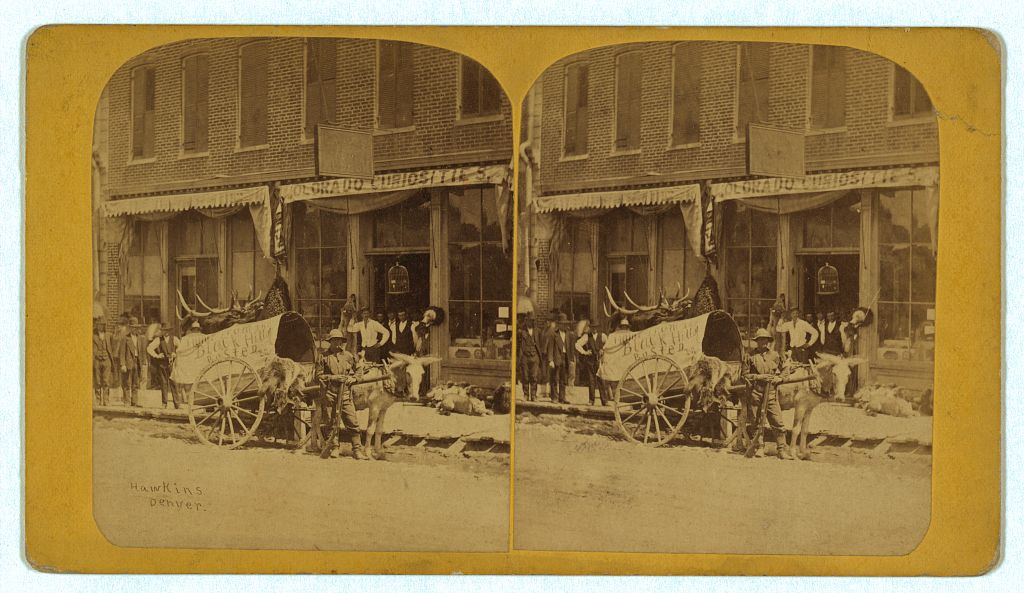
    Old photograph of 16th Street in Denver, about 1875
    16th Street, Denver, about 1875. Library of Congress, Prints and Photographs Division (no known restrictions on publication).

    Quick facts

    🚋

    Streetcars

    Denver’s first horsecar line opened on December 17, 1871, and ran from Seventh and Larimer to the Five Points neighborhood.

    🪙

    Gold

    the U.S. Assay Office in Denver melted gold into stamped bars. It made no coins; coin-making began in Denver on February 1, 1906.

    📡

    Telegraph

    the telegraph came to Denver in 1863.

    🚰

    Sewers

    Denver began building a sewer system only in 1880.

    💡 Did you know? The newspaper wrote in 1874 that since Denver was laid out, not one privy vault had been emptied. A privy is an outhouse, and the complaint shows how the city was growing faster than its plumbing.

    Timeline: Denver, 1863 to 1906

    1863

    The telegraph reaches Denver, and the U.S. Assay Office opens.

    Dec 17, 1871

    Denver’s first horsecar line opens at Seventh and Larimer.

    Oct 29, 1873

    The Inter-Ocean Hotel opens.

    June 20, 1874

    Railroad tracks reach Morrison.

    Aug 1, 1876

    Colorado becomes a state.

    1880

    Denver begins building a sewer system.

    Feb 1, 1906

    Coin-making begins at the Denver Mint.

    Getting around: the horsecar

    In 1876 a person in Denver could ride a streetcar, but the car was pulled by horses, not powered by electricity. The first horsecar line opened on December 17, 1871. It started at Seventh and Larimer Street and ran to the Five Points neighborhood. Sources disagree about small details such as exact street names and what the fare was in 1876, so we will not guess. What is clear is that Denver was a city where you could ride on rails behind a horse.

    If you wanted to go to Morrison, you could take a train. The Denver, South Park and Pacific Railroad reached Morrison on June 20, 1874, and began regular service between Denver and Morrison on July 3, 1874. It ran on narrow-gauge tracks, which are tracks set closer together than usual.

    After dark: gas lamps

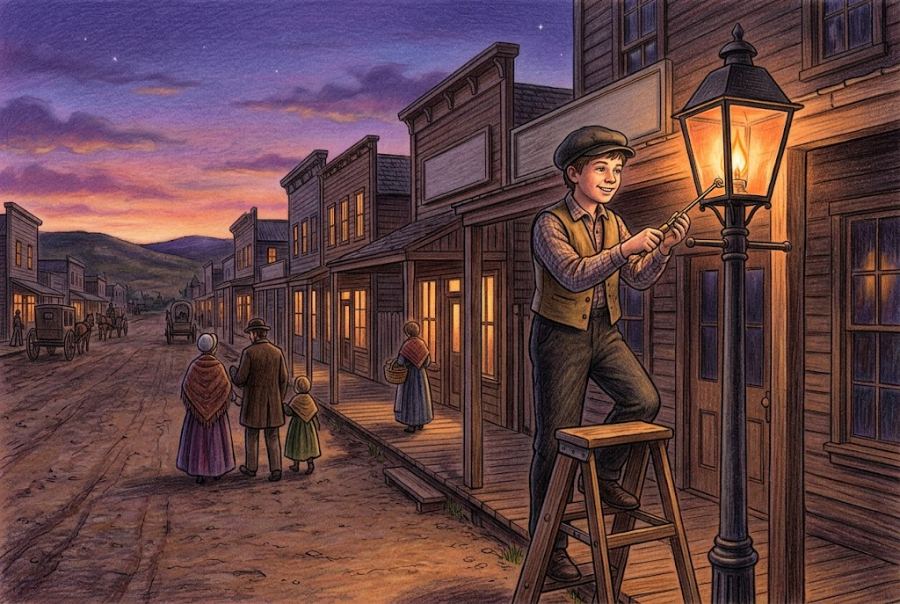
    Streets were lit by gas lamps, and a person had to light each lamp by hand. Elias Ammons, who later became governor, did exactly this job as a boy during his school years. You can read his story in our post about Elias Ammons.

    Gold, but not coins

    Denver sat near the gold fields, and miners brought their gold to town. The U.S. Assay Office opened in 1863 in a two-story brick building built by the bank Clark, Gruber & Co., at what is now the corner of Sixteenth and Market Streets. Its job was to melt and assay gold, which means testing how pure it was. Then the office returned the gold to its owner as a bar stamped with its weight and fineness.

    Many people think a mint makes coins from the beginning. Not this one. The Denver office only melted and tested gold. Coin-making began on February 1, 1906, thirty years after Colorado became a state.

    No sewers yet

    Cities in 1876 did not have the plumbing we expect today. Denver did not start building a sewer system until 1880. Before that, people used privies, which were outhouses behind buildings. The Denver Public Library has a Rocky Mountain News article from February 8, 1874, complaining that since the city was laid out, not a single privy vault had been emptied. Today we think about clean water and sewers without noticing them, but they are among the biggest changes in city life.

    A fancy hotel and fast news

    Denver also had a grand hotel. The Inter-Ocean Hotel, built by Barney Ford at Blake and Sixteenth Streets, opened in 1873 as a four-story building and was called the finest hotel in Denver. You can read more in our post about hotels in 1876.

    News came to Denver by telegraph. The wires had arrived in 1863, and in 1876 the news that Colorado had become a state came that way too. Read about it in How did news travel in 1876?.

    Try this at home

    • Which would you miss most: electric lights, a car, or a flush toilet? Why?
    • A horsecar needed horses. What would a city street sound and smell like with hundreds of horses?
    • Why might a government office melt gold into bars instead of making coins?

    What is real and what is made up

    The facts above are real history. The Wrong Choice is a made-up time-travel story that begins in Morrison in 1876, and the boys in it are not real. Each book in the series ends with a What Was Real? page that sorts the facts from the story.

    This story comes from TRACE in Colorado by T. A. Held, a time-travel series for ages 9 to 12 with a What Was Real? page in every book.

    Read the book: The Wrong Choice (Book 1) · See all the TRACE in Colorado books

    Previous post: Elias Ammons: the Denver boy who lit street lamps and became governor of Colorado

    Next post: How did news travel in 1876? Telegraphs, newspapers and printer’s devils

  • Elias Ammons: the Denver boy who lit street lamps and became governor of Colorado

    Last updated: November 2, 2026.

    Who was Elias Ammons? He was a boy who moved to Denver in 1871, worked in a woolen mill, drove oxen, lit gas street lamps in the evenings, and grew up to be the governor of Colorado. His life is a good window into what a hard-working young person’s world looked like in Denver in the 1870s.

    Colour pencil illustration of a teenage boy on a short ladder lighting a gas street lamp at dusk on a Denver street in the 1870s

    Quick facts

    👶

    Born

    July 28, 1860, in Macon County, North Carolina.

    🚂

    Came to Denver

    with his family, on April 1, 1871.

    🎓

    High school

    he graduated from East Denver High School in 1880.

    🏛️

    Governor

    he was elected on November 5, 1912, took office on January 14, 1913, and served until January 12, 1915.

    💡 Did you know? As a boy, Elias drove oxen that hauled cordwood to limekilns. Cordwood is firewood cut to a standard length, and limekilns are big ovens that burn limestone to make lime.

    Timeline: the life of Elias Ammons

    July 28, 1860

    Elias Milton Ammons is born in Macon County, North Carolina.

    April 1, 1871

    His family arrives in Denver.

    School years

    He works many jobs and lights gas street lamps in the evenings.

    July 28, 1876

    He turns 16, the summer Colorado becomes a state.

    1880

    He graduates from East Denver High School.

    Nov 5, 1912

    He is elected governor of Colorado.

    Jan 14, 1913

    He takes office as governor.

    Jan 12, 1915

    His term as governor ends.

    A boy from North Carolina

    Elias Milton Ammons was born on July 28, 1860, in Macon County, North Carolina. When his family moved to Colorado, he was ten years old. According to a county history published in 1918, they arrived in Denver on April 1, 1871.

    A boy who worked

    Elias did not have a quiet childhood. The sources describe a boy who worked from a young age. He had a job in a woolen mill on West Larimer Street, where wool was turned into cloth. He did ranch work. He worked in lumbering, and he was a teamster in a lumber camp, which means he drove a team of animals pulling loads. The 1918 biography says he drove oxen hauling cordwood to the limekilns.

    Oxen are big, strong, slow animals. On the overland trails, drivers walked beside their teams and guided the animals with their voices and a whip. It was hard work for anybody, and Elias was still a kid.

    The boy who lit the lamps

    Here is the detail that people remember. During his school years, Elias lit the street lamps in the evening. The 1918 biography says he “lighted the street lamps, as was the custom when gas was being used.” Another biography simply calls him a lamplighter.

    There were no electric streetlights then. A gas street lamp had to be lit by hand, one lamp at a time, so somebody had to walk the streets at dusk. Imagine walking through Denver as the sky grew dark and the city slowly lit up behind you. That was part of Elias’s day.

    A note about sources: the lamp-lighting story comes from a biography published in 1918, a few years after his term as governor ended. We use it because it names the job clearly, and a second biography agrees that he was a lamplighter.

    High school and 1876

    Elias graduated from East Denver High School in 1880. So in the summer of 1876, the year Colorado became a state, he was a teenager. He had turned 16 on July 28 of that year. Where he was that summer, and what job he had, is not recorded anywhere we could find. The records we found cover what he did before and after, but that one summer is a gap.

    Governor of Colorado

    Many years later, Elias Ammons was elected governor of Colorado. He won the election on November 5, 1912. He took office on January 14, 1913, and his term ended on January 12, 1915. The boy who lit the lamps had become the state’s leader, in a state that had joined the Union when he was a teenager.

    Think about it

    • Elias worked in a mill, on a ranch and in a lumber camp before he was grown. Which of those jobs would you most like to try for one day?
    • Why might a person who worked hard as a boy want to help build schools and a state when he grows up?
    • Gas lamps had to be lit one by one. What jobs from today might disappear in 100 years?

    What is real and what is made up

    Elias Ammons is a real person, and everything on this page about his life comes from real biographies. The story of The Wrong Choice, a time-travel adventure that begins in Morrison in 1876, is made up. The book’s What Was Real? page explains which parts of its world are history.

    This story comes from TRACE in Colorado by T. A. Held, a time-travel series for ages 9 to 12 with a What Was Real? page in every book.

    Read the book: The Wrong Choice (Book 1) · See all the TRACE in Colorado books

    Previous post: When did Colorado become a state? The quiet day of August 1, 1876

    Next post: What was Denver like for kids in 1876? Horsecars, gas lamps and gold bars

  • When did Colorado become a state? The quiet day of August 1, 1876

    Last updated: November 2, 2026.

    When did Colorado become a state? The answer is August 1, 1876, and the way Denver reacted may surprise you: hardly anyone threw a party. Here is what really happened on the day Colorado joined the United States, why it is called the Centennial State, and why the big celebration had already happened a month earlier.

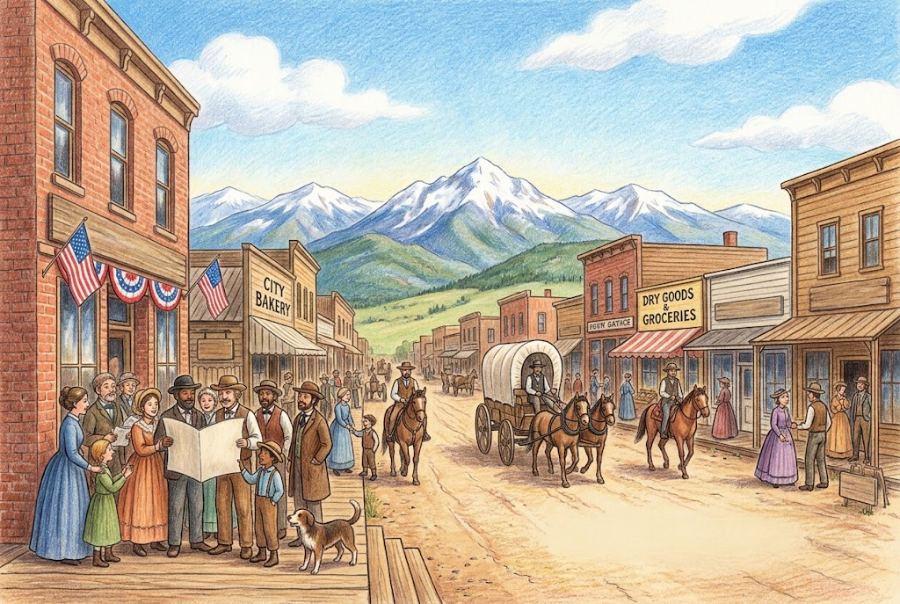
    Colour pencil illustration of a Denver street on August 1, 1876: neighbours gather around a newspaper under small flags, with a covered wagon and the Rocky Mountains behind

    Quick facts

    📅

    Date

    August 1, 1876. President Ulysses S. Grant signed the proclamation that made Colorado a state.

    🔢

    Order

    Colorado was the 38th state to join the United States.

    🏷️

    Nickname

    Colorado is the Centennial State, because it joined in the year the country turned 100.

    🎉

    Holiday

    August 1 is still celebrated in Colorado as Colorado Day.

    💡 Did you know? The name “Centennial State” was already in print in a Denver newspaper, the Denver Times, on February 27, 1875, about a year and a half before Colorado became a state.

    Timeline: from the Declaration to a new state

    July 4, 1776

    The Declaration of Independence is adopted.

    Feb 27, 1875

    The Denver Times prints “Centennial State” for the first time.

    July 4, 1876

    Denver celebrates the nation’s 100th birthday: bells, a sunrise salute, a parade and fireworks.

    Aug 1, 1876

    President Grant signs the proclamation. Colorado is the 38th state.

    Aug 2, 1876

    The statehood telegram is printed in Colorado and national newspapers.

    October 1876

    Elections are set for the first Tuesday in October.

    Why “Centennial”?

    The word centennial means a hundredth anniversary. The United States adopted the Declaration of Independence in 1776, so July 4, 1876 was its 100th birthday. People all over the country marked the date, and a giant world’s fair called the Centennial Exposition ran in Philadelphia from May 10 to November 10, 1876. Colorado joined the Union only four weeks after that birthday.

    The Denver Times saw it coming. Its writers expected Colorado to be admitted at the hundredth anniversary of American independence, and the nickname stuck.

    What the Fourth of July looked like in Denver

    Denver did not hold back on July 4, 1876. According to a history of that day published by Colorado Newsline, bells rang and whistles blew, and a 38-gun salute was fired at sunrise. A parade stepped off just after 10:30 in the morning. It included city officials, police, fire companies, secret societies, social clubs and the Denver Typographical Union, which was the union of the printers. Companies such as Wells, Fargo & Co. and Daniels, Fisher & Co. sent floats, and flags and bunting hung from nearly every building.

    The parade ended at Denver Park, where the territorial governor, John Routt, gave a speech. Fireworks on Capitol Hill closed the day, and the newspaper reported no serious accidents. That was a real celebration. Keep it in mind, because August 1 was very different.

    Then came August 1

    On August 1, the news came by telegram from Washington. Telegraph wires had reached Denver in 1863, so word from the nation’s capital could arrive quickly. The message was dated August 1, and it was printed in Colorado and national newspapers on August 2.

    Denver’s reaction was calm. The Rocky Mountain News said that people were “in the state of Colorado and the state of beatitude,” a playful way of saying they were happy. But there were no big parades and no fireworks like the ones on the Fourth of July.

    Why so quiet? One reason is that the newspapers had plenty of other news. People were still talking about what happened after the Battle of the Little Bighorn, and there was an impeachment case in Washington and a court case known as the Whiskey Ring. Closer to home, farmers were worried about swarms of grasshoppers. The News joked that anyone who hoped statehood would end the grasshopper plague had slipped up. You can read more in our post about the 1876 grasshopper plague.

    What happened next

    Officials turned quickly to the practical work of becoming a state, including setting elections for the first Tuesday in October. Today many Coloradans still mark August 1 as Colorado Day.

    Try this at home

    • Why might the birthday of a state feel quieter than the birthday of a whole country?
    • Which would you remember longer: a parade on the Fourth of July, or a telegram that arrives on an ordinary Tuesday?
    • Look at your own state or country. Do you know the date it joined or began, and how people mark it?

    What is real and what is made up

    In the time-travel adventure The Wrong Choice, two boys from today are swept back to Morrison and Denver in the summer of 1876, just before Colorado becomes a state. The boys and their adventure are made up. The history around them is real, and the book ends with a What Was Real? page that sorts the facts from the story.

    This story comes from TRACE in Colorado by T. A. Held, a time-travel series for ages 9 to 12 with a What Was Real? page in every book.

    Read the book: The Wrong Choice (Book 1) · See all the TRACE in Colorado books

    Previous post: Best adventure and history books for kids set in Colorado and the American West

    Next post: Elias Ammons: the Denver boy who lit street lamps and became governor of Colorado