
Tag: book-8

  • Space race and 1970s books for kids

    Last updated: November 19, 2026.

    Are there good books for kids about the space race and Colorado in the 1970s? Yes, and here are five. Four are well-known books about space or about the late 1970s. The fifth is a time-travel adventure that visits Colorado in 1893 and 1970.

    Each book has a short card, a closer look underneath and a quick chooser at the bottom.

    What these books have in common

    All five are about people at a turning point in history. Some are true stories, some are made up, and one mixes real history with a made-up adventure. If your child likes the Apollo books, try the real history posts on this site about Apollo 13 and the Eisenhower Tunnel, which was being dug in Colorado at the same time.

    How to choose for your child

    Younger children (about 5 to 8) usually enjoy a picture book like Moonshot, where the pictures do half the work. Kids ages 9 to 12 can take on the longer books, which have more names, dates and ideas.

    A good way to read history is to pair a true book with a story. Read Team Moon or Almost Astronauts to learn what really happened, then try a made-up story to see how a writer turns history into an adventure. Ask your child after each book: which parts were real, and which parts were invented?

    If your child gets curious about Colorado, the real-history posts on this site are short and free. Each one ends with a list of sources, so a child can open one and check where a fact came from.

    The books

    1. When You Reach Me

    📖 Mystery · ✍️ Rebecca Stead · Yearling
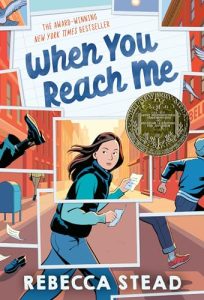
    Cover of When You Reach Me by Rebecca Stead

    A girl in New York in the late 1970s finds mysterious notes that seem to know the future.

    👍 Good for kids who like puzzles and mysteries with a twist.

    More about 1. When You Reach Me

    Rebecca Stead’s mystery is set in New York City in the late 1970s. It follows a girl who starts to find strange notes that seem to know what will happen. It is a good book for readers who like puzzles and a little bit of mystery about time.

    2. Moonshot: The Flight of Apollo 11

    📖 Picture-book history · ✍️ Brian Floca · Atheneum Books for Young Readers

    Cover of Moonshot: The Flight of Apollo 11 by Brian Floca

    A big, detailed picture book about the first trip to land people on the Moon.

    👍 Good for younger readers and anyone who wants to see the flight to the Moon step by step.

    More about 2. Moonshot: The Flight of Apollo 11

    Brian Floca’s Moonshot is a picture book about the flight of Apollo 11, the first time people landed on the Moon. Open Library lists it as a Sibert Award book. Older kids who love space enjoy the detail in the pictures too, and it is a good way to begin reading about Apollo before Apollo 13.

    3. Almost Astronauts

    📖 True story (nonfiction) · ✍️ Tanya Lee Stone · Candlewick Press
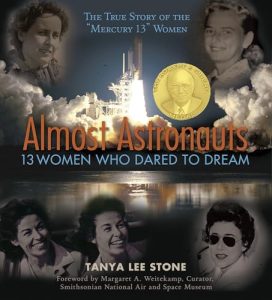
    Cover of Almost Astronauts by Tanya Lee Stone

    The true story of the Mercury 13, women who tested like astronauts at the start of the space age.

    👍 Good for kids who like true stories about people who would not give up.

    More about 3. Almost Astronauts

    Almost Astronauts, by Tanya Lee Stone, is a true story about the women known as the Mercury 13, who trained and tested like astronauts. It is for kids who want to know what the space race looked like for people who were left out.

    4. Team Moon

    📖 True story (nonfiction) · ✍️ Catherine Thimmesh · Houghton Mifflin
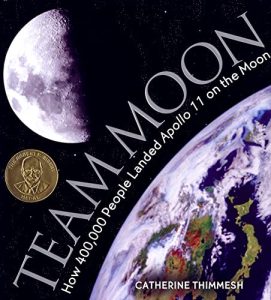
    Cover of Team Moon by Catherine Thimmesh

    The people behind the first Moon landing, from Mission Control to the workers who made the equipment.

    👍 Good for kids who want to know how a whole team made a big space mission work.

    More about 4. Team Moon

    Team Moon, by Catherine Thimmesh, is about the many people on the ground who made the first Moon landing possible. It is a good next book for kids who read about Apollo 13 and want to know what Mission Control did.

    5. TRACE in Colorado, Book 8

    📖 Time-travel adventure · ✍️ T. A. Held · Ages 9 to 14

    A time-travel adventure that visits Colorado in 1893 and in 1970.

    👍 Good for kids who like real history mixed into an exciting story.

    More about 5. TRACE in Colorado, Book 8

    Book 8 is part of The Riddle America Cannot Explain: TRACE in Colorado, a time-travel series for ages 9 to 14. Every book has a What Was Real? page that separates the made-up story from the real history. Book 8 is not out yet. Until then, you can read some of the real history behind it: How was the Eisenhower Tunnel built?, Janet Bonnema, the first woman in the Eisenhower Tunnel and Apollo 13 in April 1970.

    Which one should you pick?

    This story comes from TRACE in Colorado by T. A. Held, a time-travel series for ages 9 to 14 with a What Was Real? page in every book.

    Read the series: Book 8 of TRACE in Colorado · See all the TRACE in Colorado books

    Next post: How was the Eisenhower Tunnel built?

  • For parents and teachers: a discussion guide for Book 8 of TRACE in Colorado

    Last updated: November 19, 2026.

    How can you talk with a 9-to-12-year-old about a tunnel, a moon mission and a bank panic? This guide gives you discussion questions, new words and an easy activity. It uses only real history from the Book 8 pages on this site, so there are no spoilers.

    Quick facts

    💬

    Discussion

    Seven questions for the car, the table or the classroom.

    📚

    New words

    Eight words with child-friendly meanings.

    🗳️

    Activity

    A classroom or family vote, like the one Colorado held in 1972.

    ⬇️

    Downloads

    Bookmarks, puzzles, trivia cards and passport stickers for the series.

    💡 Did you know? Janet Bonnema asked to do the job she was hired to do, and she waited for the law to catch up with her.

    Discussion questions

    • Many people thought a woman in a tunnel brought bad luck. How can you tell the difference between a superstition and a fact?
    • Janet Bonnema was offered a job that was meant for a man. What did she do when she was told she could not do the work? What would you have done?
    • The tunnel was supposed to take three years and took five. Why do big projects so often take longer than planned?
    • Apollo 13 never landed on the Moon, but NASA calls it a successful failure. What do you think that means?
    • The engineers had to fit square filters into round openings. When have you solved a problem with the things you already had?
    • Colorado voters said no to the Olympics after they had been won. Is it ever a good idea to turn down something exciting? What would you want to know before you voted?
    • In 1893 many people lost their savings when banks closed. Why do you think banks today have insurance for people’s deposits?

    New words

    • Tunnel bore: one long tube dug through a mountain. The Eisenhower Tunnel has two.
    • Continental Divide: the line along the tops of the Rocky Mountains. Rain on one side flows toward the Pacific Ocean and on the other toward the Atlantic.
    • Superstition: a belief in luck that is not based on facts.
    • Discrimination: treating someone unfairly because of who they are, not what they can do.
    • Lunar module: the small craft that was built to land astronauts on the Moon.
    • Referendum: a vote by the people on one question.
    • Bank run: many people trying to take their money out of a bank at the same time.
    • Hoax: a trick that makes people believe something that is not true.

    An easy activity: hold a vote

    Tell the group about the 1972 Olympics vote: Denver won the Games, but the voters were asked whether the state should spend money on them. Then hold your own vote about a pretend big project, like a new playground, a new bus line or a family trip.

    First, give each side two minutes to explain why it would cost too much or why it would be worth it. Then let everyone vote by raising a hand. Finally, ask: what did you learn that you did not know before the vote? Did anyone change their mind?

    How to use this guide

    You do not need to have read the book. All the history is real and comes from the sources listed below. Pick one or two questions, read a short post together and let the child lead the conversation. In a classroom, split the questions among small groups and ask each group to find the answer in one of the posts.

    Talk about the sources too. Each post ends with a short list of pages we used. Ask children to open one and find the sentence that supports a fact.

    Printable and fun extras

    The site has downloads for the whole series: Bookmarks, Puzzles, Trivia cards and Passport stickers. Materials for Book 8 are not on the site yet.

    Read together

    Try How was the Eisenhower Tunnel built? and the Eisenhower Tunnel and 1970 quiz as a pair.

    What is real and what is made up

    Everything we say about the tunnel, Janet Bonnema, Apollo 13, the Olympic vote, the Denver Zoo and Denver in 1893 is real history.

    Book 8 of TRACE in Colorado is a made-up time-travel adventure that visits Colorado in 1893 and 1970. Its characters and story are invented.

    This story comes from TRACE in Colorado by T. A. Held, a time-travel series for ages 9 to 14 with a What Was Real? page in every book.

    Read the series: Book 8 of TRACE in Colorado · See all the TRACE in Colorado books

    Previous post: Eisenhower Tunnel and 1970 quiz for kids

  • Eisenhower Tunnel and 1970 quiz for kids

    Last updated: November 19, 2026.

    Can you answer nine questions about Colorado around 1970? Tap each question to open its answer. Every answer comes from the real-history posts on this site, so if you get stuck you can read the post to find out more.

    Quick facts

    ❓

    Questions

    Nine, each with three choices: A, B or C.

    🎓

    Best for

    Kids ages 9 to 14, and the grown-ups who read with them.

    📚

    Topics

    A tunnel, a first woman, a moon mission, an Olympic “no” and a zoo with fake cliffs.

    ⏱️

    Time

    About five minutes.

    💡 Did you know? The Eisenhower Tunnel is the highest point on the whole U.S. Interstate Highway System.

    How to play

    Read the question and choose A, B or C. Then tap the question to see if you were right. If you want to know more, there is a link to the full story after the quiz.

    The quiz

    1. What was the Eisenhower Tunnel called while it was being built? A) the Loveland Tunnel B) the Straight Creek Tunnel C) the Continental Tunnel

    Answer: B. It was named for the valley where the west end is. Read more in How was the Eisenhower Tunnel built?.

    2. On what date did the Eisenhower Tunnel open? A) March 8, 1973 B) July 4, 1976 C) December 21, 1979

    Answer: A. December 21, 1979 is when the second bore opened.

    3. How long was the tunnel planned to take, and how long did it really take? A) planned two years, took three B) planned three years, took five C) planned five years, took ten

    Answer: B. Thin air, snow and fault lines in the rock slowed the crews down.

    4. What did the job letter call Janet Bonnema? A) Dr. Janet Bonnema B) Miss Janet Bonnema C) Mr. Jamet P. Bonnema

    Answer: C. The state thought it was hiring a man. Read more in Janet Bonnema, the first woman in the Eisenhower Tunnel.

    5. What did Janet Bonnema do on a second trip, about a week after her first walk? A) She climbed up to set an instrument at the top B) She gave a speech C) She drove a truck through the tunnel

    Answer: A. She waited four hours in the snow while concrete was poured, then went up to set an instrument. Nobody walked out.

    6. What did the Apollo 13 crew use as a lifeboat after the tank exploded? A) a rescue boat B) the lunar module named Aquarius C) a second rocket

    Answer: B. It had been built for two men on the Moon, and Houston helped three men live in it. Read more in Apollo 13 in April 1970.

    7. What was the shape problem with the air filters on Apollo 13? A) the new ones were square and the openings were round B) they were too big for the door C) they were upside down

    Answer: A. Engineers in Houston found a way to make them fit.

    8. Which city hosted the 1976 Winter Olympics after Denver gave them up? A) Vancouver B) Lake Placid C) Innsbruck

    Answer: C. Innsbruck, Austria, had also hosted in 1964. Read more in Denver and the 1976 Winter Olympics.

    9. The artificial cliffs of Bear Mountain at the Denver Zoo were copied from real rocks near which town? A) Morrison B) Boulder C) Leadville

    Answer: A. They were made using plaster casts. Read more in Bear Mountain at the Denver Zoo.

    How did you do?

    Score 8 or 9 and you are a Colorado history expert. Score 5 to 7 and you have learned a lot. Score 4 or less and you have a good reason to read the posts and try again. You can also quiz a friend or a parent.

    What is real and what is made up

    Everything in this quiz is real history from the sources below.

    Book 8 of TRACE in Colorado is a made-up time-travel adventure that visits Colorado in 1893 and 1970. Its characters and story are invented. The history is real.

    This story comes from TRACE in Colorado by T. A. Held, a time-travel series for ages 9 to 14 with a What Was Real? page in every book.

    Read the series: Book 8 of TRACE in Colorado · See all the TRACE in Colorado books

    Previous post: Denver in 1893: the year the silver price crashed

    Next post: For parents and teachers: a discussion guide for Book 8 of TRACE in Colorado

  • How was the Eisenhower Tunnel built?

    Last updated: November 19, 2026.

    How do you dig a road through the top of the Rocky Mountains? Colorado engineers had to find out the hard way. The Eisenhower Tunnel carries Interstate 70 under the Continental Divide, about 60 miles west of Denver. People thought it would take three years to build. It took five.

    While it was being dug, the tunnel had a different name: the Straight Creek Tunnel, after the valley where its west end is found. Today it is the highest vehicle tunnel in the United States.

    Quick facts

    📍

    Where

    About 60 miles west of Denver, under the Continental Divide on Interstate 70.

    📏

    How long

    The first bore, the Eisenhower bore, is 1.693 miles long.

    ⛰️

    How high

    The west end sits at 11,158 feet above sea level.

    ⏱️

    How long it took

    Planned for three years. Built in five, starting March 15, 1968.

    💡 Did you know? Before the tunnel opened, a driver slipped past the “no traffic” signs and drove through the mud inside it. He got a ticket for trespassing, but the judge threw the charge out because the signs had not been clear enough.

    Timeline of the tunnel

    1963–1965

    A small pilot tunnel is dug first, through the same mountain.

    March 15, 1968

    Work begins on the first big bore.

    September 1969

    Governor John Love suggests naming the tunnel for President Eisenhower, who had died that April.

    1972

    The Colorado legislature officially chooses the Eisenhower name.

    March 8, 1973

    The tunnel is dedicated and opens to traffic.

    August 1975

    Work starts on the second bore.

    December 21, 1979

    The second bore, named for Governor Edwin C. Johnson, opens.

    Why did the engineers want a tunnel?

    Before the tunnel, cars and trucks had to climb over Loveland Pass on U.S. Highway 6. The road is steep, twisty and often closed by snow. When Colorado and the federal government planned Interstate 70 across the state, engineers decided that tunneling under the pass would work better than trying to build a modern highway over it.

    Four things that made it hard

    The state highway department said it plainly: the crews were fighting the mountain, the weather and the height.

    • The air. Men and machines worked less well at about eleven thousand feet.
    • The winter. Snow kept the outdoor working season painfully short.
    • The rock. Fault lines in the mountain had not shown up in the small pilot tunnel. Parts of the rock slipped while the crews dug, so engineers had to rush in extra supports to protect the workers.
    • The size. The tunnel is about fifty feet high and forty-five feet wide, so new ways of digging and holding up the roof had to be invented.

    One veteran highway engineer put it like this: they had gone by the book, but the mountain could not read.

    The people and the numbers

    According to the Federal Highway Administration, nearly 6,000 people worked on the project at various times over five years. Together they put in about 4.9 million hours of work and cut through 7,789 feet of rock and earth under the Continental Divide. The job was run by a team of four construction companies called Straight Creek Constructors.

    It was also a very costly job. The first estimate for the Eisenhower bore was $42 million, but it ended up costing $108 million. Most of the money came from the federal government. Three men lost their lives working on the first bore, which is a reminder that tunnel work was dangerous.

    Quick questions

    Was the tunnel always called the Eisenhower Tunnel?

    No. During construction it was the Straight Creek Tunnel. President Dwight D. Eisenhower died on April 4, 1969, and Governor John Love soon proposed the new name. The state legislature made it official in 1972.

    How cold was it at the opening?

    About 34 degrees Fahrenheit, with some snow flurries. The ceremony on March 8, 1973 was held inside the tunnel, at the east end, because of the weather.

    Is the old road over the pass still used?

    Yes. Trucks carrying dangerous materials and some tall trucks are not allowed in the tunnel, so they still take Loveland Pass. Bicycles and walkers must use the pass too.

    After the opening

    Traffic was heavier than planners had expected. The first bore carried cars in both directions, one lane each way, so work soon began on a second bore for eastbound traffic. When it opened in 1979, the tunnel finally had two lanes in each direction. When the Eisenhower bore opened, it became the highest vehicle tunnel in the world. Today it is the longest mountain tunnel and the highest point on the U.S. Interstate Highway System.

    What is real and what is made up

    Every date and number on this page is real history from the sources below.

    Book 8 of TRACE in Colorado is a made-up time-travel adventure that visits Colorado in 1893 and 1970. Its characters and story are invented. The history of the tunnel is real.

    This story comes from TRACE in Colorado by T. A. Held, a time-travel series for ages 9 to 14 with a What Was Real? page in every book.

    Read the series: Book 8 of TRACE in Colorado · See all the TRACE in Colorado books

    Previous post: Space race and 1970s books for kids

    Next post: Janet Bonnema, the first woman in the Eisenhower Tunnel

  • Janet Bonnema, the first woman in the Eisenhower Tunnel

    Last updated: November 19, 2026.

    Who was the first woman to walk into the Eisenhower Tunnel? Her name was Janet Bonnema, and she had to fight for the right to do her own job.

    In 1970 she was hired to work on the tunnel that was being dug under the Continental Divide in Colorado. But for the next two years she was not allowed to go inside it. Why? Because she was a woman. This is the true story of how that changed.

    Quick facts

    📅

    Her first walk

    Thursday, November 9, 1972, in coveralls and a hard hat.

    🎓

    Her training

    A history degree from the University of Colorado Boulder in 1960. She captained the university ski team.

    🏍️

    How she got to work

    She rode a Honda CL-350 motorcycle.

    ⚖️

    The ruling

    In July 1972 the U.S. Department of Transportation decided that keeping her out was unfair treatment because she was a woman.

    💡 Did you know? Her job letter was sent to “Mr. Jamet P. Bonnema.” Her first name had been misspelled, and the state thought it was hiring a man.

    Janet’s story in order

    November 1970

    Janet applies for a job with the Colorado Highway Department and passes the tests.

    July 1972

    After a year-long investigation, the U.S. Department of Transportation says that barring her was unfair.

    November 9, 1972

    Janet walks into the tunnel for the first time, with reporters.

    About a week later

    She goes up to the top of the tunnel to set an instrument. Nobody walks out.

    December 8, 1972

    Life magazine prints a three-page story about her.

    2012

    She is added to the Colorado Women’s Hall of Fame.

    A job letter for “Mr.”

    Janet Bonnema was born in Denver. She loved the outdoors: she climbed mountains, jumped out of airplanes with a parachute and flew as a pilot. In November 1970 she asked the Colorado Highway Department about jobs on the Straight Creek Tunnel, the old name for the Eisenhower Tunnel. She met the requirements and passed the test.

    Then the letter came, offering a job to “Mr. Jamet P. Bonnema” if “he” wanted it. When it turned out that “he” was a woman, a state worker warned her not to take the job. He said that the workers would walk out of the tunnel and never come back.

    Why were women kept out?

    In those days many people who worked underground believed that a woman in a mine or a tunnel brought bad luck. Wikipedia says the superstition came from Welsh miners who worked in Colorado in the 1800s. One miner told reporters, “It’s a jinx.” The company running the tunnel would not let any woman in, not even a woman reporter.

    Janet took the job anyway. The highway department made up a special technician position for her, working in an office. But after about eighteen months she had still never been inside the tunnel. She told a reporter that she was not allowed to do the same work as the men, even though she was strong and fit enough.

    Janet speaks up

    Janet did not give up. The U.S. Department of Transportation looked into her case for a year. In July 1972 it decided that keeping a woman out of the tunnel was unfair treatment. When the state still refused, Janet went to court. The state finally settled the case and agreed to pay her $6,750, according to the Federal Highway Administration.

    The walk

    On Thursday, November 9, 1972, Janet put on coveralls and a hard hat and walked into the tunnel with reporters, including a woman from the Denver Post. A worker shouted for the women to get out. Dozens of men walked off the job. Reports give different numbers: some say more than 60, and one says 70 out of 100. One man quit for good.

    Janet did not seem to mind. She said the men were making eight to ten dollars an hour and asked what was the matter with them. The tunnel did not cave in. Almost everyone was back at work the next day.

    A week later she went again. This time she waited four hours in the snow while concrete was being poured, then went up to the top to set an instrument. This time, she said, nobody walked out. “I had a good disguise,” she joked, because she was wearing her hard hat and coveralls like everyone else.

    Quick questions

    What did the instrument do?

    The Federal Highway Administration says it was an inclinometer, an instrument to measure layers of earth.

    What happened to Janet later?

    She worked on engineering projects for many years. She died on May 9, 2008. In 2012 she was inducted into the Colorado Women’s Hall of Fame.

    What is real and what is made up

    Everything about Janet Bonnema on this page is real history from the sources below.

    Book 8 of TRACE in Colorado is a made-up time-travel adventure that visits Colorado in 1893 and 1970. Its characters and story are invented. The history is real.

    This story comes from TRACE in Colorado by T. A. Held, a time-travel series for ages 9 to 14 with a What Was Real? page in every book.

    Read the series: Book 8 of TRACE in Colorado · See all the TRACE in Colorado books

    Previous post: How was the Eisenhower Tunnel built?

    Next post: Apollo 13 in April 1970: the moon trip that came home

  • Apollo 13 in April 1970: the moon trip that came home

    Last updated: November 19, 2026.

    What really happened on Apollo 13? In April 1970 three astronauts were on their way to the Moon when something went badly wrong two days into the trip. They never landed, but they did get home safely, and people around the world held their breath until they did.

    NASA calls it “the successful failure.” Here is the story, and how it looked from Colorado.

    Quick facts

    🚀

    Launch

    April 11, 1970, from Kennedy Space Center in Florida.

    👨‍🚀

    Crew

    Jim Lovell, Jack Swigert and Fred Haise.

    🚶

    The plan

    It was meant to be the third time people landed on the Moon.

    🌊

    Splashdown

    April 17, 1970, in the South Pacific Ocean, after almost six days.

    💡 Did you know? Jack Swigert was a late replacement. Another astronaut, Ken Mattingly, was grounded just before launch after being exposed to an illness.

    The mission day by day

    July 1969

    Apollo 11 lands on the Moon. Landings begin to feel almost routine.

    April 11, 1970

    Apollo 13 launches. One of the rocket’s engines shuts down early, but the rocket reaches the right orbit anyway.

    April 13, 1970

    An oxygen tank explodes about two days into the trip. The Moon landing is cancelled.

    April 15, 1970

    The spacecraft swings around the Moon and heads for home.

    April 17, 1970

    Splashdown. The crew is picked up by the ship USS Iwo Jima.

    From routine to emergency

    After Apollo 11 in July 1969, many people thought trips to the Moon had become routine. Television networks and the public paid less attention, and Congress kept cutting NASA’s money. The Apollo missions planned for the end of the program were cancelled.

    Then, on the way to the Moon, an oxygen tank in the service module exploded. The spacecraft lost oxygen and electric power, and the Moon landing was cancelled. Now the only goal was to bring the crew home alive.

    The lifeboat

    The crew moved into the lunar module, the small landing craft named Aquarius, which became their lifeboat. It had been built to keep two men alive for about two days on the Moon. Mission Control in Houston found ways to keep three men alive in it for about four days.

    Life in the lifeboat was hard. The crew had little power, so the cabin was cold and damp, and they had very little drinking water.

    The square peg in the round hole

    Another problem was the air itself. Breathing makes carbon dioxide, and the spacecraft had canisters to remove it. But the spare canisters from the main spacecraft were square, and the lunar module’s openings were round. Engineers in Houston worked out a way to make them fit and talked the astronauts through it. NASA calls it fitting a “square peg in a round hole.”

    Coming home

    The spacecraft looped around the Moon and used its pull to swing back toward Earth. One last job remained: turning the main spacecraft back on after days of being shut down. Writing new instructions like that normally takes about three months. Houston had three days.

    The crew splashed down on April 17. Tens of millions of people watched the splashdown on television. That was about eleven in the morning in Colorado, which was still on standard time.

    Quick questions

    What went wrong?

    An oxygen tank in the service module exploded. According to Wikipedia, a routine stir of the tank set damaged wire insulation on fire inside it.

    Did anyone change the next mission because of it?

    Yes. An investigation found problems with how the tank had been tested and built. The recommended changes were made before Apollo 14.

    Is there a movie about it?

    Yes, a 1995 film called Apollo 13, based on a book co-written by Jim Lovell.

    What is real and what is made up

    Everything about Apollo 13 on this page is real history from the sources below.

    Book 8 of TRACE in Colorado is a made-up time-travel adventure that visits Colorado in 1893 and 1970. Its characters and story are invented. The history is real.

    This story comes from TRACE in Colorado by T. A. Held, a time-travel series for ages 9 to 14 with a What Was Real? page in every book.

    Read the series: Book 8 of TRACE in Colorado · See all the TRACE in Colorado books

    Previous post: Janet Bonnema, the first woman in the Eisenhower Tunnel

    Next post: Denver and the 1976 Winter Olympics: the city that said no

  • Denver and the 1976 Winter Olympics: the city that said no

    Last updated: November 19, 2026.

    Did Denver ever host the Olympics? No, and the reason is surprising. In 1970 Denver was chosen to host the 1976 Winter Olympics. Two years later the people of Colorado voted against paying for them. It is the only time a city has won the Olympics and then given them up.

    This is the story of how a big win turned into a big “no.”

    Quick facts

    🏆

    The win

    Denver was chosen in May 1970 at an IOC meeting in Amsterdam.

    🗳️

    The vote

    On November 7, 1972, Colorado voters said no to using state money for the Games.

    📊

    The result

    514,228 votes yes, 350,964 votes no, about 59 percent in favor of the ban.

    ⛷️

    Who got them

    The 1976 Winter Olympics were held in Innsbruck, Austria.

    💡 Did you know? Colorado has still never hosted an Olympic Games.

    How it happened

    May 1970

    The International Olympic Committee picks Denver over Sion in Switzerland, Tampere in Finland and Vancouver in Canada.

    November 7, 1972

    Voters pass Amendment 8, which stops the state from spending money on the Games.

    November 15, 1972

    Denver officially withdraws.

    February 5, 1973

    The Olympic Committee picks Innsbruck, Austria.

    February 4, 1976

    The Games open in Innsbruck.

    A big plan

    In the 1960s, business and city leaders in Denver wanted the Winter Olympics. A group called the Denver Olympic Organizing Committee came up with a $14 million plan. After Denver won in 1970, many people in Colorado were proud and excited.

    Then the problems began

    Denver is a mile high, but it is not in the mountains. According to a magazine story published by NBC News, the plan to put the events close to the city ran into trouble. Some of the places chosen did not have reliable snow. Neighbors in the town of Evergreen learned that the cross-country skiing events would run through their backyards, and they formed a group to protest. The downhill and other alpine skiing events were then moved west to Vail, and the cross-country events to Steamboat Springs. Those towns are far from Denver, so the “less than an hour from Denver” idea fell apart.

    The cost also kept growing. The $14 million budget more than doubled to about $35 million, even after the bobsled events were dropped to save money. Colorado taxpayers were going to be asked to pay a share of about $5 million.

    A state legislator asks questions

    A young state legislator from Denver named Richard Lamm sat on a committee that checked the state’s money. He noticed that no city had ever made money on the Olympics, and many had been left with debts. He started a group called Citizens for Colorado’s Future, and its members collected signatures to put an amendment on the ballot. The amendment said Colorado could not spend state money on the 1976 Winter Games.

    On November 7, 1972, about 59 percent of the voters said yes to the amendment. Without state money, there could be no Games in Denver. Lamm later served three terms as governor of Colorado.

    Who took over?

    Denver officially gave up the Games on November 15. The second-place city, Sion, declined to take over, and so did Whistler in Canada. Salt Lake City offered and then pulled out. In February 1973 the Olympic Committee chose Innsbruck, Austria, which had hosted the Winter Olympics nine years earlier in 1964.

    Quick questions

    Did Colorado ever try again?

    Not for these Games. Colorado has never hosted an Olympics. Other states have: Lake Placid in New York hosted the Winter Games in 1980, and Salt Lake City, Utah, hosted them in 2002.

    Was the vote close?

    No. It was 514,228 yes votes to 350,964 no votes on the ballot question.

    Why does this matter for history?

    It shows that people can say no to a big, exciting plan when they think it costs too much or will change their home too much.

    What is real and what is made up

    Everything about the Olympics on this page is real history from the sources below.

    Book 8 of TRACE in Colorado is a made-up time-travel adventure that visits Colorado in 1893 and 1970. Its characters and story are invented. The history is real.

    This story comes from TRACE in Colorado by T. A. Held, a time-travel series for ages 9 to 14 with a What Was Real? page in every book.

    Read the series: Book 8 of TRACE in Colorado · See all the TRACE in Colorado books

    Previous post: Apollo 13 in April 1970: the moon trip that came home

    Next post: Loveland Pass before the Eisenhower Tunnel

  • Loveland Pass before the Eisenhower Tunnel

    Last updated: November 19, 2026.

    How did people cross the Rocky Mountains by car before the Eisenhower Tunnel? They drove over Loveland Pass. The road climbs to 11,990 feet on the Continental Divide, with a steady, steep slope and many hairpin turns.

    For almost a hundred years, Loveland Pass was the shortcut over the mountains. It is still open today, but most drivers now go under it.

    Quick facts

    ⛰️

    How high

    11,990 feet above sea level, on the Continental Divide.

    🛣️

    Which road

    U.S. Highway 6, between Clear Creek and Summit counties.

    🧢

    The steepness

    A steady 6.7 percent slope with many hairpin turns.

    ❄️

    In winter

    It is the highest pass in Colorado that regularly stays open in snowy weather.

    💡 Did you know? In 1867 William A. H. Loveland thought about a tunnel under the Divide. Instead he got a wagon road built, and the pass was named for him more than a century before the Eisenhower Tunnel was dug.

    Loveland Pass through the years

    1879

    The first usable trail over the pass is finished.

    Late 1929

    A modern dirt road is nearly finished. It is good enough for trucks and cars by 1930.

    1932

    A grand opening is held for the dirt road.

    1941–1943

    A small pioneer tunnel is dug under the pass.

    1949–1950

    The road is paved.

    March 1973

    The Eisenhower Tunnel opens, and most drivers stop crossing the pass.

    Who was Loveland?

    The pass is named for William A. H. Loveland, the president of the Colorado Central Railroad, who lived in Golden. He helped raise the money to build the first trail, which opened in 1879. Several companies did the work, and a surveyor named E. L. Berthoud mapped the route. You can read about that 1879 rush in The race to Leadville in 1879 and the road over Loveland Pass.

    From a trail to a highway

    By the early 1900s the old road was in bad shape, but it was never completely abandoned. In the late 1920s the state worked on a modern dirt road. The road, part of U.S. Highway 6, was paved in 1949 and 1950, which made winter travel easier.

    Winter was still the problem. The twists and the steep slope made the road hard to plow. When a blizzard hit, the pass could be closed, and when a lesser storm came, drivers had to put chains on their tires.

    Why build a tunnel?

    By the 1950s Colorado wanted an interstate highway, Interstate 70, to cross the state. Engineers decided it was better to tunnel under the pass than to try to build a modern highway over it. The first small tunnel, called a pioneer tunnel, was dug under the pass in 1941 to 1943. The first plan to build a full tunnel for cars drew only one bid, in 1947, and the price was far more than the engineers had expected, so nothing happened for years.

    When the Eisenhower Tunnel opened in March 1973, it let drivers on I-70 skip the pass altogether. The tunnel is about 800 feet lower than the road over the top.

    Quick questions

    Can you still drive over Loveland Pass?

    Yes. Trucks carrying dangerous materials and trucks that are too tall for the tunnel must use it. Bicycles, walkers and anyone who wants to stop and enjoy the view can use it too.

    What if the pass is closed by a storm?

    Then all traffic uses the tunnel, even trucks carrying dangerous materials. The tunnel is closed to other traffic once an hour while these trucks go through together.

    What is near the pass?

    Loveland Ski Area is to the north and west. Arapahoe Basin is on the south and east side. Hikers also use the parking lot to start walks to the top of Mount Sniktau.

    What is real and what is made up

    Everything about Loveland Pass on this page is real history from the sources below.

    Book 8 of TRACE in Colorado is a made-up time-travel adventure that visits Colorado in 1893 and 1970. Its characters and story are invented. The history is real.

    This story comes from TRACE in Colorado by T. A. Held, a time-travel series for ages 9 to 14 with a What Was Real? page in every book.

    Read the series: Book 8 of TRACE in Colorado · See all the TRACE in Colorado books

    Previous post: Denver and the 1976 Winter Olympics: the city that said no

    Next post: Bear Mountain at the Denver Zoo: cliffs copied from Morrison

  • Bear Mountain at the Denver Zoo: cliffs copied from Morrison

    Last updated: November 19, 2026.

    Why does the Denver Zoo have a mountain made of fake rock? Because in 1918 the zoo wanted visitors to see bears the way they live in the wild, in rocky country, without bars in between. So the builders copied real cliffs from near Morrison, Colorado.

    That exhibit is called Bear Mountain. It is more than a hundred years old and it is still there.

    Quick facts

    🐻

    The first animal

    An orphaned black bear cub named Billy Bryan, given to the mayor of Denver in 1896.

    🪨

    Bear Mountain

    Opened in 1918, with rock formations made from plaster casts of real cliffs near Morrison.

    🏛️

    Today

    It is listed on the National Register of Historic Places.

    📍

    Where

    In City Park, Denver.

    💡 Did you know? Billy Bryan was named after the politician William Jennings Bryan. The mayor found the cub hard to manage, so he passed it to the keeper of City Park.

    The Denver Zoo’s early years

    1896

    The zoo begins with the gift of a bear cub named Billy Bryan.

    1918

    Bear Mountain opens.

    1936

    Monkey Island is built with help from federal money.

    1950

    Denver citizens help bring the zoo’s first elephant, Cookie.

    1964

    The Feline House opens, the biggest new exhibit since Bear Mountain.

    The zoo with one bear

    The Denver Zoo began with a gift. In 1896 a baby black bear whose mother was gone was given to Mayor Thomas McMurray. The cub grew hard to handle, so the mayor passed it to Alexander Graham, the keeper of City Park. Graham looked after the bear, and that was the start of the zoo. Other early animals included waterfowl on Duck Lake, prairie dogs and pronghorn antelope. Elk and bison were big favorites.

    A zoo without cages

    In those days most zoos kept animals in rows of cages with bars. A zoo pioneer named Carl Hagenbeck had a different idea. He thought that visitors should see animals at eye level in places that looked like their homes, without bars or fences in front of them.

    When Bear Mountain opened in 1918, the Denver Zoo became the first American zoo to follow Hagenbeck’s idea. Wikipedia says it was the first zoo in the United States to use natural-looking enclosures instead of cages with bars.

    Rocks copied from Morrison

    The builders did not want plain concrete walls. According to the Denver Zoo, the artificial rock formations were made using plaster casts taken from natural cliffs near Morrison, Colorado. That is the same area of red rocks where you can visit Red Rocks Amphitheatre and Dinosaur Ridge. The zoo’s mountain looks like Colorado because it was copied from Colorado.

    The zoo grows

    The zoo kept growing. Monkey Island was built in 1936 with federal money. In 1950, Denver citizens gave money to bring the zoo its first elephant, Cookie, who lived for nearly ten years in the City Park Pump House until a new Pachyderm Building opened in 1959. The Feline House opened in 1964. The zoo says it was the most dramatic new exhibit since Bear Mountain.

    Some of the zoo’s best-known exhibits did not exist yet in 1970. Bird World opened in 1975, Northern Shores in 1987 and Tropical Discovery in 1993.

    Quick questions

    What is a plaster cast?

    It is a copy made by pressing wet plaster against an object. When the plaster dries, it holds the shape, so builders can copy the bumps and cracks of a real rock.

    Is Bear Mountain still in use?

    Yes. The zoo lists Bear Mountain as one of its major exhibits, and it is on the National Register of Historic Places.

    What is the Denver Zoo called today?

    Its full name is the Denver Zoo Conservation Alliance. It is a nonprofit organization in City Park.

    What is real and what is made up

    Everything about the Denver Zoo on this page is real history from the sources below.

    Book 8 of TRACE in Colorado is a made-up time-travel adventure that visits Colorado in 1893 and 1970. Its characters and story are invented. The history is real.

    This story comes from TRACE in Colorado by T. A. Held, a time-travel series for ages 9 to 14 with a What Was Real? page in every book.

    Read the series: Book 8 of TRACE in Colorado · See all the TRACE in Colorado books

    Previous post: Loveland Pass before the Eisenhower Tunnel

    Next post: Denver in 1893: the year the silver price crashed

  • Denver in 1893: the year the silver price crashed

    Last updated: November 19, 2026.

    What happened in Denver in 1893? Almost overnight, the silver that had made Colorado rich stopped being worth enough. Banks closed, mines shut down, and thousands of people lost their work and their savings.

    Historians call it the Silver Panic of 1893. Here is the story in plain words.

    Quick facts

    📅

    When

    1893, and the hard years that followed.

    🪙

    The price drop

    Silver fell from about 83 cents to about 62 cents an ounce.

    🏦

    The banks

    With no federal deposit insurance, people who lost their bank accounts lost their savings.

    👥

    The people

    By September, 45,000 people in Colorado were out of work.

    💡 Did you know? Denver’s population dropped from 106,000 people in 1890 to 90,000 in 1895, because so many people left to find work.

    How it unfolded

    July 14, 1890

    Congress passes the Sherman Silver Purchase Act. The government must buy millions of ounces of silver each month.

    July 12, 1893

    Politicians who support silver meet in Denver to fight against ending that law. It does not work.

    1893

    Congress repeals the act. The price of silver keeps falling.

    September 1893

    Colorado counts 377 failed businesses, 435 closed mines and 45,000 people out of work.

    1895

    Denver begins an annual Festival of Mountain and Plain to lift people’s spirits.

    Why was Denver tied to silver?

    Denver grew very fast in the late 1800s. Silver mines in the mountains, and then bigger silver strikes, made the city a boomtown. Under laws passed in 1878 and 1890, the U.S. government had to buy a lot of silver every month, which kept the price up. As one historian put it, almost everyone in Colorado had a stake in mining.

    What went wrong?

    In 1893 the law was repealed. Silver mines in Colorado kept producing, and new silver strikes added even more. With so much silver and no government buyer, the price fell. When the price dropped, mines closed and miners lost work. People rushed to take their money out of the banks, and many banks failed. Back then, there was no insurance from the government to pay people back.

    Life in the hard times

    As the mines closed, unemployed miners from the mountains poured into Denver looking for jobs and found none. Churches and missions gave out food and shelter, but they could not keep up. By fall, a tent city had grown beside the South Platte River. Some train companies cut fares or let people ride free so that out-of-work people could leave. Real estate prices fell, smelters stopped working, and the streetcars had trouble finding riders.

    The building of the Colorado State Capitol was the one big project that kept going. It gave work to builders and to miners who dug the marble.

    A nationwide panic

    Denver was not alone. The Panic of 1893 hit the whole country. Wikipedia says it led to more than 15,000 business failures and more than 500 bank collapses, and that it was the worst depression in American history until the 1930s.

    Quick questions

    What is a bank run?

    It is when many people try to take their money out at the same time. A bank only keeps part of its money in the building, so it can run out and close.

    Why did people lose their savings?

    There was no federal deposit insurance. If a bank failed, the money could be gone.

    Did Denver recover?

    Yes, but slowly. In 1895 the Chamber of Commerce started the Festival of Mountain and Plain to cheer people up, with marches and a giant silver serpent.

    What is real and what is made up

    The events and numbers on this page are real history from the sources below. This page is about Colorado’s silver crash in general. It does not describe any single bank.

    Book 8 of TRACE in Colorado is a made-up time-travel adventure that visits Colorado in 1893 and 1970. Its characters and story are invented. The history is real.

    This story comes from TRACE in Colorado by T. A. Held, a time-travel series for ages 9 to 14 with a What Was Real? page in every book.

    Read the series: Book 8 of TRACE in Colorado · See all the TRACE in Colorado books

    Previous post: Bear Mountain at the Denver Zoo: cliffs copied from Morrison

    Next post: Eisenhower Tunnel and 1970 quiz for kids