
Tag: book-3

  • Books for Kids Set in the 1980s and 1990s: When Their Parents Were Kids

    Last updated: November 15, 2026.

    Looking for books for kids set in the 1980s and 1990s, the years when their parents were kids? Here are six chapter books, novels and one graphic memoir about life before smartphones: a space shuttle countdown, a time machine in a bathtub, a family motel in California, a big earthquake, and a new airport in Denver that just would not open. Each one has a short card, a closer look underneath, and a quick chooser at the bottom.

    One starts just before the 1980s, in 1979, because it fits too well to leave out. Two are time-travel stories, and one is a true story told in comics.

    From 1979 to 1995 in six books: a quick timeline

    • 1978 to 1979: New York City. When You Reach Me
    • 1984: northeast England, by time machine. Time Traveling with a Hamster
    • January 1986: the countdown to the space shuttle Challenger launch. Planet Earth Is Blue
    • Late 1980s: San Francisco, and the 1989 earthquake. Smile
    • 1993: a motel in California. Front Desk
    • 1993 to 1995: Colorado, and Denver’s new airport. Opening Soon

    The books

    1. When You Reach Me

    📖 Mystery with a time-travel twist · ✍️ Rebecca Stead · Wendy Lamb Books, 2009 · Newbery Medal · ages 8 to 12
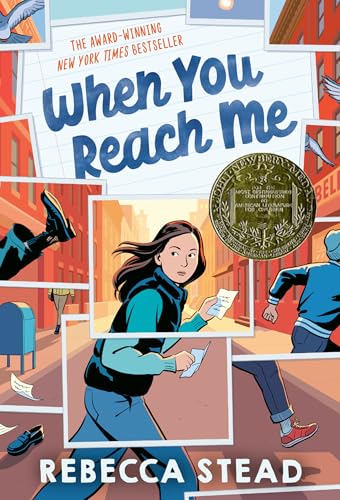
    Cover of When You Reach Me by Rebecca Stead

    New York City, 1979. Sixth grader Miranda starts finding secret notes, and whoever writes them seems to know things before they happen.

    👍 Good for kids who love puzzles, a twist they will want to talk about, and a story that feels real.

    More about When You Reach Me

    Miranda lives on the Upper West Side of Manhattan. After a fight with her best friend, she finds a strange note in her library book, unsigned and addressed only to “M.” The notes tell her she must write a letter, a true story, and that she can’t tell anyone. Her favorite book is A Wrinkle in Time, and that turns out to matter. It won the Newbery Medal in 2010. Brightly (Penguin Random House) lists it for ages 8 to 12.

    If your reader likes messages that seem to come from the future, the chalk notes signed D.W. in Opening Soon (number 6 below) are for them.

    2. Time Traveling with a Hamster

    📖 Time-travel novel · ✍️ Ross Welford · Schwartz & Wade, 2016 · 448 pages (paperback) · ages 8 to 12
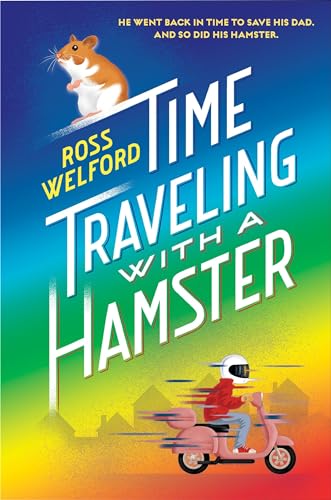
    Cover of Time Traveling with a Hamster by Ross Welford

    On his 12th birthday, Al gets a pet hamster and a letter from his dad, who died four years ago. The letter tells him where to find a time machine.

    👍 Good for kids who like funny narrators, homemade gadgets and a race against time.

    More about Time Traveling with a Hamster

    Al Chaudhury lives in the northeast of England, and his best friend is his grandfather. His father built a time machine out of an old laptop, a box of electronics and a zinc tub, and hid it in a fallout shelter. Al has to travel back to 1984, to his father’s own childhood, to stop an accident. Every try goes a little wrong. Brightly lists the paperback for ages 8 to 12, and Kirkus Reviews says 10 to 14.

    3. Planet Earth Is Blue

    📖 Historical novel · ✍️ Nicole Panteleakos · Wendy Lamb Books, 2019 · 240 pages · ages 8 to 12

    Cover of Planet Earth Is Blue by Nicole Panteleakos

    January 1986. Twelve-year-old Nova counts down the days to the space shuttle Challenger launch, and to her big sister coming back for her.

    👍 Good for kids who love space and astronauts, and a story that will stay with them.

    More about Planet Earth Is Blue

    Nova is autistic and does not speak, and she loves astronomy. She has moved through many foster homes, and at every new school people underestimate her. Kirkus Reviews called it “Stellar” and lists it for ages 8 to 12. A note for parents: the real Challenger launch on January 28, 1986 ended in tragedy, so this book can bring big feelings. It is a good one to read together.

    4. Smile

    📖 Graphic memoir (a true story in comics) · ✍️ Raina Telgemeier · Scholastic/Graphix, 2010 · 224 pages, full color · ages 8 to 12
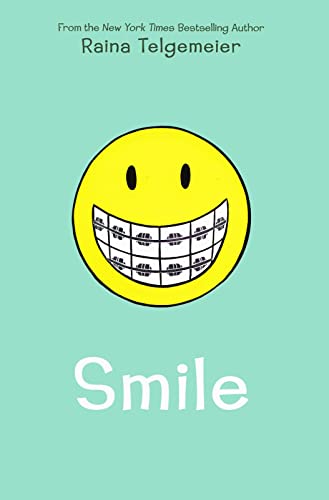
    Cover of Smile by Raina Telgemeier

    Sixth grader Raina trips and falls one night after Girl Scouts and hurts her two front teeth. Then come years of braces, headgear and dental drama.

    👍 Good for kids who love graphic novels and true stories about middle school.

    More about Smile

    This is Raina Telgemeier’s own story, drawn by her. Along with the teeth, there are crushes, friends who turn out to be not so friendly, and a big earthquake: her family’s experience of the San Francisco earthquake of 1989. It won the Eisner Award for Best Publication for a Teen Audience in 2011. The author’s site lists it for ages 8 to 12, and Publishers Weekly says 9 to 13.

    5. Front Desk

    📖 Novel · ✍️ Kelly Yang · Scholastic, 2018 · ages 8 to 12

    Cover of Front Desk by Kelly Yang

    1993. Ten-year-old Mia Tang’s parents become managers of a California motel with a pool, and Disneyland just down the road. Then the owner bans her from the pool.

    👍 Good for kids who cheer for underdogs and for kids who stand up for what’s fair.

    More about Front Desk

    Mia’s family came from China, and the motel owner treats them badly and cheats her parents out of money they earned. Mia is brave, kind and full of ideas, and she does not give up. Kelly Yang based the story on her own childhood. Publishers Weekly lists it for ages 8 to 12. If your reader loves it, there are more Front Desk books, starting with Three Keys.

    6. Opening Soon (TRACE in Colorado, Book 3)

    📖 Time-travel mystery · ✍️ T. A. Held · The Riddle America Cannot Explain: TRACE in Colorado · ages 9 to 12

    August 1993. Somebody has been writing messages on the stone in chalk, signed D.W., and every one of them tells him something nobody could know yet.

    👍 Good for kids who want a time-travel mystery with real 1990s Colorado history behind it.

    More about Opening Soon

    Maya never gave up. This time, Alex and Daniel finally take her along. The stone sets the three of them down in the cellar of the cabin in August 1993, and for the first time somebody lives upstairs, an old man named Walter who has heard stories for most of his life about a group of kids who travel through time.

    Some of the chalk messages are about a box of sensors, and some are about Denver’s giant new airport, which is always opening soon and never opens. Then the three of them get split up, in a time when none of them has even been born. So who is looking after whom now?

    Opening Soon is Book 3 of The Riddle America Cannot Explain: TRACE in Colorado by T. A. Held, set in Colorado from 1993 to 1995. Want the true story? Read why Denver’s new airport was always “opening soon”, the rainy night U2 played Red Rocks in 1983 and how people sent messages before cell phones. Then try the Denver in the 1990s quiz.

    How to choose

    • For a graphic novel fan: Smile.
    • For a kid who loves space: Planet Earth Is Blue.
    • For a funny time-travel story: Time Traveling with a Hamster.
    • For a puzzle lover who wants a big twist: When You Reach Me.
    • For a kid who cares about what’s fair: Front Desk.
    • For a mystery lover who wants time travel, real Colorado history and a What Was Real? page: Opening Soon.

    Read it together

    These books are a great excuse to ask a parent or grandparent: what was it like when you were a kid? Did you have a phone? How did you find your way without a map app? Where were you when something big happened in the news?

    More book lists

    Want another decade? Try books for kids set in the 1870s, books for kids set in the 1920s, World War II books for kids, Cold War books for kids or time-travel books for kids who love Magic Tree House. Or pick a topic: mystery and riddle books, dinosaur books, gold rush books, Colorado and the West adventure books or heist and detective books.

    This list comes from TRACE in Colorado by T. A. Held, a time-travel series for ages 9 to 12 with a What Was Real? page in every book.

    Read the book: Opening Soon (Book 3) · See all the TRACE in Colorado books

  • Why was Denver’s new airport always “opening soon”? The story of 1993 to 1995

    Last updated: November 4, 2026.

    Why did the new Denver airport keep being “opening soon” for a year and a half? Because it really did not open when everyone said it would. Here is what happened, in plain words.

    In the early 1990s Denver was building one of the biggest airports in the country, out on the flat prairie east of the city. The plan said it would open in October 1993. Newspapers, pilots and families all waited. Then the date moved, and moved again.

    Quick facts

    📅

    Opened

    Denver International Airport opened on February 28, 1995. That was 16 months later than planned.

    💰

    Cost

    About $4.8 billion, nearly $2 billion more than the budget.

    🧳

    Baggage plan

    Over 17 miles of track and 4,000 little carts were meant to move every suitcase by computer.

    📍

    Place

    About 24 miles from the middle of Denver, on land annexed from Adams County.

    💡 Did you know? When the airport finally opened, a long line of de-icing trucks, baggage tugs and other vehicles drove the whole 22 miles from the old airport to the new one in a convoy.

    The airport timeline

    1988

    Voters in Adams County approve giving Denver 54 square miles of land for a new airport.

    September 1989

    Ground is broken.

    October 29, 1993

    The date first planned for opening.

    December 1993

    The opening is pushed back. It moves again to March 1994 and then May 1994.

    April 1994

    Reporters watch a test of the baggage system. It goes badly.

    February 28, 1995

    The airport finally opens.

    Why build a new airport at all?

    The old airport, Stapleton, had little room to grow. Its runways were too close together, so planes had long delays in bad weather. Federico Peña was elected mayor of Denver in 1983 and worked out a deal to build somewhere new. In 1988 voters in Adams County agreed to give Denver 54 square miles of land. The airport would sit far from established neighborhoods, but it would also be far from downtown. The federal government put in $500 million, and builders broke ground in September 1989.

    The baggage system that was supposed to be magic

    One airline, United, did not want to move because of the high fees. It agreed only if the new airport had an automated baggage system. The idea was simple and exciting: suitcases would ride on little carts along twisting tracks, and sensors and computers would send each one to the right plane.

    A government report from the time describes how big this was. The original system had over 17 miles of track, 4,000 carts, thousands of electric motors and photocells, and more than 150 computers. Photocells and radio readers were meant to steer every cart to the right place.

    Building something that big and new was very hard. It had to work before a single passenger could use the airport.

    The day the bags flew

    In April 1994 the city invited reporters to watch the first test. Instead of a smooth show, they saw clothes and other things scattered under the tracks, and carts that sometimes tossed luggage right off the system. A Denver Post story called the machine a “baggage mangler.” After that embarrassing day the mayor canceled the planned May opening.

    One reason it was so hard: a government report said the system had software and mechanical problems and had not passed the tests needed to be called ready. In earlier tests, bags had been misloaded or sent to the wrong place, or had fallen out of carts and jammed the system.

    A backup plan

    The airport built a regular, old-fashioned baggage system as a backup. The automated system stayed a headache for years, and it was finally shut down in September 2005. Workers carried bags the ordinary way.

    Opening day at last

    The night before the opening, snow flurries and fog settled on the airport and cut how far people could see. The airport opened anyway on February 28, 1995. Construction had needed about 11,000 workers. The first plane to leave was United Flight 1062 to Kansas City, and the first to arrive was United Flight 1474 from Colorado Springs.

    Try this at home

    Ask a grown-up: have you ever waited for something that kept being “soon”? Make a calendar like the timeline above for a project of your own, and mark each time the date moves.

    What is real and what is made up

    The airport, the delays, the April 1994 baggage test and the opening date of February 28, 1995 are real history.

    The stone, the cabin and the three kids in TRACE in Colorado are made up. The book only uses the real airport as part of its 1993 world.

    This story comes from TRACE in Colorado by T. A. Held, a time-travel series for ages 9 to 12 with a What Was Real? page in every book.

    Read the book: Opening Soon (Book 3) · See all the TRACE in Colorado books

    Previous post: Mystery and riddle books for kids who love puzzles and secrets

    Next post: The rainy night at Red Rocks: what happened when U2 played in 1983

  • The rainy night at Red Rocks: what happened when U2 played in 1983

    Last updated: November 4, 2026.

    What happened at Red Rocks on the rainy night of June 5, 1983? A famous Irish rock band, U2, played there in a downpour, and people still talk about it more than forty years later.

    Red Rocks is a stone theater in the foothills near Morrison, Colorado. That night the weather was so bad that the show almost did not happen.

    Quick facts

    📅

    Date

    The concert was on June 5, 1983, on the War Tour.

    🌧️

    Weather

    Heavy rain and flash flood warnings hit the area that day.

    🎟️

    Crowd

    The theater had sold out, but only about 4,400 people came.

    🎬

    Film

    The night was filmed and became the concert film U2 Live at Red Rocks: Under a Blood Red Sky.

    💡 Did you know? Red Rocks holds 9,525 people, sits about 6,450 feet above sea level, and is roughly ten miles southwest of Denver.

    The night at a glance

    Morning and afternoon

    Torrential rain soaks the area. Flash flood warnings are issued. Crews struggle to bring gear into the mountains.

    Before the show

    The band tells fans on radio interviews that it is still on and asks them to come anyway.

    Two hours before

    The downpour fades into a misty drizzle.

    Evening

    About 4,400 fans watch the band in the rain and mist.

    Why was the weather such a problem?

    The concert was planned for June 5, 1983, but the weather threatened to cancel it. Rain poured down and flash flood warnings were issued. It was hard for the crew to carry the band’s equipment and video gear through the mountains to the theater. The wet conditions also caused many technical problems for the people filming and setting up, and they made it risky for the crew working on the lights.

    A message on the radio

    In radio interviews, the band told fans something like this: we know it is raining now, but we are sure it will stop before the show starts, so please come. Two hours before the concert the rain eased into a mist and drizzle. The theater could hold about 9,000 fans and the show was sold out, but because of the bad weather only about 4,400 people came. That was around half of the full crowd.

    Why did they film it?

    The band had already paid to film the show, together with their record company and a concert promoter named Barry Fey. They wanted to show American audiences what their live shows were like, so they decided to go on. Six camera operators filmed the night, and the director was Gavin Taylor.

    The rain, the mist and the torches around the red rocks made the music look dramatic on screen. The film was released in 1984, and the band also made a live album called Under a Blood Red Sky from shows on the same tour.

    The white flag

    During one song, “The Electric Co.”, the singer, Bono, left the stage and climbed up a lighting rig to show a white flag. It looked very bold, and one of the band members later said it frightened him because of the live wires nearby. This is one of the best-known moments of the night.

    Why people still remember

    The tour was the band’s first as a full-time headliner and its first to make a profit. Writers say the film matched the band’s energy with the beauty of the natural stage, and it helped make the group more popular. Many traveling musicians call Red Rocks the most spectacular outdoor venue in the United States.

    Try this at home

    Think about a plan you made that rain could have ruined. How would you tell your friends it is still on? Write a short radio message, like the band did.

    What is real and what is made up

    The date, the rain, the flash flood warnings, the crowd of about 4,400, the white flag and the film are real history.

    The characters and the stone in TRACE in Colorado are made up. The book only uses the rainy night as part of its world.

    This story comes from TRACE in Colorado by T. A. Held, a time-travel series for ages 9 to 12 with a What Was Real? page in every book.

    Read the book: Opening Soon (Book 3) · See all the TRACE in Colorado books

    Previous post: Why was Denver’s new airport always “opening soon”? The story of 1993 to 1995

    Next post: How was Red Rocks Amphitheatre built? The story of the 1941 opening

  • How was Red Rocks Amphitheatre built? The story of the 1941 opening

    Last updated: November 4, 2026.

    Who built Red Rocks, and when did it open? The famous stone theater near Morrison, Colorado, was dedicated on June 15, 1941, after years of work.

    Before it was a concert hall, the place was a park of tall red rocks with some very fancy names.

    Quick facts

    🏞️

    Old name

    At first the place was called the Garden of the Angels.

    🛠️

    Builders

    Workers from the Civilian Conservation Corps and the Works Progress Administration helped build it.

    📅

    Dedicated

    June 15, 1941, with a performance by Helen Jepson.

    🎟️

    Seats

    It holds 9,525 people.

    💡 Did you know? Red Rocks sits about 6,450 feet above sea level and is owned and run by the city of Denver, about ten miles from the middle of the city.

    Red Rocks through time

    1820

    An Army expedition led by Stephen Long finds the area again.

    1872

    Marion Burts becomes the first recorded owner of the Garden of the Angels.

    1878

    Leonard Eicholtz turns the land into a park.

    May 31, 1906

    Publisher John Brisben Walker opens a show at the Garden of the Titans, the earliest documented performance.

    1927

    Denver buys the area for $54,133.

    1936

    Construction of the amphitheater begins.

    June 15, 1941

    The amphitheater is formally dedicated.

    From angels to titans

    The place first had the name Garden of the Angels. In 1872 Marion Burts became the first recorded owner, and he sold it to Leonard Eicholtz, who made it a park in 1878. About thirty years later a magazine editor named John Brisben Walker bought it and renamed it the Garden of the Titans. He held shows there, and the first one we know of was on May 31, 1906.

    The city steps in

    In 1927 George Cranmer, the manager of Denver parks, convinced the city to buy the area from Walker for $54,133. Cranmer then persuaded Mayor Benjamin Stapleton to build on what Walker had begun.

    A New Deal theater

    The city hired a Denver architect named Burnham F. Hoyt and worked with Stanley E. Morse. Labor and materials came from two New Deal programs, the Civilian Conservation Corps and the Works Progress Administration. Construction began in 1936. The amphitheater was formally dedicated on June 15, 1941, with a performance by Helen Jepson.

    Why is it special?

    The theater sits between huge red rock walls, so the stage is made by nature. Many traveling musicians call Red Rocks the most spectacular outdoor venue in the United States. Performances have been held there for over a century, including the rainy night in 1983 that we told in another post.

    A visit today

    Red Rocks is in Morrison, Colorado, and is still run by the city of Denver. If you go, check its official website for events and visiting rules before you travel.

    Words to know

    • Amphitheater: an open-air theater where the seats curve around a stage.
    • Dedicated: officially opened with a ceremony, as Red Rocks was on June 15, 1941.
    • New Deal: a set of government programs in the 1930s that gave people jobs building things like parks, roads and theaters.
    • Civilian Conservation Corps: one of those programs. Its workers built many parks and trails across the country.

    Questions to talk about

    • Why might the city have wanted to buy the land in 1927 instead of letting a private owner keep it?
    • The place had three names in its story: Garden of the Angels, Garden of the Titans and Red Rocks. Which do you like best, and why?
    • What do you think it was like to sit in the first audience in 1941?

    One more thing to know

    John Brisben Walker also built a funicular railway called the Mount Morrison Cable Incline. It carried tourists from the lower part of the park up to the top of Mount Morrison and ran for about five years, starting in 1909. Long before the stone theater existed, people already came here for the view.

    Try this at home

    Build a model of a natural theater out of a cardboard box and paper. Where would the stage go, and where would the audience sit? Draw a timeline of the dates above.

    What is real and what is made up

    The names, owners, dates, builders and the June 15, 1941 dedication are real history.

    The characters and the stone in TRACE in Colorado are made up. The book only uses Red Rocks as a real place in its Colorado world.

    This story comes from TRACE in Colorado by T. A. Held, a time-travel series for ages 9 to 12 with a What Was Real? page in every book.

    Read the book: Opening Soon (Book 3) · See all the TRACE in Colorado books

    Previous post: The rainy night at Red Rocks: what happened when U2 played in 1983

    Next post: How was Camp Hale built in 1942? The ski soldiers’ town in the mountains

  • How was Camp Hale built in 1942? The ski soldiers’ town in the mountains

    Last updated: November 4, 2026.

    What was Camp Hale, and how did the Army build it so fast? It was a training camp high in the Colorado mountains, built in 1942 for soldiers who would fight on skis and climb cliffs.

    Imagine a whole town going up in a snowy valley in only seven months.

    Quick facts

    📅

    Started

    Construction began in April 1942 in the Pando Valley.

    ⛰️

    Height

    The valley floor sits at about 9,200 feet above sea level.

    💰

    Cost

    About $30 million, finished in roughly seven months.

    🎿

    Who trained there

    The 10th Mountain Division, the Army’s first and only mountain infantry division.

    💡 Did you know? At its busiest, Camp Hale housed about 15,000 soldiers.

    Camp Hale timeline

    April 1942

    The Army begins building the camp.

    About November 1942

    The building work is finished, after about seven months.

    February 1945

    Soldiers of the 10th Mountain Division scale a 1,500-foot cliff in Italy.

    November 1945

    Camp Hale is closed.

    April 10, 1992

    Camp Hale is added to the National Register of Historic Places.

    October 12, 2022

    The area becomes the Camp Hale-Continental Divide National Monument.

    Why build in the mountains?

    The Army wanted soldiers who could climb, ski and survive in deep snow and bitter cold. The Department of Agriculture allowed the War Department to use 179,000 acres of National Forest land for the training. The valley floor was wide enough for a large camp, and the Eagle River gave the soldiers water all year. The railroad stopped at the Pando station, and there was plenty of snow in the Tennessee Pass area.

    A camp built in seven months

    Construction began in the spring of 1942 and was finished seven months later. During that time Highway 24 was moved, and a sewage system was installed so the nearby river would stay clean. The camp cost about $30 million. It was named for General Irving Hale.

    What did soldiers learn?

    They trained in mountain climbing, downhill and cross-country skiing, cold-weather survival, and the use of weapons. At full strength the camp housed about 15,000 soldiers. The creation of a ski corps was a national effort, and ski clubs and the ski patrol helped find skiers and outdoors people.

    What happened next?

    The 10th Mountain Division fought in Italy. In February 1945 its soldiers climbed a 1,500-foot cliff to capture a German position and helped the Allies break through a defensive line. After the war, many veterans used what they learned in Colorado to help build the American skiing and outdoor recreation industry. Camp Hale was active for only about three years and was closed in November 1945.

    Camp Hale today

    The camp is gone, but the valley is still special. In 2022 the area was named a national monument, and visitors can go there to learn the history of the division. Check the Forest Service website for current rules before you visit.

    Why this valley still matters

    The 2022 proclamation that made the area a national monument says the Camp Hale and Tenmile Range area is treasured for its history, its stunning landscape and its wildlife and plants. It also says the area is important for telling the story of the 10th Mountain Division veterans, who after the war used the skills they learned here to help start America’s skiing and outdoor recreation industry.

    Words to know

    • Division: a large army unit made up of thousands of soldiers.
    • Mountain infantry: soldiers trained to move and fight in the mountains, on foot and on skis.
    • National Forest: public land managed for wood, water, wildlife and recreation. The Army borrowed a part of it for the camp.
    • National monument: a place the nation protects because of its history or nature.

    Questions to talk about

    • Why would an army choose a valley with deep snow on purpose?
    • What would you miss most if you lived in a camp at 9,200 feet in winter?
    • How can a place that is mostly empty today still be important to history?

    Try this at home

    Draw a map of a camp for 15,000 people. Where would you put the kitchen, the beds and the ski slope? Why did the Army choose this valley?

    What is real and what is made up

    The dates, numbers and places in this post are real history.

    The characters and the stone in TRACE in Colorado are made up. The book only uses real places like Camp Hale as part of the world the kids visit.

    This story comes from TRACE in Colorado by T. A. Held, a time-travel series for ages 9 to 12 with a What Was Real? page in every book.

    Read the book: Opening Soon (Book 3) · See all the TRACE in Colorado books

    Previous post: How was Red Rocks Amphitheatre built? The story of the 1941 opening

    Next post: What were the orphan trains? How children traveled west by rail

  • What were the orphan trains? How children traveled west by rail

    Last updated: November 4, 2026.

    What were the orphan trains, and why did children ride them? From 1854 to 1929, charity groups sent about 200,000 children by train from big Eastern cities to families in the countryside and the West.

    Some of those trains came as far as Colorado. This is a sad and important part of history, so we tell it carefully.

    Quick facts

    📅

    Years

    The orphan trains ran from 1854 to 1929.

    👧

    Children

    About 200,000 children were sent west.

    🏛️

    Who ran it

    Groups such as the Children’s Aid Society, started in 1853 by Charles Loring Brace.

    🚂

    Why trains

    The trains carried the children to farm families that needed help.

    💡 Did you know? In 1850, New York City had an estimated 10,000 to 30,000 homeless children, in a city of only about 500,000 people.

    Orphan train timeline

    1851

    Children’s Village is founded in New York by 24 philanthropists.

    1853

    Charles Loring Brace founds the Children’s Aid Society.

    1854

    The orphan trains begin carrying children west.

    1929

    The program’s trains run for the last time. The relocation of children ended in 1930.

    Why were there so many homeless children?

    Around 1830 the number of homeless children in big Eastern cities such as New York grew quickly. Some had lost parents in epidemics of typhoid, yellow fever or flu. Others were left because of poverty, illness or addiction. Many children sold matches, rags or newspapers to survive. To stay safe from street violence they banded together in gangs.

    How did the trains work?

    Charitable groups, including Children’s Village, the Children’s Aid Society and later the New York Foundling Hospital, moved the children. The trains were labeled “orphan trains” or “baby trains.” They carried children to foster homes in rural areas of the East, the Midwest and the West that were short on farm workers.

    According to a student project about Pueblo orphanages, the trains stopped in towns, and families who wanted a child met the riders. If a family felt it was a good fit, they signed a paper and agreed to raise the child until age 18. They could return the child after a year if it did not work out.

    Were they all orphans?

    No. The people who started the program said the children were orphaned, abandoned, abused or homeless, but that was not always true. Historians say most were children of poor immigrant families and others living in poverty in the cities.

    What went wrong?

    There were problems. Critics say caretakers were not checked well enough, workers did not follow up enough on the new homes, and many children were treated as free farm labor. Some riders said they lost their names and their family connections after repeated moves. Their stories were not all the same, so historians read many accounts.

    Colorado stories

    Orphan trains stopped in many states, and Pueblo, Colorado, has a county history page that collects stories of riders. It includes a 2008 CNN story about Stanley Cornell, who was taken as a small boy from the Children’s Aid Society in New York in the 1920s and rode the train west.

    How did it end?

    The program ended around 1930. Reasons include new laws that put limits on placing children, less need for farm workers in the Midwest, and changing ideas about how to care for children. Today foster care and adoption work very differently.

    Words to know

    • Orphan: a child whose parents have died.
    • Foster home: a family that takes care of a child who cannot live with their own parents.
    • Immigrant: a person who moves to a new country to live there.
    • Placing out: the old name for sending a child to live with a new family.

    Questions to talk about

    • Why might a family in the countryside have wanted a child from a big city?
    • Why is it important that adults check carefully on a child’s new home?
    • How do you think a child felt on the long train ride?

    Try this at home

    Ask a grown-up: how do communities help children who need a home today? With an adult, look at the timeline above and write two questions you still have about this history.

    What is real and what is made up

    The dates, numbers and groups in this post are real history.

    The characters and the stone in TRACE in Colorado are made up. The book includes a bonus journal and uses real history from many places in Colorado, and it does not retell real children’s stories.

    This story comes from TRACE in Colorado by T. A. Held, a time-travel series for ages 9 to 12 with a What Was Real? page in every book.

    Read the book: Opening Soon (Book 3) · See all the TRACE in Colorado books

    Previous post: How was Camp Hale built in 1942? The ski soldiers’ town in the mountains

    Next post: What was the first handheld cell phone? Sending messages before cell phones

  • What was the first handheld cell phone? Sending messages before cell phones

    Last updated: November 4, 2026.

    What was the first handheld cell phone, and how did people send messages before it? The first one was a big gray brick with an antenna, and it cost almost four thousand dollars.

    In the world of Opening Soon, which is 1993 to 1995, cell phones already existed but were not in every pocket. Here is the true story.

    Quick facts

    📅

    Unveiled

    Motorola showed the DynaTAC on March 6, 1983.

    🛒

    On sale

    It went on sale to the public in 1984, when it cost $3,995.

    ⚖️

    Weight

    About 2.5 pounds, and about 10 inches tall.

    🔋

    Battery

    About 10 hours to charge, and about 30 minutes of talking.

    💡 Did you know? The DynaTAC could store 30 phone numbers. A price of $3,995 in 1984 equals about $12,800 in 2025 money.

    Mobile phone timeline

    1973

    Motorola announces it is working on a handheld phone called the Dyna-Tac.

    1979

    A Japanese company, NTT, launches the world’s first cellular network.

    March 6, 1983

    Motorola unveils the DynaTAC.

    1984

    The DynaTAC 8000X is sold to the public.

    1994

    Motorola stops making the DynaTAC line.

    What was the DynaTAC?

    The Motorola DynaTAC was the first handheld cellular phone that people could buy. It was big. One model, the 8000X, weighed about 2.5 pounds and was about 10 inches tall, not counting the antenna. A full charge took roughly 10 hours and gave only 30 minutes of talk time. It had a small light-up screen for dialing numbers or recalling one of 30 numbers stored in its memory.

    How much did it cost?

    In 1984, when it went on sale, the phone cost $3,995. Adjusted for prices today, Wikipedia says it equals about $12,800 in 2025.

    A date that is easy to mix up

    Sources do not agree on which year to call the first phone. Motorola showed the DynaTAC on March 6, 1983. It was sold to the public in 1984. Some books and websites say 1983 because that was the year of the first demonstration. So you can say it was unveiled in 1983 and went on sale in 1984.

    What came before?

    In 1973 Motorola announced it was building a phone it called the Dyna-Tac. The company said it would weigh about three pounds and cost between $60 and $100 a month. In 1979 Nippon Telegraph and Telephone started the first cellular network in Japan.

    And before all that?

    On our site we told how people sent news in 1876 by telegraph and newspaper. Compare it with 1983: in 1876 a message went along a wire in dots and dashes, and in 1983 the world saw the first handheld cell phone. Read more here: How did news travel in 1876?.

    Why does it matter in a story about 1993?

    In the mid-1990s, small phones already existed, but they were still not common. By 2024, there were more than 9.1 billion mobile phone subscriptions around the world, up from a much smaller number in 1993. A story set in 1993 happens in a world just before phones changed everything.

    Words to know

    • Cellular: a phone system that splits an area into small cells, each with its own antenna.
    • Antenna: the part of a phone that sends and receives radio signals.
    • Unveil: to show something to the public for the first time.
    • Subscription: a service you pay for to keep using a phone.

    Questions to talk about

    • Why would a phone with only 30 minutes of talk time still seem amazing in 1984?
    • What is one thing you do on a phone today that people in 1983 could not imagine?
    • Why do you think the price was so high at first?

    What happened to the DynaTAC?

    Motorola made DynaTAC phones from 1983 to 1994. Several newer models followed, starting in 1985, and the last one was the Classic II in 1993. Later, much smaller phones replaced the big brick, and Motorola called the next line the MicroTAC.

    Try this at home

    Measure 10 inches with a ruler and imagine a phone that tall. Then ask a grown-up: what was the first phone you ever owned, and what could it do?

    What is real and what is made up

    The DynaTAC, its size, price and dates are real history.

    The characters and the stone in TRACE in Colorado are made up. The book only uses the real world of 1993 to 1995 as a setting.

    This story comes from TRACE in Colorado by T. A. Held, a time-travel series for ages 9 to 12 with a What Was Real? page in every book.

    Read the book: Opening Soon (Book 3) · See all the TRACE in Colorado books

    Previous post: What were the orphan trains? How children traveled west by rail

    Next post: From 1941 to 1994: the real history behind Walter’s Journal

  • From 1941 to 1994: the real history behind Walter’s Journal

    Last updated: November 4, 2026.

    What really happened in the years when a young man in Colorado might have kept a journal, from 1941 to 1994? A lot: a war, a new theater, a camp in the mountains, a walk on the Moon and a very late airport.

    Opening Soon comes with a bonus page called Walter’s Journal. The journal and Walter are made up, and we will not tell you what is in it. But the real events of those years are all true, and here they are.

    Quick facts

    🎭

    Red Rocks

    Dedicated on June 15, 1941.

    ⚓

    War

    The United States entered World War II in December 1941.

    🌕

    Moon

    Apollo 11 landed on the Moon on July 20, 1969.

    ✈️

    Airport

    Denver’s new airport opened on February 28, 1995.

    💡 Did you know? The Mercury dime was made from 1916 to 1945, and the Roosevelt dime started in 1946, so the same dime could look very different before and after the war.

    Real events, 1941 to 1995

    June 15, 1941

    Red Rocks Amphitheatre is formally dedicated.

    December 7, 1941

    Japan attacks Pearl Harbor. The United States and Britain declare war on Japan on December 8.

    April 1942

    The Army begins to build Camp Hale in the Pando Valley.

    June 22, 1944

    President Roosevelt signs the G.I. Bill.

    August 15, 1945

    Japan announces its surrender in a radio broadcast by the emperor.

    November 1945

    Camp Hale closes.

    1946

    The Roosevelt dime is introduced.

    July 20, 1969

    The Apollo 11 lunar module lands on the Moon.

    March 6, 1983

    Motorola shows the first handheld cell phone, the DynaTAC.

    June 5, 1983

    U2 plays at Red Rocks in the rain.

    February 28, 1995

    Denver International Airport finally opens.

    A theater and a war

    In June 1941, Red Rocks was formally dedicated near Morrison with a performance by Helen Jepson. Six months later, on December 7, 1941, Japan attacked Pearl Harbor. The United States and Britain declared war on Japan on December 8.

    A camp in the mountains

    In April 1942 the Army began building Camp Hale high in the Pando Valley for the 10th Mountain Division. It was closed in November 1945. You can read the full story here: How was Camp Hale built in 1942?.

    Help for soldiers coming home

    On June 22, 1944, President Franklin D. Roosevelt signed the Servicemen’s Readjustment Act, better known as the G.I. Bill, which gave many benefits to American veterans. On August 15, 1945, the emperor of Japan told his people by radio that the war was ending.

    Money in your pocket

    Coins change, too. The Mercury dime was minted from 1916 to 1945. In 1946 the Roosevelt dime, with President Franklin D. Roosevelt on the front, took its place and is still made today.

    A giant step

    On July 20, 1969, the Apollo 11 lunar module landed on the Moon. It was one of the most famous events of the twentieth century.

    New gadgets

    In 1983 Motorola showed the DynaTAC, the first handheld cell phone. It went on sale in 1984. Read more here: What was the first handheld cell phone?. The same year, in June 1983, a famous band played Red Rocks on a rainy night: The rainy night at Red Rocks.

    An airport that would not open

    By 1994 Denver’s big new airport had been delayed several times because its baggage system did not work. It finally opened on February 28, 1995. Read the story here: Why was Denver’s new airport always opening soon?.

    Words to know

    • Amphitheater: an open-air theater.
    • Veteran: a person who served in the armed forces.
    • Surrender: to give up a fight and agree to end a war.
    • Lunar module: the part of the Apollo spacecraft that landed on the Moon.

    Questions to talk about

    • Which event on the timeline do you think people remembered longest?
    • Why might a local place like Red Rocks or Camp Hale show up in a story about long ago?

    Try this at home

    Make your own timeline for your family: put in the year a grandparent was born, a big event they remember and a gadget they used. Which of your dates is the oldest?

    What is real and what is made up

    The events, dates and numbers in this post are real history.

    Walter, his journal, the stone and the characters in TRACE in Colorado are made up.

    This story comes from TRACE in Colorado by T. A. Held, a time-travel series for ages 9 to 12 with a What Was Real? page in every book.

    Read the book: Opening Soon (Book 3) · See all the TRACE in Colorado books

    Previous post: What was the first handheld cell phone? Sending messages before cell phones

    Next post: Denver in the 1990s quiz for kids: airport, rain and snacks

  • Denver in the 1990s quiz for kids: airport, rain and snacks

    Last updated: November 4, 2026.

    Do you know what happened at Denver’s new airport, at Red Rocks in the rain, and to a soda that looked like water? Try our quiz, then tap a question to see the answer.

    The questions come from the trivia cards for the book Opening Soon, and every answer has been checked against a real source.

    Quick facts

    ❓

    Questions

    Seven, each with three choices: A, B or C.

    🎯

    How to play

    Pick your answer first, then tap the question.

    📚

    Topics

    The Denver airport, Red Rocks and a famous soda.

    🏆

    Score

    6 or 7 right means you are a history star.

    💡 Did you know? The Denver airport was supposed to open in October 1993, but it opened on February 28, 1995.

    How to play

    Read each question and think of your answer. Then tap the question to open the box and see if you were right. Ask a friend or a grown-up to play along.

    The quiz

    1. Which airline said it would move to the new Denver airport only if it had an automated baggage system? A) United Airlines B) Delta C) Southwest

    A. United. The airport agreed to build the automated baggage system as a condition.

    2. How much track did the original baggage system have? A) About 2 miles B) More than 17 miles C) About 100 miles

    B. A government report says the original system had over 17 miles of track and 4,000 carts.

    3. In April 1994 the city showed the baggage system to reporters. What happened? A) Clothes and other things were scattered under the tracks. B) It worked perfectly. C) The lights went out.

    A. The carts often tossed luggage off the system, and the mayor canceled the planned May opening.

    4. When did the airport finally open? A) December 1993 B) May 1994 C) February 28, 1995

    C. It opened 16 months late.

    5. U2 played Red Rocks on June 5, 1983. About how many fans came to the sold-out show? A) Almost all of them B) About half C) Only ten

    B. The theater holds about 9,000 and was sold out, but only about 4,400 came because of the rain and flash flood warnings.

    6. What did the singer, Bono, climb up on during the show? A) A lighting rig B) A tree C) A rock tower

    A. He climbed a lighting rig and showed a white flag during one song.

    7. What was strange about Crystal Pepsi, introduced in 1992? A) It was blue. B) It was clear, like water. C) It tasted like oranges.

    B. It was a clear cola. It was introduced on April 13, 1992, and its first run was over by 1994.

    Bonus facts

    • The old airport, Stapleton, closed on February 27, 1995, one day before the new airport opened.
    • About 11,000 workers helped build the new airport.
    • The first plane to leave the new airport was United Flight 1062 to Kansas City. The first plane to arrive was United Flight 1474 from Colorado Springs.
    • The new airport sits roughly one mile above sea level.
    • Red Rocks Amphitheatre holds 9,525 people and was dedicated on June 15, 1941.
    • The concert film U2 Live at Red Rocks came out in 1984 and was directed by Gavin Taylor.

    How did you do?

    • 0 to 2 right: a good start. Read the posts below and try again.
    • 3 to 5 right: well done. You know your Denver history.
    • 6 or 7 right: history star!

    Think about it

    The airport story has a lesson that is useful in real life: big plans can take longer than expected, and testing finds problems before they reach everyone. Which question in the quiz surprised you the most? Why do you think the people building the airport kept going even after the bad test in April 1994?

    Want to learn more?

    Read the full stories: Why was Denver’s new airport always opening soon? and The rainy night at Red Rocks. You can also see how Red Rocks was built in How was Red Rocks Amphitheatre built?.

    What is real and what is made up

    The facts in the questions are real history.

    The characters and the stone in TRACE in Colorado are made up.

    This story comes from TRACE in Colorado by T. A. Held, a time-travel series for ages 9 to 12 with a What Was Real? page in every book.

    Read the book: Opening Soon (Book 3) · See all the TRACE in Colorado books

    Previous post: From 1941 to 1994: the real history behind Walter’s Journal

    Next post: For parents and teachers: a discussion guide for Opening Soon

  • For parents and teachers: a discussion guide for Opening Soon

    Last updated: November 4, 2026.

    How can you talk with a child about Opening Soon after reading? This guide gives questions, new words and free downloads for parents and teachers.

    Opening Soon is Book 3 of The Riddle America Cannot Explain: TRACE in Colorado, a time-travel series for ages 9 to 12. Each book has a What Was Real? page that separates real history from made-up story.

    Quick facts

    📚

    Book

    Opening Soon, Book 3 of TRACE in Colorado.

    🎂

    Ages

    9 to 12, with parents and teachers.

    🕰️

    Times

    1993 to 1995 in Colorado.

    📖

    What Was Real?

    Each book has a page that explains what is real and what is made up.

    💡 Did you know? The real Denver airport was supposed to open in October 1993, but it opened on February 28, 1995.

    About the book

    The back cover says: somebody is sending messages to the past, and he is the one who reads them. Alex, Daniel and Maya arrive in the cellar of the cabin in August 1993, where an old man named Walter lives upstairs. Somebody has written messages on the stone in chalk, and some of them are about a box of sensors and about Denver’s giant new airport, which is always opening soon and never opens. Then the three are split up. Who will solve the riddle? Will somebody change history, or will it stay exactly the way it was?

    Before reading

    • What is something you have waited a long time for? How did waiting feel?
    • What do you think a baggage system with little carts and sensors would look like?
    • Why might a grown-up in 1993 want to know the future?

    After reading: questions to talk about

    • Why does the book call the airport “opening soon”? Why does that phrase matter in the story?
    • What is the difference between real history and made-up story in this book? Check the What Was Real? page together.
    • Why do you think the real baggage system failed its test in April 1994?
    • If you could send a message to the past, what would you tell someone? What could go wrong?
    • How does it feel to keep trying when a plan keeps being delayed?
    • What did you learn about Red Rocks, and why do you think people call it special?

    New words

    • Annex: to add land to a city, like the land for the new airport.
    • Delay: when something happens later than planned.
    • Budget: the amount of money planned for a project.
    • Amphitheater: an open-air theater with curved seats.
    • Flash flood: a sudden flood after heavy rain.

    Activities to try

    • Timeline: draw a long line and mark October 1993 (planned opening), April 1994 (the baggage test) and February 28, 1995 (the real opening). What happened in between?
    • Design a system: on paper, invent a way to get suitcases from check-in to the airplane. What could go wrong with your plan?
    • Radio message: write a short message like the one the band used in 1983 to tell fans the show was still on.
    • Interview: ask an adult what they remember about the 1990s, such as phones, snacks or travel.

    How to use this guide

    Read a few questions aloud before bedtime, or use them as a short class discussion. Younger readers can draw their answers. Older readers can write a paragraph. There are no wrong answers, and the best discussions often start with a child saying, “But why?”

    Connect to real history

    The posts below tell the real stories behind the book: Why was Denver’s new airport always opening soon?, The rainy night at Red Rocks, How was Red Rocks Amphitheatre built?, How was Camp Hale built in 1942? and What was the first handheld cell phone?. For a quiz, try Denver in the 1990s quiz.

    Free downloads

    Find printable bookmarks, a puzzle, trivia cards and a traveler passport on our site: bookmarks, puzzle, trivia cards and passport.

    What is real and what is made up

    The airport delays, the April 1994 baggage test, the opening date of February 28, 1995 and the Red Rocks dates are real history.

    The characters, the cabin and the stone in TRACE in Colorado are made up.

    This story comes from TRACE in Colorado by T. A. Held, a time-travel series for ages 9 to 12 with a What Was Real? page in every book.

    Read the book: Opening Soon (Book 3) · See all the TRACE in Colorado books

    Previous post: Denver in the 1990s quiz for kids: airport, rain and snacks