Tag: book-9

  • Mount Vernon and Golden City in 1860: Towns of Jefferson Territory

    Last updated: November 19, 2026.

    What towns were near Morrison in 1860? The answer is a surprise: Morrison was not there yet. The town was platted in November 1874. But two other towns were busy in 1860: Mount Vernon, at the mouth of a canyon, and Golden City, beside Clear Creek. Both were stops on the roads between Denver and the mining camps in the mountains.

    This page is about real history. Book 9 of TRACE in Colorado visits Colorado in 1860 and 1863, near Morrison and Denver, but its story is made up.

    Quick facts

    ⛰️

    Mount Vernon

    Founded October 27, 1859, at the entrance to Mount Vernon Canyon.

    🏘️

    Golden City

    Established June 16, 1859. About 700 people lived there when it was proposed as capital.

    🏛️

    Jefferson Territory

    October 24, 1859 until June 6, 1861. Never legally recognized by the United States.

    📍

    Morrison

    Not yet a town. It was platted in November 1874.

    💡 Did you know? Mount Vernon’s cemetery still exists. It has a gravestone dated 1860, which makes it one of the oldest cemeteries in Colorado.

    Timeline: towns and territory

    June 16, 1859

    Golden City is established by George West and other members of the Boston Company.

    October 24, 1859

    The provisional government of Jefferson Territory is formed.

    October 27, 1859

    The town of Mount Vernon is established.

    January 2, 1860

    First county election. About 1,000 people from six communities vote, and Golden City is chosen as county seat.

    April 6, 1860

    First post office opens in Golden City.

    November 22, 1860

    Golden City becomes the capital of Jefferson Territory.

    February 28, 1861

    Congress creates the Territory of Colorado.

    Mount Vernon

    Mount Vernon was founded by Dr. Joseph Casto, who came for the gold rush but did not find gold. He decided to start a town between the mining camps and Denver. With three other men he formed the Denver, Auraria and Colorado Wagon Company in December 1859. After gold ore was found near Central City in 1859, a trail through Mount Vernon became a main route into the mountains, and the wagon company built a toll road through Mount Vernon Canyon.

    At its height about 200 people lived in Mount Vernon. It had a post office, two hotels, homes and a store. One of its citizens was Robert Williamson Steele, the governor of Jefferson Territory, who often worked from his house there.

    What happened to Mount Vernon?

    By 1885 only about 50 people still lived in Mount Vernon, and the town was slowly abandoned. Its toll road was bought by Jefferson County in 1880, so it no longer charged a toll. The road later became U.S. 40 and then Interstate 70, so you may have driven where those wagons once rolled. The town also had a gypsum deposit, limestone and lime kilns, which means people there made lime, a material used in building.

    In October 1860 the first major forest fire in Jefferson County began. It burned for two months and charred Bear Creek, Turkey Creek and Mount Vernon canyons.

    Golden City

    Golden City was bigger. Wikipedia says it had a population of 700 when it was proposed as the capital, and it was an important place for trade between the gold fields and the settlements to the east. The first bridge across Clear Creek, built in 1859, charged a toll. In 1860 the town got a school, which opened on January 9 in a rented cabin, and a post office, which opened on April 6 with Dr. Isaac E. Hardy as postmaster.

    A government nobody recognized

    In the fall of 1859, the people of the Pikes Peak gold region formed their own government, the Jefferson Territory. It was elected democratically, but the United States never legally recognized it. It ran things for about nineteen months. Then Congress created the Territory of Colorado on February 28, 1861, and Jefferson Territory gave way on June 6, 1861. Many of its laws were passed again by the new Colorado legislature.

    Check what you learned

    Was Morrison a town in 1860?

    No. Morrison was platted in November 1874.

    Who was Robert W. Steele?

    The governor of Jefferson Territory, who often worked from his house in Mount Vernon.

    Which town became the capital of Jefferson Territory in November 1860?

    Golden City.

    What did the first bridge over Clear Creek charge?

    A toll. It was built in 1859.

    Think about it

    • Why might people form their own government if there is no official one nearby?
    • What jobs would a town between Denver and the mines have created for people?
    • Why did a town like Mount Vernon almost disappear?

    What is real and what is made up

    The towns, the people named here and Jefferson Territory are real history. Book 9 of TRACE in Colorado is a made-up time-travel adventure whose story, characters and plot are invented.

    This story comes from TRACE in Colorado by T. A. Held, a time-travel series for ages 9 to 14 with a What Was Real? page in every book.

    Read the book: Book 9 of TRACE in Colorado · See all the TRACE in Colorado books

    Previous post: Claim clubs: how settlers held land before they could own it

    Next post: Toll roads and wagons in the canyons near Morrison
  • Toll Roads and Wagons: How People Got Up the Canyons Near Morrison

    Last updated: November 19, 2026.

    How did a wagon get up into the mountains in the 1860s? Mostly by toll road. Early roads in Colorado were often built by companies that wanted to make a profit, so they put up a toll station and charged everyone who wanted to pass. Some of those roads ran through the canyons near today’s town of Morrison.

    This page is about real history. Book 9 of TRACE in Colorado visits Colorado in 1860 and 1863, near Morrison and Denver, but its story is made up.

    Quick facts

    💰

    Toll

    25 cents for a team and wagon, 10 cents per horse, and 5 cents per sheep, goat or hog.

    🚶

    Free

    Anyone on foot, or traveling to church or to a funeral.

    🛣️

    Canyons

    Golden Gate, Mount Vernon, Bear Creek and Turkey Creek all had toll roads.

    🚂

    The end

    By 1880 wagon travel was shrinking because railroads were faster.

    💡 Did you know? Gold rushers renamed a creek in 1859. Montana Creek, named after Colorado’s first gold rush city at its mouth, was soon renamed Bear Creek.

    Timeline: roads and tolls

    1859

    The first bridge across Clear Creek is built and charges a toll.

    1859

    A wagon company builds a toll road through Mount Vernon Canyon.

    October 1860

    A forest fire burns for two months and chars Bear Creek, Turkey Creek and Mount Vernon canyons.

    1870s

    The Colorado Central railroad climbs Clear Creek Canyon west of Golden.

    1880

    Jefferson County buys the Mount Vernon road, and it no longer charges a toll.

    Why toll roads?

    Before good roads, people reached the mountains on foot or on horseback, by early trails or by clambering through canyons. Settlers helped each other improve the roads and build new ones. But most of the roads were built to make money, and they operated as toll roads. The first toll roads were authorized by the territorial legislatures. People organized companies to build wagon roads up gulches and canyons, and a toll station was placed at the entrance of the canyon.

    How much did it cost?

    According to Jefferson County’s historic transportation brochure, travelers paid 25 cents for a team and wagon, 10 cents for each horse and 5 cents for each sheep, goat or hog. The toll was waived for anyone on foot, or traveling to a church or to a funeral. The brochure lists these prices without giving a year.

    Which canyons?

    Toll roads ran through Golden Gate Canyon, Mount Vernon Canyon, Bear Creek Canyon and Turkey Creek Canyon. There was another road that ran west from Bradford Ranch, at the north end of today’s Ken-Caryl Ranch neighborhood. On June 1, 1859, John C. Guy became the first settler to homestead on Gregory’s Road up Golden Gate Canyon. In Mount Vernon Canyon, the wagon company that built the road was the Denver, Auraria and Colorado Wagon Company, formed in December 1859.

    When the tolls ended

    Many toll roads later came to be owned and maintained by the county. Jefferson County bought the Mount Vernon road in 1880, and it stopped charging a toll. That road became U.S. 40 and then Interstate 70. By 1880 wagon travel was shrinking because railroads gave faster and more comfortable travel. In the 1870s the Colorado Central railroad climbed Clear Creek Canyon west of Golden.

    A fire in the canyons

    The canyons were not always safe. In October 1860 the first major forest fire in Jefferson County began. It burned for two months and charred Bear Creek, Turkey Creek and Mount Vernon canyons, as well as all of Green Mountain.

    Check what you learned

    What did a team and wagon pay at a toll station?

    25 cents, according to Jefferson County’s brochure.

    Who did not have to pay?

    Anyone on foot, or going to a church or a funeral.

    Why did wagon travel shrink by 1880?

    Railroads gave faster, more comfortable travel.

    What did the Mount Vernon road later become?

    U.S. 40, and then Interstate 70.

    Think about it

    • Why do you think there was no toll for people going to a church or a funeral?
    • Who benefits when a road is built by a company instead of the government? Who might not?
    • How would a toll road at the mouth of a canyon be hard to avoid?

    What is real and what is made up

    The toll prices, the canyons, the wagon company, the 1860 fire and the railroads are real history. The brochure gives the toll prices in general and does not give a year, so this page does not claim they were the same every year. Book 9 of TRACE in Colorado is a made-up time-travel adventure whose story and characters are invented.

    This story comes from TRACE in Colorado by T. A. Held, a time-travel series for ages 9 to 14 with a What Was Real? page in every book.

    Read the book: Book 9 of TRACE in Colorado · See all the TRACE in Colorado books

    Previous post: Mount Vernon and Golden City in 1860

    Next post: The Ute people of Colorado: how families lived

  • The Ute People of Colorado: How Families Lived

    Last updated: November 19, 2026.

    Who are the Ute people, and how did their families live? The Utes call themselves Núuchi-u, which means the people. They have lived in the mountains and valleys of what is now Colorado for a very long time, long before the gold rush. Today there are three federally recognized Ute tribes: the Southern Ute Indian Tribe and the Ute Mountain Ute Tribe in Colorado, and the Ute Indian Tribe of the Uintah and Ouray Reservation in Utah.

    This page describes daily life using an old National Park Service study that draws on researchers from the early 1900s. Some of its details come from Ute bands in Utah, not Colorado, and we say so where that matters. Book 9 of TRACE in Colorado visits Colorado in 1860 and 1863, near Morrison and Denver. Its story is made up, but the Ute people are real, and they deserve to be described carefully.

    Quick facts

    🏕️

    Homes

    A form of the Plains tipi, usually with eleven poles about 17 feet long.

    🦌

    Food

    Buffalo, elk, deer and rabbits, plus berries, seeds and roots.

    🧺

    Baskets

    Burden baskets for gathering, and baskets to store dried berries.

    👞

    Clothing

    Elkhide moccasins, deerskin leggings and fringed buckskin.

    💡 Did you know? In summer, Ute families used a shade, which was just a frame roofed with brush. An older style of home, covered with brush or bark, came before the Plains tipi.

    Timeline: what the sources tell us

    Long ago

    Ute bands live in the mountains and valleys of the Southern Rocky Mountains.

    After they had horses

    Bands use horses and a form of the Plains tipi.

    One camp near Morrison

    Colorow’s band camps east of Dinosaur Ridge. The source gives no date.

    Today

    Three Ute tribes are federally recognized.

    Homes

    Ute families used a form of the Plains tipi. It was built on a four-pole foundation and usually had eleven poles in all, plus two more poles to open and close the smoke hole. The poles were about 17 feet long. The cover was made from about ten elkskins or buffalo hides. In the summer a family could sit in a shade made of poles with brush on top.

    Food

    The main animals Ute families ate were buffalo, elk, deer and rabbits. Buffalo were hunted on horseback, and when one was killed the meat was cut into small pieces and divided among the whole band. Deer were driven into deep pits between the two wings of a sagebrush fence. Rabbits were important too, and they were hunted by the whole group together.

    Plants were gathered too. Berries, grass seeds, sunflower seeds and roots were collected in burden baskets held up by a strap. Berries were dried, packed into baskets and stored in pits in the ground that were covered with earth. Chokeberries were mashed with their pits and dried into round lumps, and sunflower seeds were ground, boiled and dried. The Utah bands also used a grinding stone called a metate. The study has no information about this for the Colorado bands.

    Clothing

    A man’s clothing in early times is described as elkhide moccasins, deerskin leggings and a shirt. Blankets were made of rabbitskin, elk skin or deerskin by the women. Navajo blankets were probably a later addition. Fringed buckskin clothing was common for both men and women. The study says that Ute women wore their hair parted in the middle and not braided, while men braided their hair in two braids hanging behind the ears.

    Ute camps near Morrison

    According to Wikipedia, a Mouache band led by Colorow camped on Lookout Mountain until fresh pastures were needed. They then moved to a valley east of Dinosaur Ridge near Morrison, close to a mineral spring called Iron Spring. People from other nations, including the Cheyenne, Arapaho, Kiowa and Comanche, visited the springs, and Wikipedia says these visits were always peaceful. The page does not give a date for these camps.

    Learning more

    There is much that a short page cannot tell. This page leaves out religion and ceremonies, which belong to the Ute people to explain. To learn more, look for books, museums and exhibits made with the Ute tribes themselves.

    Check what you learned

    What does Núuchi-u mean?

    The people. It is how the Utes name themselves.

    What were Ute baskets used for?

    Gathering berries, seeds and roots, and storing dried berries.

    What animals did Ute families hunt?

    Buffalo, elk, deer and rabbits.

    How many Ute tribes are federally recognized today?

    Three: the Southern Ute and the Ute Mountain Ute in Colorado, and the Ute Indian Tribe of the Uintah and Ouray Reservation in Utah.

    Think about it

    • Why might families dry and store berries in baskets in the ground?
    • How did the land and the animals around a family shape the clothes and homes they used?
    • Why is it important to learn about a people from the people themselves?

    What is real and what is made up

    The Ute homes, food, baskets, clothing and the camps near Morrison on this page come from the sources listed below and are real history. Some of the details come from Ute bands in Utah. Book 9 of TRACE in Colorado is a made-up time-travel adventure. Its characters and plot are invented, and no event in it is presented as history.

    This story comes from TRACE in Colorado by T. A. Held, a time-travel series for ages 9 to 14 with a What Was Real? page in every book.

    Read the book: Book 9 of TRACE in Colorado · See all the TRACE in Colorado books

    Previous post: Toll roads and wagons in the canyons near Morrison
    Next post: The young men who built Red Rocks: the CCC camp

  • Who Built Red Rocks Amphitheatre? The Young Men of the CCC Camp

    Last updated: November 19, 2026.

    Who built Red Rocks Amphitheatre? Not machines alone. Most of the work was done by young men from the Civilian Conservation Corps, or CCC, a government program of the 1930s that gave jobs to young people when many Americans could not find work. They lived in a camp just south of Red Rocks Park near Morrison, and their work is still used for concerts today.

    This page is about real history. Book 9 of TRACE in Colorado visits Colorado in 1860 and 1863, near Morrison and Denver, but its story is made up. The CCC camp is real, and so are the facts below.

    Quick facts

    📅

    Arrival

    June 30, 1935: about 200 young enrollees arrive by train at the Mount Morrison camp.

    👷

    Who

    Young men aged 17 to 25 in the Civilian Conservation Corps.

    💵

    Pay

    About a dollar a day. They kept 25 cents and sent 75 cents home.

    🎭

    Opening

    June 15, 1941, with a concert by opera star Helen Jepson.

    💡 Did you know? The amphitheatre has an 80 by 170 foot stage and room for 10,000 people. Parking lots were planned for over 4,000 cars.

    Timeline: building Red Rocks

    1928

    The City and County of Denver buys the Red Rocks land, including the future camp site.

    June 30, 1935

    Company 1848, about 200 young men, arrives from Durango by train at the camp.

    May 9, 1936

    Denver receives approval to use the CCC to build the amphitheatre.

    May 11, 1936

    The enrollees begin work, almost all on Project No. 120, the amphitheatre.

    June 15, 1941

    Red Rocks Amphitheatre opens with speeches and a concert.

    1942

    The CCC program ends.

    What was the CCC?

    The CCC was one of the New Deal programs of President Franklin D. Roosevelt. It put unemployed young men to work on projects in parks and public lands. Wikipedia says three million young men took part across the United States. At Red Rocks, the National Park Service says the CCC developed public landscapes from the mid-1930s until the program ended in 1942.

    The camp

    The Mount Morrison camp, called Camp SP-13-C, was right next to the park on the south side. It was separated from the red rocks by a road, rock formations and Bear Creek, but it had flat ground for barracks, offices and other buildings. The Red Rocks site says the young men who lived there were 17 to 25 years old. In its first months the camp’s enrollees improved roads and built the camp’s offices, a tool room and a repair garage while they waited for approval of the amphitheatre plans.

    The big job

    When the approval came, almost every enrollee was sent to work on the amphitheatre. Historians say it was one of the largest and most difficult projects the Corps ever took on. Steam shovels did some of the heaviest work, but much of it was done by hand, with picks, shovels and dynamite. The National Park Service reports that the enrollees removed 25,000 cubic yards of dirt, and used ten carloads of cement, 800 tons of quarried stone and 90,000 square feet of flagstone. Other sources give different numbers for the rock moved, so this page uses the National Park Service figures. The stone was sandstone quarried in Lyons, Colorado, chosen to match the natural red rocks.

    Pay and life

    A CCC worker at Red Rocks earned about a dollar a day. He kept 25 cents and sent the other 75 cents home to help his family. The sources used here do not describe daily life in the camp, so this page does not guess about it.

    Opening night

    The grand opening was June 15, 1941. The event included speeches from the governor and the mayor and a concert by the New York opera singer Helen Jepson. Today the amphitheatre is still used for events, and many of the camp’s buildings remain.

    Check what you learned

    What did CCC stand for?

    Civilian Conservation Corps.

    How much of their pay did the young men keep at Red Rocks?

    25 cents of about a dollar a day. They sent the other 75 cents home.

    What kind of stone was used to build the seating?

    Sandstone quarried in Lyons, Colorado.

    When did Red Rocks Amphitheatre open?

    June 15, 1941.

    Think about it

    • Why would a government start a program to give young people jobs?
    • Which would be harder: building with a steam shovel or with a pick and shovel? Why?
    • Why do you think the builders chose stone that matched the red rocks?

    What is real and what is made up

    The CCC, the camp, the amphitheatre and the facts in this post come from the sources listed below and are real history. Book 9 of TRACE in Colorado is a made-up time-travel adventure. Its characters and plot are invented.

    This story comes from TRACE in Colorado by T. A. Held, a time-travel series for ages 9 to 14 with a What Was Real? page in every book.

    Read the book: Book 9 of TRACE in Colorado · See all the TRACE in Colorado books

    Previous post: The Ute people of Colorado: how families lived

    Next post: Colorado in 1860 and 1863 quiz for kids

  • Colorado in 1860 and 1863 Quiz for Kids: Fire, Toll Roads and Red Rocks

    Last updated: November 19, 2026.

    How much do you know about early Denver and the canyons near Morrison? Try this quiz. Every question comes from real history, and every answer is explained so that you learn something even if you guess wrong. Click a question to open its answer.

    The questions use the other pages in this series of posts, so you can read the stories first or use the quiz to find out what to read. Book 9 of TRACE in Colorado visits Colorado in 1860 and 1863, near Morrison and Denver. Its story is made up, but all the history in this quiz is real.

    Quick facts

    🧠

    Questions

    Nine questions with three choices each: A, B or C.

    🎯

    Level

    Made for ages 9 to 14, but fun for the whole family.

    🔍

    Topics

    The Great Denver Fire, the Elephant Corral, toll roads, claim clubs, Jefferson Territory and the CCC.

    📖

    Answers

    Click a question to open its answer, with a short reason.

    💡 Did you know? A pinch of gold dust between the thumb and finger counted as 25 cents in early Denver, no matter how big the miner’s hands were.

    How did you do?

    • 8 or 9 right: you are a history detective. Try telling the stories to someone at home.
    • 5 to 7 right: great work. Read a page or two and try again.
    • 0 to 4 right: you just learned a lot of new facts. Pick one page and see what surprises you.

    The quiz

    Question 1. What time of day did the Great Denver Fire of 1863 begin? A) At noon B) Between 2 and 3 in the morning C) At sunset

    Answer: B. It began between 2 and 3 in the morning on Sunday, April 19, 1863, at the back of the Cherokee House.

    Question 2. What did Denver require for buildings after the fire? A) Brick or stone and other fire-resistant materials B) Tents C) Glass walls

    Answer: A. Denver’s brick ordinance required fire-resistant materials such as brick or stone.

    Question 3. Which town across Cherry Creek was not touched by the fire? A) Golden City B) Auraria C) Mount Vernon

    Answer: B. Auraria, across Cherry Creek, was spared.

    Question 4. What could emigrants do at the Elephant Corral? A) Trade prairie oxen for mountain mules B) Trade wagons for boats C) Buy tickets for a train

    Answer: A. They watered and fed their animals, and traded oxen for mules.

    Question 5. In early Denver, a pinch of gold dust between the thumb and finger was counted as how much money? A) 5 cents B) 25 cents C) 1 dollar

    Answer: B. It was counted as 25 cents, no matter how big the miner’s hands were.

    Question 6. According to Jefferson County, how much did a toll station charge for a sheep, goat or hog? A) 5 cents B) 25 cents C) 2 dollars

    Answer: A. A team and wagon paid 25 cents, a horse 10 cents, and a sheep, goat or hog 5 cents.

    Question 7. Which town became the capital of Jefferson Territory in November 1860? A) Denver B) Mount Vernon C) Golden City

    Answer: C. Golden City became the capital on November 22, 1860.

    Question 8. How big a log cabin did the Cañon City Claim Club require within sixty days? A) Twelve feet square B) Thirty feet square C) Six feet square

    Answer: A. The cabin had to be twelve feet square, with a roof of poles and dirt.

    Question 9. A young man in the CCC at Red Rocks earned about a dollar a day. How much did he keep? A) All of it B) 25 cents C) 75 cents

    Answer: B. He kept 25 cents and sent the other 75 cents home.

    Read the stories behind the questions

    You can also print the series trivia cards and other free downloads. See how to use the trivia cards.

    What is real and what is made up

    Every fact in this quiz comes from the real history pages of this series and the sources listed below. Book 9 of TRACE in Colorado is a made-up time-travel adventure. Its characters and plot are invented.

    This story comes from TRACE in Colorado by T. A. Held, a time-travel series for ages 9 to 14 with a What Was Real? page in every book.

    Read the book: Book 9 of TRACE in Colorado · See all the TRACE in Colorado books

    Previous post: The young men who built Red Rocks: the CCC camp

    Next post: For parents and teachers: a discussion guide for Book 9

  • For Parents and Teachers: A Discussion Guide to Early Denver and the Canyons Near Morrison

    Last updated: November 19, 2026.

    How can you talk with a 9-to-12-year-old about a fire, a toll road or a claim on land in the 1860s? This guide gives you discussion questions, new words and an easy activity. It uses only the real history on the other pages of this series of posts. It has no spoilers from the book.

    Book 9 of TRACE in Colorado is a time-travel adventure for ages 9 to 14 that visits Colorado in 1860 and 1863, near Morrison and Denver. The story is made up, and the history pages are real. Every book in the series has a What Was Real? page that helps children tell the two apart.

    Quick facts

    💬

    Discussion

    Seven questions for the car, the table or the classroom.

    📚

    New words

    Eight words with child-friendly meanings.

    🪙

    Activity

    A toll game that uses real prices from Jefferson County.

    ⬇️

    Downloads

    Bookmarks, puzzles, trivia cards and passport stickers.

    💡 Did you know? A toll station in Jefferson County charged 5 cents for each sheep, goat or hog, and nothing at all for people on foot. That is a good start for a math game.

    Discussion questions

    • After the Great Denver Fire, the city made a rule that buildings had to be made of fire-resistant materials like brick or stone. Why do cities make new safety rules after a disaster?
    • Claim clubs made rules about land when there was no government land office nearby. When there is no official rule, who should decide what is fair?
    • Settlers made claims on land that, under the 1851 treaty, was set aside for the Cheyenne and Arapaho. How can a rule be fair to one group and unfair to another?
    • Toll roads charged travelers to use a road. How are roads paid for today?
    • The CCC gave young people jobs building things like Red Rocks Amphitheatre. Why might a government choose to hire young people for a big building job?
    • Some facts in these pages are uncertain, such as the year the Elephant Corral was built. How can we write about the past when our sources disagree?
    • Which page surprised you most, and why?

    New words

    • Brick ordinance: a city rule requiring buildings to be made of fire-resistant materials like brick or stone.
    • Claim: a piece of land that a settler says belongs to him or her.
    • Claim jumper: someone who takes over land that another person claimed.
    • Toll: money you pay to use a road or a bridge.
    • Territory: an area governed by the United States before it became a state.
    • Treaty: a written agreement between governments or nations.
    • Emigrant: a person who leaves one place to settle in another. In the 1850s many emigrants crossed the plains.
    • Enrollee: a young person who joined the Civilian Conservation Corps.

    An easy activity: the toll game

    You need play coins or paper money and a few toys or drawings of animals. Use the real prices from Jefferson County’s brochure: 25 cents for a team and wagon, 10 cents for a horse, and 5 cents for a sheep, goat or hog. People on foot pay nothing.

    Let the child be the toll collector and an adult be the traveler. Ask how much it costs to pass with three sheep, three goats and one hog (seven animals at 5 cents is 35 cents). Then change the traveler: a farmer on foot, or a person walking to a funeral. Why do you think those people did not pay?

    Read the history pages

    Free downloads

    The series has printable extras for each book. Instructions for using them are here: bookmarks, puzzles, trivia cards and passport stickers.

    What is real and what is made up

    The fire, the claim clubs, the treaties, the toll prices and the CCC are real history, from the sources listed below. Book 9 of TRACE in Colorado is a made-up time-travel adventure whose story, characters and plot are invented. This guide never describes the plot.

    This story comes from TRACE in Colorado by T. A. Held, a time-travel series for ages 9 to 14 with a What Was Real? page in every book.

    Read the book: Book 9 of TRACE in Colorado · See all the TRACE in Colorado books

    Previous post: Colorado in 1860 and 1863 quiz for kids

  • Books for Kids Set in the 1860s American West

    Last updated: November 19, 2026.

    Are there good books for kids set in the American West around 1860? Yes, and here are six. Four are novels about children during the gold rush, the Civil War years and the hard years that Native American families lived through. One is a classic from 1917 about the Colorado gold rush. The last is a time-travel adventure that visits Colorado in 1860 and 1863.

    Each book has a short card, a closer look underneath and a quick chooser at the bottom.

    What these books have in common

    All six are about young people living through a time of big change: a gold rush, a war, a long journey or the loss of a homeland. Two of the books are told from the point of view of Native American girls, because the 1860s were not only a settlers’ story. Book 9 of TRACE in Colorado is a made-up time-travel story, and its real history is on this site. You can read about The Great Denver Fire of April 19, 1863 and about toll roads and wagons in the canyons near Morrison.

    The books

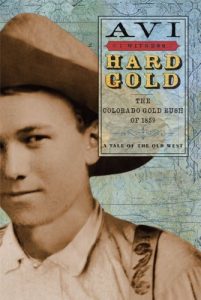
    1. Hard Gold: The Colorado Gold Rush of 1859

    📖 Historical adventure · ✍️ Avi · Hyperion Books for Children

    Book cover of Hard Gold: The Colorado Gold Rush of 1859 by Avi

    A boy sets out to find his uncle, who has struck gold in the Rocky Mountains and is in danger.

    👍 Good for kids who like long journeys, wagon trains and a mystery.

    More about Hard Gold

    Early’s uncle Jesse (more like a brother) is sure the answer to their troubles is to head west and dig for gold. When Jesse flees during the night after being accused of a robbery, Early does not know what to believe. Then a message arrives: Jesse has found gold, but his life is in danger. Early runs away and joins a wagon train with a strange family. The closer the travelers get to the mountains, the more ruined lives they meet, lives consumed by the hunt for gold.

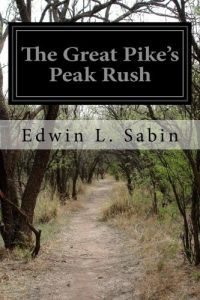
    2. The Great Pike’s Peak Rush

    📖 Old-fashioned adventure · ✍️ Edwin L. Sabin · 1917

    Book cover of The Great Pike's Peak Rush by Edwin L. Sabin

    A classic adventure from 1917 set in the Colorado gold fields. The whole book is free to read.

    👍 Good for curious older readers, and families who like reading aloud.

    More about The Great Pike’s Peak Rush

    The full title is The Great Pike’s Peak Rush, or, Terry in the New Gold Fields. It was published by Thomas Y. Crowell in 1917, and the whole text is free on Project Gutenberg. Because it is old, the language is different from a modern novel, so it works best read aloud together or for a curious older reader.

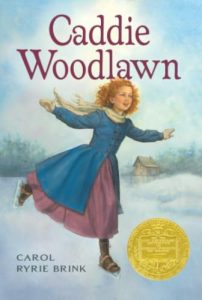
    3. Caddie Woodlawn

    📖 Classic historical novel · ✍️ Carol Ryrie Brink · Newbery Medal 1936

    Cover of Caddie Woodlawn by Carol Ryrie Brink

    Eleven-year-old Caddie is a lively tomboy on the Wisconsin frontier in the 1860s, during the Civil War.

    👍 Good for kids who love adventurous heroines and frontier life.

    More about Caddie Woodlawn

    Caddie was sick and weak when her family came to Wisconsin from Boston, so her parents let her run free with her brothers to get strong. In one year she rides through the forest at night to warn a friend, faces a prairie fire, falls through the ice while skating, and has to put up with her perfect cousin Annabelle from Boston. The book won the Newbery Medal in 1936 and was based on the stories of the author’s own grandmother. It was written long ago, and its view of Native Americans is a good thing to talk about with a parent or teacher.

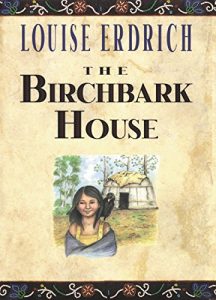
    4. The Birchbark House

    📖 Historical novel · ✍️ Louise Erdrich · Ojibwe family, 1847

    Cover of The Birchbark House by Louise Erdrich

    Omakayas, a seven-year-old Ojibwe girl, lives through four seasons near Lake Superior.

    👍 Good for kids who want a Native American girl’s own view of daily life.

    More about The Birchbark House

    The story starts in 1847, a little earlier than the other books on this list. It follows Omakayas and her family through building a summer house of birchbark, harvesting rice in the fall, getting through a terrible winter and making maple syrup in the spring. The winter brings smallpox and a hard loss, so it is sad in places. Louise Erdrich weaves Ojibwe words into the story. It was a 1999 National Book Award finalist and is the first of five Birchbark House books. Publishers Weekly suggests it for ages 9 and up.

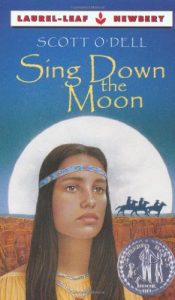
    5. Sing Down the Moon

    📖 Historical novel · ✍️ Scott O’Dell · Newbery Honor 1971

    Cover of Sing Down the Moon by Scott O’Dell

    A young Navajo girl named Bright Morning lives through the Long Walk of 1863 to 1865.

    👍 Good for older kids who are ready for a serious, moving story.

    More about Sing Down the Moon

    Scott O’Dell’s short novel was published in 1970 by Houghton Mifflin, and it was a Newbery Honor Book in 1971. It is told through the eyes of Bright Morning, a Navajo girl, and a reviewer calls it a heart-wrenching story of the Long Walk of 1863 through 1865. Because it deals with a painful part of history, it is a good book to read together and talk about.

    6. TRACE in Colorado, Book 9

    📖 Time-travel adventure · ✍️ T. A. Held · Ages 9 to 14

    A time-travel adventure that visits Colorado in 1860 and 1863, near Morrison and Denver.

    👍 Good for kids who like adventure with real history behind it.

    More about TRACE in Colorado, Book 9

    Book 9 is part of The Riddle America Cannot Explain: TRACE in Colorado, a time-travel series for ages 9 to 14. Every book has a What Was Real? page that separates the made-up story from the real history. Details about Book 9 will be added here when it is ready. Until then, you can read the real history around it: Mount Vernon and Golden City in 1860 and claim clubs, and how settlers held land before they could own it.

    Which one should you pick?

    This story comes from TRACE in Colorado by T. A. Held, a time-travel series for ages 9 to 14 with a What Was Real? page in every book.

    Read the book: Book 9 of TRACE in Colorado · See all the TRACE in Colorado books

    Next post: The Great Denver Fire of April 19, 1863

  • The Great Denver Fire of April 19, 1863: What Happened?

    Last updated: November 19, 2026.

    What happened in the Great Denver Fire of 1863? In the middle of the night, a small fire started behind a building in a town made almost entirely of wood. By morning, much of downtown Denver was gone. This page tells what the sources say about that night and how the fire changed the way Denver was built.

    Denver in 1863 was a young frontier town, and nearly all of its buildings were made of wood. Book 9 of TRACE in Colorado visits Colorado in 1860 and 1863, but its story is made up. Everything on this page is real history.

    Quick facts

    📅

    When

    Sunday, April 19, 1863, between 2 and 3 in the morning.

    📍

    Where

    It began at the back of the Cherokee House, at the southwest corner of 15th and Blake Streets.

    🏚️

    How much burned

    More than 70 buildings, with losses estimated at $200,000 to $350,000.

    🧱

    What changed

    Denver rebuilt in brick, and a brick ordinance required fire-resistant buildings.

    💡 Did you know? Across Cherry Creek, the town of Auraria was not touched by the fire at all, and right after the fire the prices of nearly everything in Denver’s stores doubled overnight.

    Timeline: the fire

    1862

    The city allows one hook and ladder company and two bucket companies to fight fires. The Denver Fire Department itself is not officially set up until 1866.

    Spring 1863

    A dry spring, with strong winds almost every day.

    April 19, 2-3 a.m.

    A small fire breaks out at the back of the Cherokee House.

    Within three hours

    Almost every building in the downtown area is destroyed.

    Soon after

    Owners rebuild in brick, and a law requires fire-resistant materials.

    A town built of wood

    Early Denver was a boom town, and people put up buildings fast with the lumber they could get. The Denver Firefighters Museum says that most of the buildings were built of pine full of sticky resin, which burns very easily. The historian Jerome Smiley wrote that the spring of 1863 was a dry one and that high winds were almost daily visitors. Put those together and a small fire had everything it needed to grow.

    The night of April 19

    Sometime between 2 and 3 in the morning, a small fire broke out in the rear of the Cherokee House, an entertainment place that was also a saloon and hotel, on the southwest corner of 15th and Blake Streets. Pushed by a strong wind and fed by wooden walls, it grew very fast. Within three hours almost every building in the downtown area was destroyed, even though every able-bodied man in Denver joined the fight.

    The burned area ran, in Smiley’s words, between Sixteenth, Market and Wazee Streets and Cherry Creek. A few buildings survived. The sources used for this page do not explain how the fire started, so this page does not guess.

    How much was lost

    Denver7, reporting what the Denver Firefighters Museum says, tells us that more than 70 buildings were destroyed and that the losses were estimated at between $200,000 and $350,000. The same report says that no deaths were reported. Soon after the fire, a list was published with the names of 64 people and businesses that had lost property. Their losses ranged from $200 to $20,000. For comparison, the Denver Public Library says that a dollar in 1863 had the buying power of about $20 today.

    Almost none of the owners had insurance, because it was very expensive in Colorado Territory at that time. Even people who lost no building felt the fire, because prices doubled overnight.

    Rebuilding in brick

    Many owners began rebuilding right away, and downtown Denver was soon up and running again. One big thing changed. They rebuilt with brick, which resists fire better, and a law required that nearly every building be made of brick. Denver’s so-called brick ordinance, which required fire-resistant materials such as brick or stone, was passed in reaction to the fire. If you walk through old downtown Denver today, you can still see many buildings from the late 1800s and early 1900s made of reddish brick or stone.

    Check what you learned

    What time did the fire start?

    Between 2 and 3 in the morning on Sunday, April 19, 1863.

    Why did it spread so fast?

    The buildings were made of wood, the spring was dry, and strong winds blew almost every day.

    Which nearby town was not burned?

    Auraria, across Cherry Creek.

    What new rule came after the fire?

    Buildings had to be made of fire-resistant materials such as brick or stone.

    Think about it

    • If you were planning a new town today, what would you do to stop a fire from spreading?
    • Why might people skip insurance, even when they know a disaster could happen?
    • Why do you think prices went up after the fire?

    What is real and what is made up

    The fire, the Cherokee House, the losses, the rebuilding in brick and the brick ordinance are real history. Book 9 of TRACE in Colorado is a made-up time-travel adventure that visits Colorado in 1860 and 1863, near Morrison and Denver. Its characters and plot are invented, and this page is only about the real history.

    This story comes from TRACE in Colorado by T. A. Held, a time-travel series for ages 9 to 14 with a What Was Real? page in every book.

    Read the book: Book 9 of TRACE in Colorado · See all the TRACE in Colorado books

    Previous post: Books for kids set in the 1860s American West

    Next post: The Elephant Corral and the Cherokee House: where Denver’s travelers stopped

  • The Elephant Corral and the Cherokee House: Where Denver’s Travelers Stopped

    Last updated: November 19, 2026.

    Where did travelers stay when they reached Denver during the gold rush? Many of them stopped at the Elephant Corral, a famous camp ground, stockyard and hotel in the very early days of the city. It sat on Wazee Street, and today a historical marker and a few old stories are all that is left to tell us about it.

    This page is about real places. Book 9 of TRACE in Colorado visits Colorado in 1860 and 1863, near Morrison and Denver. Its story is made up, but the Elephant Corral and the Cherokee House were real.

    Quick facts

    📍

    Where

    On Wazee Street in what is now Denver’s Lower Downtown. The address given is 1626 Wazee Street.

    🪵

    Built by

    Charles Blake and Andrew Williams, from hewn cottonwood logs with a canvas roof.

    📅

    Built

    1858 or 1859. Sources differ.

    🐂

    What travelers did

    Fed and watered animals, traded oxen for mules, and bought, sold and rented animals.

    💡 Did you know? In 1863 the corral’s owner brought in a load of apples. He sold the good ones for 50 cents each and the shriveled ones for 25 cents each.

    Timeline: the corral

    1858 or 1859

    Blake and Williams build the Elephant Corral. Sources do not agree on the year.

    June 6, 1859

    Newspaper editor Horace Greeley, a guest at the Blake and Williams house, speaks to the pioneers.

    Around 1860

    Blake and Williams sell the business to Robert Teats, who makes it bigger.

    1863

    Teats sells apples at 50 cents each.

    April 19, 1863

    The Great Denver Fire starts at the Cherokee House, in Denver’s young downtown.

    A big building in a very small town

    The Elephant Corral began as a trading post for two kinds of customers: teamsters, who hauled supplies, and gold seekers. J. v. L. Bell, a Colorado historian, writes that it started as the largest building in the Denver and Auraria settlement, 32 feet wide and 100 feet long. It grew to include a livery stable and a stockyard. The front of the big building held a bar and gambling tables. Behind the bar, six bedrooms were rented to anyone who needed a place to sleep.

    The LoDo District’s virtual tour says the corral was made of hewn cottonwood logs with a canvas roof. Emigrants, the people who had crossed the plains, watered and fed their animals there. They also traded their prairie oxen for mountain mules and bought, sold and rented animals. A historical marker calls it the camp ground, immigrant headquarters and stock yards of pioneer Denver.

    A thick wall and a famous guest

    According to Bell, the owners surrounded the corral with a thick wall made of mud mixed with cobblestones from Cherry Creek, topped with gun ports, which are small openings for guns. The marker says that Horace Greeley, a famous newspaper editor, was a guest at the Blake and Williams house, which it calls the first hotel in Denver City, and that he spoke to the pioneers on June 6, 1859. Bell adds that Greeley stayed only one night in one of the rooms before moving to a cabin to get away from the noise of the bar.

    Why is it called the Elephant Corral?

    Nobody is sure. In gold rush days, to see the elephant meant to see something strange and wonderful for the first time, and some people believe the name comes from that saying. Others think it was named after the Elephant Corral stables in Council Bluffs, Iowa.

    Gold dust and apples

    In those early days money was scarce, and most business was done with gold dust. A pinch of dust between the thumb and finger was counted as 25 cents, no matter how big the miner’s hands were. That is why a load of apples in 1863 could be such a big event.

    The Cherokee House

    The Cherokee House was a different place. The Denver Public Library calls it an entertainment establishment, and Denver7 calls it a saloon and hotel. It stood on the southwest corner of 15th and Blake Streets, and the Great Denver Fire of April 19, 1863 began at the back of it. You can read that story in The Great Denver Fire of April 19, 1863. The sources used for this page do not say whether the Elephant Corral burned that night, so this page does not say either.

    Check what you learned

    What could a traveler do at the Elephant Corral?

    Feed and water animals, trade oxen for mules, buy, sell or rent animals, and rent a bed.

    How was a pinch of gold dust counted in early Denver?

    As 25 cents.

    What did to see the elephant mean?

    To see something strange or wonderful, especially for the first time.

    Where did the Great Denver Fire begin?

    At the back of the Cherokee House, at 15th and Blake.

    Think about it

    • Why do you think travelers wanted to trade oxen for mules before going into the mountains?
    • Why was gold dust used as money in the early days?
    • If you could ask a traveler from 1859 one question about the Elephant Corral, what would it be?

    What is real and what is made up

    The Elephant Corral, its builders, Horace Greeley’s visit, the Cherokee House and the fire are real history. Some details, like the year it was built and the origin of its name, are uncertain, and this page says so. Book 9 of TRACE in Colorado is a made-up time-travel adventure. Its characters and plot are invented.

    This story comes from TRACE in Colorado by T. A. Held, a time-travel series for ages 9 to 14 with a What Was Real? page in every book.

    Read the book: Book 9 of TRACE in Colorado · See all the TRACE in Colorado books

    Previous post: The Great Denver Fire of April 19, 1863

    Next post: Claim clubs: how settlers held land before they could own it

  • Claim Clubs: How Settlers Held Land in Colorado Before They Could Own It

    Last updated: November 19, 2026.

    Who owned the land in Colorado in 1860? That is not an easy question. Thousands of people were arriving for the gold rush, and many of them wanted to farm, build or open a business. But there was no government land office nearby, so settlers had to invent their own way to keep track of who had claimed what. They formed claim clubs.

    This page is about real history. Book 9 of TRACE in Colorado visits Colorado in 1860 and 1863, near Morrison and Denver, but its story is made up.

    Quick facts

    📜

    What it was

    A local group where settlers recorded claims and settled arguments about land.

    📅

    Colorado clubs

    The El Paso Claim Club began in 1859 and lasted until a federal land office came in 1862.

    📏

    Land rule

    One club allowed 160 acres in one body, along a stream or other water.

    🏠

    Cabin rule

    A log cabin 12 feet square, built within 60 days.

    💡 Did you know? The Cañon City Claim Club kept a record book. When a historian studied it in 1939, it was part of the official archives of Fremont County.

    Timeline: land and claims

    1851

    Cheyenne, Arapaho and other nations sign the Fort Laramie Treaty with the United States.

    1859

    The El Paso Claim Club is formed by the Colorado City Town Company.

    March 13, 1860

    Thirty-five men meet to start the Cañon City Claim Club.

    February 18, 1861

    Six Southern Cheyenne chiefs and four Arapaho chiefs sign the Treaty of Fort Wise.

    1862

    Federal rules provide for an official land office.

    What was a claim club?

    Claim clubs were also called settlers’ associations or squatters’ clubs. Wikipedia describes them as pseudo-governmental groups that tried to manage land in places with little or no legal system to handle land arguments. Their main purpose was to protect the first settlers to arrive. Each club made its own rules, and the claim clubs of the American West from Iowa to Washington often enforced them with the settlers’ own muscle rather than with courts.

    One big problem was claim jumping. If someone claimed land but never lived on it or built anything, a newcomer might move in and take it. A claim club decided who was right. Claim clubs did not always protect honest settlers, though. Sometimes they were also a tool for people who wanted to grab land for themselves.

    Clubs in Colorado

    In Old Colorado City, the El Paso Claim Club was formed in 1859 by members of the Colorado City Town Company. It settled land arguments and recorded land sales until federal rules created an official land office in 1862. Cañon City had a claim club too, and Wikipedia says Denver also had one. The sources used for this page do not say what the Denver club’s rules were or where it met, so this page does not guess.

    The rules of the Cañon City club

    The Cañon City club is the one whose rules we can read. Thirty-five men met on March 13, 1860 and wrote a constitution. Its rules included these:

    • A person taking a farming claim could have 160 acres in one body, along a river or other water, marked with stakes, trees or mounds.
    • The claim had to be filed with the club’s recorder within ten days.
    • Within sixty days, the claimant had to build a log cabin twelve feet square with a roof of poles and dirt.
    • Two or more people could hold a claim together, as long as it was not bigger than what each could hold alone.

    As a historian wrote in 1939, the club was one of those short-lived frontier institutions that bridged the gap between settlement and real law and order. It lasted less than twenty-three months.

    Whose land was it?

    There is another part of the story. In 1851 the Fort Laramie Treaty set out lands for the Cheyenne, Arapaho and other nations. On February 18, 1861, six Southern Cheyenne chiefs and four Arapaho chiefs signed the Treaty of Fort Wise, giving up most of the lands that had been set aside for them. So in 1860, settlers were making claims on land that, under the 1851 treaty, was set aside for the Cheyenne and Arapaho. Claim clubs only recorded who had claimed what among the settlers themselves.

    Check what you learned

    What is a claim jumper?

    Someone who takes over land that another person claimed but did not live on or improve.

    How big was a farming claim in the Cañon City club?

    160 acres in one body, along a river or water.

    What did a claimant have to build within sixty days?

    A log cabin twelve feet square with a pole and dirt roof.

    What changed in 1862?

    Federal rules provided for an official land office.

    Think about it

    • Why do you think the Cañon City club required a cabin as well as a claim?
    • Why might a rule be fair to the settlers but not fair to someone else?
    • How do we decide who owns land today?

    What is real and what is made up

    The claim clubs, the Cañon City rules and the treaties are real history. Book 9 of TRACE in Colorado is a made-up time-travel adventure. Its characters, its plot and anything that happens in it are invented, and no part of it is presented as history.

    This story comes from TRACE in Colorado by T. A. Held, a time-travel series for ages 9 to 14 with a What Was Real? page in every book.

    Read the book: Book 9 of TRACE in Colorado · See all the TRACE in Colorado books

    Previous post: The Elephant Corral and the Cherokee House: where Denver’s travelers stopped

    Next post: Mount Vernon and Golden City in 1860