
Tag: book-4

  • Books for Kids Set in the 1920s: From the 1919 Molasses Flood to a 1922 Denver Mystery

    Last updated: November 12, 2026.

    Looking for books for kids set in the 1920s? Here are five chapter books and novels that take young readers to the years between 1919 and 1927: a flood of molasses in Boston, a famous World Series, the fight for women’s right to vote, a 1922 mystery in Denver, and New York in 1927. Each one has a short card, a closer look underneath, and a quick chooser at the bottom.

    Two of the five are time-travel stories, where a kid from today lands in the past. The other three are set in the 1920s from the first page.

    The 1920s in five books: a quick timeline

    • January 1919: Boston, the Great Molasses Flood. I Survived the Great Molasses Flood, 1919
    • 1919: the World Series and the Black Sox scandal. Shoeless Joe & Me
    • 1920: the fight to ratify the 19th Amendment, in Nashville, Tennessee. The Hope Chest
    • December 1922: Morrison and Denver, Colorado. Where the Money Went
    • October 1927: Hoboken and New York City. Wonderstruck

    The books

    1. I Survived the Great Molasses Flood, 1919 (I Survived #19)

    📖 Chapter book · ✍️ Lauren Tarshis · Scholastic, 2019 · 144 pages · ages 7 to 10

    Cover of I Survived the Great Molasses Flood, 1919 by Lauren Tarshis

    Carmen Grasso is twelve and lives in Boston’s North End, next to a giant tank of molasses that never stops leaking. Then, one January day in 1919, the tank breaks.

    👍 Good for kids who love the I Survived series and want a real disaster story that is fast, short and hard to put down.

    More about I Survived the Great Molasses Flood

    Carmen is a twelve-year-old Italian immigrant. She and her best friend Tony sneak up to the molasses tank for a sweet treat, but Carmen keeps wondering why the tank is always leaking and what the molasses is really for. Scholastic lists it for grades 2 to 5 (ages 7 to 10). Like every I Survived book, it is built around a real event, and the Great Molasses Flood really did pour through the streets of Boston in January 1919.

    2. Shoeless Joe & Me (Baseball Card Adventures)

    📖 Sports time-travel novel · ✍️ Dan Gutman · HarperCollins · ages 9 to 12
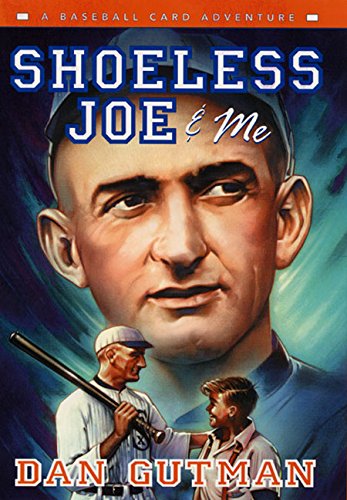
    Cover of Shoeless Joe & Me by Dan Gutman

    Joe “Stosh” Stoshack can travel through time by holding an old baseball card. This time he goes back to 1919, to stop the most famous cheating scandal in baseball.

    👍 Good for kids who love sports, and anyone who already read Honus & Me and wants the next trip.

    More about Shoeless Joe & Me

    Stosh is thirteen. In 1919 he overhears gamblers planning to fix the World Series, and he tries to keep the great hitter Shoeless Joe Jackson out of it. Kirkus notes that Jackson wanted no part of the fix but was still banned as one of the “eight men out.” Can a kid from today change what happened? Kirkus suggests it for ages 9 to 12. It is part of Dan Gutman’s Baseball Card Adventures, the same series as Honus & Me.

    3. The Hope Chest

    📖 Historical novel · ✍️ Karen Schwabach · Random House, 2008 · ages 8 to 12

    Cover of The Hope Chest by Karen Schwabach

    It’s 1920, and eleven-year-old Violet runs away from home to find her big sister Chloe. The trail leads to New York, and then to Tennessee.

    👍 Good for kids who like brave, stubborn heroes and want a road-trip story with a big real-life fight at the end.

    More about The Hope Chest

    Violet follows her sister’s trail to New York and then to Nashville, where Chloe is working for the ratification of the 19th Amendment, the change to the Constitution that gave women the right to vote. Along the way Violet finds a friend, Myrtle, and a cause, and the two girls join the suffragists who are trying to win over the lawmakers. The publisher lists it for ages 8 to 12 (grades 3 to 7).

    4. Where the Money Went (TRACE in Colorado, Book 4)

    📖 Time-travel mystery · ✍️ T. A. Held · The Riddle America Cannot Explain: TRACE in Colorado · ages 9 to 12

    The cabin door is standing wide open, and nothing is missing. A red stone drops Alex, Daniel and Maya in Colorado in December 1922, and someone is watching.

    👍 Good for kids who want a time-travel mystery with clues to follow and real 1922 history behind it.

    More about Where the Money Went

    The stone sets Alex, Daniel and Maya down in the cellar of the cabin in December 1922. Aurora lives there alone now. She sends travelers into the past and keeps the stone’s secrets from everyone, even the people she cares about. She has never met the three of them, and they know more about her than she does.

    So Maya tells the whole town of Morrison that they are Aurora’s cousins, and that their mother just had twins. That’s the easy part. Somebody has been watching the cabin, and he isn’t after Aurora’s money. Then, on one busy day in Denver, the journal that takes them home disappears. Who broke in, and what did he want?

    Where the Money Went is Book 4 of The Riddle America Cannot Explain: TRACE in Colorado by T. A. Held. It can be read on its own, and like every book in the series it ends with a What Was Real? page. Curious about the real 1922? Read what happened in the Denver Mint robbery of 1922.

    5. Wonderstruck

    📖 Novel in words and pictures · ✍️ Brian Selznick · Scholastic, 2011 · about 640 pages · ages 9 and up
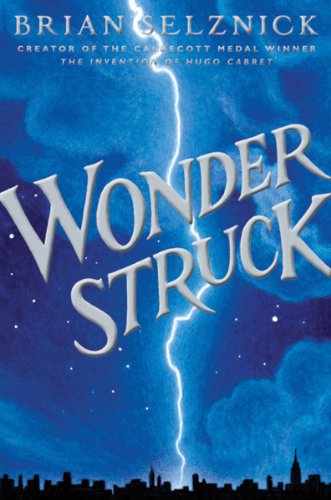
    Cover of Wonderstruck by Brian Selznick

    Two runaways, fifty years apart. Rose leaves Hoboken for New York in 1927. Ben leaves Minnesota for New York in 1977. Their stories are about to meet.

    👍 Good for kids who love pictures as much as words, and readers who like a big, beautiful book with a puzzle in it.

    More about Wonderstruck

    Rose is a deaf girl who runs away to New York to find an actress she admires. Her 1927 story is told only in drawings. Ben’s 1977 story is told in words: after he loses his hearing, he runs away from a hospital to find the father he never met. Both trails lead to New York City and the American Museum of Natural History. It is by Brian Selznick, the author of The Invention of Hugo Cabret, and Kirkus lists it for ages 9 and up. It looks long, but hundreds of its pages are pictures.

    How to choose

    • For a younger reader (7 to 10) who likes real disasters: I Survived the Great Molasses Flood, 1919.
    • For a sports fan: Shoeless Joe & Me.
    • For a reader who likes a brave girl on a big journey: The Hope Chest.
    • For a mystery lover who wants time travel and a What Was Real? page: Where the Money Went.
    • For a kid who loves pictures and museums: Wonderstruck.

    More book lists

    Want more time travel? Try time-travel books for kids who love Magic Tree House. Or jump ahead twenty years with World War II books for kids. Or pick a topic: heist and detective books, mystery and riddle books, gold rush books, dinosaur books, Cold War books or Colorado and the West adventure books.

    This list comes from TRACE in Colorado by T. A. Held, a time-travel series for ages 9 to 12 with a What Was Real? page in every book.

    Read the book: Where the Money Went (Book 4) · See all the TRACE in Colorado books

  • For parents and teachers: a discussion guide for Where the Money Went

    Last updated: November 5, 2026.

    How can you talk with a child about Where the Money Went? This guide gives you questions to ask, words to look up and small activities to try. There are no spoilers about what happens in the book.

    Where the Money Went is Book 4 of TRACE in Colorado by T. A. Held, a time-travel series for ages 9 to 12. It is set in Denver in December 1922, and a What Was Real? page at the end tells which parts of the story are real history.

    Quick facts

    👧

    Age

    The series is written for ages 9 to 12.

    📅

    Setting

    Denver and Morrison, Colorado, in December 1922.

    🔎

    Real event

    The Denver Mint robbery of December 18, 1922.

    📖

    Extra

    A What Was Real? page at the end of the book.

    💡 Did you know? The best questions for a child are often the simplest ones: “What would you miss most from your own time?” There is no wrong answer, and it gets them thinking about how daily life has changed.

    Questions to talk about

    • In 1922 people had no phones in their pockets. What would be hardest for you without one?
    • Why do you think the robbers chose a moment when the truck was being loaded?
    • The Denver Mint robbery was never solved. How does that make you feel? Why do people keep talking about unsolved cases?
    • The kids in the story pretend to be cousins. Is it ever okay to hide the truth, and when does it become a problem?
    • How is finding something out from a newspaper different from finding it online?

    New words to look up

    • Mint: a place where coins are made.
    • Federal Reserve: the system of banks that supplies the country’s paper money.
    • Prohibition: the national ban on making and selling alcohol, from 1920.
    • Pawnshop: a shop that lends money and keeps something you own until you pay it back.
    • Levee: a wall or bank built to keep a river from flooding.

    Activities

    • Detective notebook. Write down three clues from the robbery story (the car, the time, the money) and make a timeline.
    • Then and now. Draw one thing from 1922, such as a streetcar or a pocket camera, next to the same thing today.
    • Newspaper front page. Write a front page for December 19, 1922, using only the facts from the robbery post.

    Quick answers for teachers

    Is the story true?

    The history is real, and the main characters are made up. The What Was Real? page in the book separates the two.

    What time period does it cover?

    December 1922 in Denver and Morrison, Colorado.

    Can a child read it without the other books?

    Yes. Each book in the series stands on its own.

    Free downloads for the classroom or the kitchen table

    The TRACE in Colorado site has printable extras that go with the books. Pick the one that suits your child.

    A few more things to try

    • Map it. Find Denver and Morrison on a map. Morrison is west of the city, in the foothills. How would you travel between them in 1922, without a car of your own?
    • Gold or paper? In 1922 an ounce of gold cost $20.67 and the robbers took paper bills. Which would you rather carry, and why?
    • Fact or story. After reading, open the What Was Real? page and pick one thing that surprised you. Then look it up in a library book or on a museum website.

    What is real and what is made up

    The robbery, the Mint, the money, the cars, the cameras and the newspapers described in this guide are real history from 1922.

    The characters and the plot of the book are made up.

    This story comes from TRACE in Colorado by T. A. Held, a time-travel series for ages 9 to 12 with a What Was Real? page in every book.

    Read the book: Where the Money Went (Book 4) · See all the TRACE in Colorado books

    Previous post: Denver in 1922 quiz for kids: robbery, cars and cameras

  • What happened in the Denver Mint robbery of 1922?

    Last updated: November 5, 2026.

    What happened in the Denver Mint robbery? On Monday, December 18, 1922, at about 10:30 in the morning, a gang of robbers hijacked a Federal Reserve Bank truck on West Colfax Avenue in Denver. They drove away with $200,000 in five-dollar bills. The whole thing took about a minute and a half, and the case was never solved.

    This is one of the most famous crimes in Colorado history. It is also a real event from the year in which the book Where the Money Went is set, so it is a good place to start if you want to know what in that story is true.

    Quick facts

    💵

    The loot

    $200,000, all in new five-dollar bills.

    ⏱️

    The time

    The robbers were at the scene only about a minute and a half.

    🚗

    The getaway car

    A black Buick touring car.

    🔫

    The Mint police

    About 50 officers were inside and fired back.

    💡 Did you know? The Denver Mint makes coins, not paper money. The robbers did not take money the Mint had made. They took bags of bills from a Federal Reserve Bank truck that was parked at the Mint.

    The Denver Mint case, step by step

    December 18, 1922

    About 10:30 a.m. the truck is being loaded on West Colfax Avenue. A black Buick pulls up, two men jump out with sawed-off shotguns and a third grabs the money bags.

    The same minute

    About 50 Mint police inside the building hurry out and fire back. One guard, Charles Linton, is killed. Robber Nicholas Trainor is badly wounded, and the gang takes him with them.

    January 14, 1923

    Trainor’s body is found in the getaway car. The car had been left in a garage on Gilpin Street in Denver.

    February 17, 1923

    Minnesota authorities raid an empty hideout. The Secret Service finds $80,000 of the stolen money there.

    December 1, 1934

    The case is officially closed. No one has ever been charged.

    What happened that morning

    Imagine a cold December Monday in downtown Denver. A delivery truck from the Federal Reserve Bank stops outside the Mint, a heavy stone building on West Colfax Avenue. Guards and workers are carrying $200,000 out to it, in five-dollar bills.

    Then a black Buick touring car pulls up. Two men leap out with sawed-off shotguns. A third grabs the money bags. Inside the Mint, about fifty police officers hear the shooting and hurry to answer it. They fire back, and one robber is said to have been hit. But the gang is already gone. They were there for only a minute and a half.

    The people we know about

    A guard named Charles Linton was killed in the shooting. Wikipedia says he had worked as a deputy sheriff before he became a guard at the Federal Reserve in Denver. The only robber who was ever named for certain was Nicholas Trainor, called “Chaw Jimmie.” He was wounded, and his friends took him away with them. His frozen body was found weeks later in the Buick.

    Was the money ever found?

    Only some of it. In February 1923 the Secret Service found $80,000 in a hideout in Minnesota. The rest, about $120,000, was never recovered. Years later the Denver police chief said that the gang had been identified, with five men and two women in it, and that all of them had died in the years since. Two other suspects were already in prison for other crimes. Police said the stolen money had gone to “a prominent Minneapolis attorney.” But nobody was ever charged, and the case was closed in 1934, twelve years after the robbery.

    Try it: test your memory

    How long were the robbers at the Mint?

    About a minute and a half.

    What kind of car did they use?

    A black Buick touring car.

    Who made the bills that were stolen?

    Not the Denver Mint. It makes coins. Paper money was printed in Washington, D.C.

    How much was found again?

    About $80,000, in Minnesota in February 1923.

    Why this crime still gets talked about

    Part of the reason is how fast it was. Another part is that nobody was ever put on trial. People who study the case still argue about who the other robbers were. Some of the details in old newspapers do not even agree, such as the exact time of the shooting.

    In the book, three kids from our own time arrive in Denver just before Christmas 1922 and end up in a mystery set in a world of money, banks and newspapers. The story is made up, but the robbery and the city around it are real.

    What is real and what is made up

    The robbery on December 18, 1922, the $200,000, the black Buick, the guards’ gunfire, Charles Linton and Nicholas Trainor, the money found in Minnesota, and the case closed in 1934 are all real.

    The three time-traveling kids and the people they meet in the story are made up.

    This story comes from TRACE in Colorado by T. A. Held, a time-travel series for ages 9 to 12 with a What Was Real? page in every book.

    Read the book: Where the Money Went (Book 4) · See all the TRACE in Colorado books

    Previous post: Heist and detective books for kids who love a good caper

    Next post: How did people get around Denver in 1922? Streetcars and black cars

  • How did people get around Denver in 1922? Streetcars and black cars

    Last updated: November 5, 2026.

    How did people get around Denver in 1922? Most of them rode an electric streetcar, and some of them drove a car. There were no buses on most routes yet, and a car looked very different from the cars you see today.

    If you could step off the train at Union Station and into the Denver of 1922, the first thing you would notice is the traffic: clanging streetcars, horns, and a street full of boxy black cars.

    Quick facts

    🚋

    Streetcars

    Electric streetcars of the Denver Tramway were the city’s main public transit.

    🪙

    The fare

    The Tramway’s old charter set a fixed fare of 5 cents.

    🚗

    The Model T

    From 1914 to about 1925 Ford sold the Model T in black.

    🚌

    Buses

    Buses only began to replace some streetcar lines from about 1925.

    💡 Did you know? The Model T had come in colors in its first years, but by 1914 Ford offered it in black only. A Ford executive once said a customer could have a car painted any color he wanted “so long as it is black.” Fancier, more expensive cars could still be ordered in other colors.

    Getting around town, then and later

    Early 1900s

    The Denver Tramway runs streetcars on Denver’s streets. Its charter sets a fixed fare of 5 cents.

    1914

    Ford’s “any color so long as it is black” policy is put in place for the Model T.

    1922

    Streetcars are still the main way to travel across Denver. Many families own no car at all.

    About 1925

    Buses begin to take over some of the streetcar lines. Ford’s lowest Model T price that year is $260.

    1950

    Streetcar service in Denver ends.

    Riding the streetcar

    A streetcar was an electric train that ran on rails down the middle of the street. Wikipedia describes the Denver Tramway as the company that ran Denver’s streetcar system, and its early charter set a fixed fare of 5 cents. We could not find the exact fare for 1922, so we are not going to guess one. What we do know is that if you wanted to cross the city without a horse or a car, the streetcar was how you did it.

    The black car

    Cars were already common by 1922, but they were still new enough that people stared at them. The most famous one was the Ford Model T. Ford had started selling it in 1908, and from 1914 he painted all of them black. The reason people often give is that black paint was cheap and tough. Wikipedia points out that there is no proof black dried faster than other dark colors, so the story is a little fuzzier than it sounds.

    By 1925 the Model T had become so cheap that it sold for just $260. That is why so many ordinary families could afford one.

    Try it: Streetcar or Model T?

    If you lived in Denver in 1922 and had no car, how would you get downtown?

    Most likely on an electric streetcar run by the Denver Tramway.

    What color was a Model T in 1922?

    Black. Ford made only black Model Ts from 1914 until about 1925.

    Could you buy a car that was not black?

    Yes, but it was usually a more expensive car, not the cheap Model T.

    Why this matters in the story

    In Where the Money Went, the children have to chase clues across a busy city with no phones and no apps. Streetcars and trains are how they move, and cars show up at the most important moments. Knowing that most cars were black and most people rode streetcars helps you picture the scenes, and it helps you spot when something in the story is unusual.

    What is real and what is made up

    The Denver Tramway and its streetcars, the Model T and its black paint from 1914, and buses replacing streetcar lines later in the 1920s and 1950 for the end of streetcars are real.

    The three children and their chases through Denver are made up.

    This story comes from TRACE in Colorado by T. A. Held, a time-travel series for ages 9 to 12 with a What Was Real? page in every book.

    Read the book: Where the Money Went (Book 4) · See all the TRACE in Colorado books

    Previous post: What happened in the Denver Mint robbery of 1922?

    Next post: What was the Soldier’s Kodak? The pocket camera of 1922

  • What was the Soldier’s Kodak? The pocket camera of 1922

    Last updated: November 5, 2026.

    What was the Soldier’s Kodak? It was a small folding camera that Kodak first sold in April 1912, called the Vest Pocket Kodak. It was small enough to fit in a pocket, and people took it to war, on trips and to the park.

    By 1922 a camera like this was an ordinary thing to own. But taking a picture then was very different from taking one on a phone.

    Quick facts

    📷

    Introduced

    April 1912, by Eastman Kodak.

    🎒

    Nickname

    “The Soldier’s Kodak.”

    🎞️

    Film

    It used 127 roll film.

    📈

    Sold

    About two million before the original line ended in 1926.

    💡 Did you know? You could not see your picture right away. The film had to be taken out, developed in a darkroom and printed. A friend with a darkroom was useful to have.

    The Vest Pocket Kodak

    April 1912

    Kodak introduces the Vest Pocket Kodak.

    1915

    A new version is released and soon becomes the usual one.

    1922

    The camera is still an ordinary thing to carry. Many people have one.

    1926

    The original line is discontinued after about two million were sold.

    1934

    The Vest Pocket Kodak line ends, replaced by the Kodak Bantam.

    A camera for your pocket

    The Vest Pocket Kodak folded flat. Folded up, it was about 4.7 inches long and 2.5 inches wide, about the size of a small wallet. You pulled out the front, pointed it, and pressed the button. Because it used 127 film, the pictures were small.

    The name “Soldier’s Kodak” came from how Kodak advertised it. Its marketing said the camera was tough, and it was aimed at soldiers going overseas. By Wikipedia’s count, about two million were sold before the first version ended, which made it the most popular camera of its time.

    What was different from your phone

    There was no screen, no zoom, no flash and no way to delete a bad picture. You had a roll of film with a few pictures on it. You took them, then waited until the film was developed in a darkroom before you could see what you had. If someone blinked, you found out later.

    Try it: pocket camera quiz

    When could you see a picture taken with a pocket camera in 1922?

    Only after the film was developed in a darkroom.

    Why was it called the Soldier’s Kodak?

    Kodak advertised it to soldiers because it was small and rugged.

    How many were sold before the original line ended in 1926?

    About two million.

    In the story

    In Where the Money Went, the kids come from a time when everyone has a camera in a phone. In 1922 they have to learn that a picture is something you wait for. A pocket camera like this one is exactly the kind of thing a person in 1922 might carry.

    How the camera worked

    The Vest Pocket Kodak had a metal body. It weighed about 300 grams, or 11 ounces, and when you opened it, the lens sat on a platform that slid out on a folding bellows, so the camera grew from about an inch thick to almost four inches deep.

    It used 127 film, a roll film that is 46 millimeters wide. That is why it could be so small.

    In 1915 Kodak brought out an Autographic version. It had a little door on the back, and you could write a note straight onto the film with a metal stylus, like a date or a name. That was a clever way to remember who was in a picture.

    What is real and what is made up

    The Vest Pocket Kodak, its 1912 introduction, the nickname, the 127 film and the two million sold are real.

    What the children photograph, and who has a camera in the story, is made up.

    This story comes from TRACE in Colorado by T. A. Held, a time-travel series for ages 9 to 12 with a What Was Real? page in every book.

    Read the book: Where the Money Went (Book 4) · See all the TRACE in Colorado books

    Previous post: How did people get around Denver in 1922? Streetcars and black cars

    Next post: Prohibition, pawnshops and Larimer Street: Denver in the early 1920s

  • Prohibition, pawnshops and Larimer Street: Denver in the early 1920s

    Last updated: November 5, 2026.

    What was Denver like in the early 1920s? It was a city with new rules. Since January 17, 1920, it had been against the law across the United States to make or sell alcohol, and Denver’s oldest street, Larimer Street, was full of shops, including pawnshops with three golden balls over the door.

    This post covers three things you can spot in the book Where the Money Went: Prohibition, the pawnbroker’s sign and Larimer Street.

    Quick facts

    🚫

    Prohibition

    The nation went dry on January 17, 1920.

    📜

    The law

    The Volstead Act set the rules for enforcing the ban.

    🟡

    The sign

    A pawnbroker’s symbol is three golden balls hanging from a bar.

    🏘️

    Larimer

    Larimer Square is Denver’s oldest surviving commercial district.

    💡 Did you know? Larimer Street was laid out by William Larimer in 1858, during the Pike’s Peak gold rush. That makes it older than the state of Colorado, which joined the United States in 1876.

    Prohibition, step by step

    1858

    William Larimer lays out Larimer Street during the Pike’s Peak gold rush.

    October 28, 1919

    Congress passes the Volstead Act, the law that sets up the rules for enforcing Prohibition.

    January 17, 1920

    The country goes dry, one year after the amendment became part of the Constitution.

    1922

    Prohibition is a few years old. People still argue about it, and some break it.

    1971

    Larimer Square is named Denver’s first historic district.

    What was Prohibition?

    Prohibition was a rule in the Constitution that banned making and selling most alcohol. The Volstead Act, passed by Congress in October 1919, explained what was and was not allowed. Not all alcohol was banned, but most drinks were. The ban started on January 17, 1920. So in December 1922, when the story takes place, it had been in force for almost three years.

    For the characters in the book, this means that saloons were closed, and a joke about a bottle had a different meaning than it would have before 1920.

    The three golden balls

    If you walk past a pawnshop in an old movie, you will see three golden balls hanging over the door. A pawnbroker is a person who lends money and keeps something you own until you pay it back. The sign for it, three golden balls on a bar, is famous. People have often linked the three balls to the Medici family of Florence in Italy. Pawnshops used this sign for hundreds of years, and it was still a clue that told you what the shop was.

    Larimer Street

    Larimer Street is where Denver began. William Larimer laid it out in 1858, and during the gold rush it was the main street for hotels, stores and offices. Today a few blocks of it, called Larimer Square, are the city’s oldest surviving commercial district. It became Denver’s first historic district in 1971.

    Try it: street signs and laws

    What did the three golden balls mean?

    A pawnshop, a place that lends money and keeps your things until you pay it back.

    When did Prohibition start?

    January 17, 1920.

    Who laid out Larimer Street?

    William Larimer, in 1858.

    In the story

    When the children in Where the Money Went look for a lost journal, they visit shops, hotels and secondhand stores. A pawnshop is exactly the kind of place a missing object might end up. The shops in the story are made up, but the idea is very real: in 1922, a lost thing could easily end up behind a window with three golden balls over the door.

    What is real and what is made up

    Prohibition from January 17, 1920, the Volstead Act, the pawnbroker’s three golden balls, and Larimer Street laid out in 1858 are real.

    The pawnshops and shopkeepers in the book are made up.

    This story comes from TRACE in Colorado by T. A. Held, a time-travel series for ages 9 to 12 with a What Was Real? page in every book.

    Read the book: Where the Money Went (Book 4) · See all the TRACE in Colorado books

    Previous post: What was the Soldier’s Kodak? The pocket camera of 1922

    Next post: What did money look like in 1922? Gold, coins and big paper bills

  • What did money look like in 1922? Gold, coins and big paper bills

    Last updated: November 5, 2026.

    What did money look like in 1922? Coins were made at places like the Denver Mint, paper money was printed in Washington, D.C., and the bills were bigger than the ones in your wallet today. Gold also had a fixed price.

    This matters in Where the Money Went, because the robbers in the real 1922 case did not take coins or gold. They took paper bills.

    Quick facts

    🪙

    Coins

    The Denver Mint struck its first coins on February 1, 1906.

    💵

    Paper money

    Federal Reserve Notes have been printed since Series 1914.

    📏

    Size

    Bills were large-size until Series 1928 brought in the small size we use today.

    🥇

    Gold

    An ounce of gold cost $20.67 before the price was changed in 1934.

    💡 Did you know? The Denver Mint makes coins only. Its “D” mint mark is stamped on coins to show where they were made. The bills in the 1922 robbery came from the Federal Reserve Bank, not from the Mint.

    Money, step by step

    1906

    The Denver Mint strikes its first coins.

    1914

    The first Federal Reserve Notes are printed (Series 1914).

    1922

    Gold is still $20.67 an ounce. The Denver robbers take $200,000 in five-dollar bills.

    1928

    The small-size dollar bill we know today begins with Series 1928.

    January 31, 1934

    The president changes the price of gold from $20.67 to $35 an ounce.

    Coins and the Denver Mint

    The Denver Mint is a branch of the U.S. Mint. It struck its first coins on February 1, 1906, and it is still making coins now. Coins from Denver carry a letter D. Paper money is a different story. It is printed somewhere else, and in 1922 the bills were printed in Washington, D.C.

    Paper money in 1922

    Federal Reserve Notes had been printed since Series 1914. They were large-size notes, bigger than today’s. Smaller bills, the size we use now, started with Series 1928. So the five-dollar bills in the robbery were bigger than a five-dollar bill today, and a bag of $200,000 in fives was a lot of paper.

    Gold at $20.67

    Before 1934 the United States fixed the price of gold at $20.67 an ounce. In January 1934 the president changed it to $35 an ounce, which was more than a 40 percent change. So in 1922, if someone offered you an ounce of gold, the price would have been $20.67, the same as it had been for years.

    Try it: money questions

    What does the Denver Mint make?

    Coins.

    Where was paper money printed in 1922?

    In Washington, D.C.

    How much was an ounce of gold in 1922?

    $20.67.

    In the story

    The kids in Where the Money Went know about money from their own time, with cards and phones. In 1922 they have to think about coins, paper bills and gold, and about why robbers would take bags full of bills from a truck.

    How many bills is $200,000?

    The Wikipedia article on the robbery says the truck was being loaded with $200,000 in five-dollar bills on West Colfax Avenue. If you divide $200,000 by five, you get 40,000 bills. That is a lot of paper to carry in a few bags.

    The money did not come from inside the Mint. It belonged to the Federal Reserve, and the truck was only stopping at the Mint. Inside, about 50 Mint police returned fire. About $80,000 was found in Minnesota in February 1923, which means roughly $120,000 was never found.

    What is real and what is made up

    The Denver Mint’s first coins in 1906, Federal Reserve Notes from 1914, large-size bills until Series 1928, gold at $20.67 and the 1934 price change are real.

    The characters and what they do with money in the book are made up.

    This story comes from TRACE in Colorado by T. A. Held, a time-travel series for ages 9 to 12 with a What Was Real? page in every book.

    Read the book: Where the Money Went (Book 4) · See all the TRACE in Colorado books

    Previous post: Prohibition, pawnshops and Larimer Street: Denver in the early 1920s

    Next post: Denver’s newspapers in 1922: how a story reached the front page

  • Denver’s newspapers in 1922: how a story reached the front page

    Last updated: November 5, 2026.

    Which newspapers did people read in Denver in 1922? There were several. The best known were the Denver Post, the Rocky Mountain News and the Denver Times, and they all wanted the biggest story first.

    There was no television and no internet. If something big happened, like a robbery at the Mint, a newspaper was how most people learned about it.

    Quick facts

    📰

    Rocky Mountain News

    Founded April 23, 1859, it was one of Colorado’s oldest papers.

    📰

    The Denver Post

    Named The Denver Post on January 1, 1901.

    📰

    The Denver Times

    Published from 1872 to 1926, then merged into the News.

    🏢

    Scripps

    The E. W. Scripps Company owned the News from 1926.

    💡 Did you know? The Denver Post was bought in 1895 by Harry Tammen, a former bartender who ran a curio shop, and Frederick Bonfils, who came from Kansas City. Wikipedia says neither of them had ever worked on a newspaper. They were good at getting attention.

    Denver newspapers, step by step

    April 23, 1859

    The Rocky Mountain News is founded.

    1872

    The Denver Times begins publishing.

    October 28, 1895

    Tammen and Bonfils buy the Evening Post for $12,500.

    January 1, 1901

    The paper drops “Evening” from its name and becomes The Denver Post.

    December 18, 1922

    The Mint robbery happens. All the Denver papers have the story.

    November 22, 1926

    The Denver Times is merged into the Rocky Mountain News.

    Three papers, one big story

    In December 1922 a person in Denver could pick up the Post, the News or the Times. They were rivals, which means each wanted to be the first with the news and the first to print the best picture or detail. When a robbery happened at the Mint, all of them wanted to tell it.

    In Where the Money Went, the trail the kids follow leads through hotels, pawnshops and newspapers. The newspapers and the people in the book are made up.

    What happened to the papers

    The Denver Times did not last. Wikipedia says it was published from 1872 to 1926 and then merged into the Rocky Mountain News. The News itself continued until it closed on February 27, 2009, after 149 years. The Post, which began as the Evening Post, is still published.

    Old papers are a gift to history

    American newspapers published before 1929 are in the public domain, which means anyone can copy them. That is why historians, and writers like T. A. Held, can read the old front pages and quote the real events.

    Try it: newspaper facts

    Which paper was founded in 1859?

    The Rocky Mountain News.

    Which Denver paper merged into the News in 1926?

    The Denver Times.

    What was the Denver Post called before 1901?

    The Denver Evening Post.

    Reading the news in 1922

    If you ever get a chance, look at a real front page from 1922 in a library or an online collection. You will see long headlines, no color photographs and very small print. That is how people read about the Mint robbery the next morning.

    A robbery story that kept going

    A big news story did not end on the first day. After the first headlines about the Mint robbery, there were more. In January 1923 the body of a wounded robber, Nicholas Trainor, was found. In February 1923 Minnesota authorities raided an abandoned hideout and the Secret Service recovered $80,000 of the stolen money. No one was ever charged, and the case was officially closed on December 1, 1934.

    What is real and what is made up

    The Rocky Mountain News from 1859, the Denver Times from 1872 to 1926, the Denver Post and its 1901 name change, and the 1926 merger are real.

    The newspapers and people in the book are made up.

    This story comes from TRACE in Colorado by T. A. Held, a time-travel series for ages 9 to 12 with a What Was Real? page in every book.

    Read the book: Where the Money Went (Book 4) · See all the TRACE in Colorado books

    Previous post: What did money look like in 1922? Gold, coins and big paper bills

    Next post: What was the Pueblo flood of 1921?

  • What was the Pueblo flood of 1921?

    Last updated: November 5, 2026.

    What was the Pueblo flood of 1921? It was a huge flood that hit downtown Pueblo, Colorado, on the evening of June 3, 1921. The Arkansas River broke through its levees and flooded the business district, and it is remembered as one of the most destructive floods in the state’s history.

    This happened only about eighteen months before the Denver Mint robbery in the book Where the Money Went, and it happened not long before the year in which the book is set.

    Quick facts

    🌧️

    When

    The evening of June 3, 1921, and into the next morning.

    💧

    Water height

    About 10 feet at Union Depot, and more than 13 feet in some downtown stores.

    🏠

    Homes lost

    A city report said 510 dwellings were washed away.

    💰

    Damage

    About $25 million at the time.

    💡 Did you know? A wooden display horse from a Pueblo saddle shop floated about 15 miles down the river to Avondale, and it survived. The horse, named “Lucky,” now lives at the Pueblo Heritage Museum.

    The flood, step by step

    June 3, 1921

    Heavy rain, cloudbursts and snowmelt swell Fountain Creek, and the water breaks through the Arkansas River levees in the evening.

    That night

    The business district is flooded. Houses are pulled off their foundations, and a fire breaks out in a lumber yard.

    June 4

    The Colorado Daily Chieftain reports that the flood “gutted” the business and wholesale districts.

    June 8

    The Chieftain reports that conditions have improved with clearing skies.

    After the flood

    The city creates the Pueblo Conservancy District, moves the river and builds concrete levees.

    What happened

    At the beginning of June 1921, heavy rain and melting snow filled the creeks and rivers around Pueblo. On the evening of June 3 the water broke through the levees along the Arkansas River and rushed into the middle of town. People first watched from the banks and bridges as if it were a show. Then the water came up and they had to run.

    According to the Pueblo Star Journal, the water rose to about 10 feet at the Union Depot, which was a busy railroad station, and some downtown businesses were more than 13 feet under water. Passenger trains were knocked off their tracks. A lumber yard caught fire, and Boy Scouts in a rowboat rescued the owner and his son.

    How many people died?

    Nobody knows for sure. Some estimates are as low as 78, others are 250 or more, and reports vary from about 100 people to ten times that number. The list of missing people was over 500 names long, and bodies were found downstream for years. A later government report said the exact extent of the loss of life and property would never be known.

    After the flood

    Pueblo spent years rebuilding. The city created a conservancy district, rerouted the river and built concrete levees to protect downtown. Today those levees are painted with murals, and a riverwalk now follows the old river path.

    Try it: flood facts

    When did the Pueblo flood begin?

    On the evening of June 3, 1921.

    Which river broke through its levees?

    The Arkansas River.

    Is the number of people who died known exactly?

    No. Estimates run from 78 to much higher.

    Why it matters in the story

    In Where the Money Went, the story is set in 1922. A character is shaped by a loss in this flood. The characters are made up, but the flood and the loss it caused were real, and many families in Colorado had lived through it.

    What is real and what is made up

    The flood on June 3, 1921, the broken Arkansas River levees, water about 10 feet deep at Union Depot, the damage to the railroad, and the uncertain number of deaths are real.

    The people in the book who lived through the flood are made up.

    This story comes from TRACE in Colorado by T. A. Held, a time-travel series for ages 9 to 12 with a What Was Real? page in every book.

    Read the book: Where the Money Went (Book 4) · See all the TRACE in Colorado books

    Previous post: Denver’s newspapers in 1922: how a story reached the front page

    Next post: Denver in 1922 quiz for kids: robbery, cars and cameras

  • Denver in 1922 quiz for kids: robbery, cars and cameras

    Last updated: November 5, 2026.

    Think you know Denver in 1922? Here are nine questions about a real robbery, the cars people drove, the cameras they carried and the money in their pockets. Tap a question to see the answer. No peeking at the book first.

    You will find the facts behind each answer in the other posts in this series, and links are at the bottom.

    Quick facts

    🔍

    Questions

    Nine, from easy to tricky.

    📚

    Topics

    The Mint robbery, cars, cameras, gold, pawnshops and a flood.

    👧

    Best for

    Kids who have read Where the Money Went, or anyone who likes history.

    ⏱️

    Time

    About five minutes.

    💡 Did you know? In 1922 people called the war that ended in 1918 “the Great War.” Today we call it World War I.

    Nine questions

    1. How much money did the robbers take? A) $2,000 B) $20,000 C) $200,000

    C. They took $200,000 in five-dollar bills. About $80,000 was found later, in Minnesota.

    2. How long were the robbers in front of the Mint? A) About a minute and a half B) About an hour C) All morning

    A. It was over in about a minute and a half.

    3. What does the Denver Mint make? A) Paper money B) Coins C) Gold bars

    B. The Denver Mint has made coins since 1906. Paper money was printed in Washington, D.C.

    4. What hung over the door of a pawnshop? A) A red lantern B) A wooden boot C) Three gold balls

    C. Three golden balls were the sign of a pawnbroker.

    5. What color was every Model T from 1914 until about 1925? A) Blue B) Black C) Green

    B. Ford offered the Model T only in black.

    6. When could you see a picture taken with a pocket camera in 1922? A) Right away B) On a screen on the back C) After the film was developed

    C. Cameras used film, and the picture had to be developed in a darkroom.

    7. How much did an ounce of gold cost in 1922? A) $2.07 B) $20.67 C) $200.67

    B. An ounce of gold cost $20.67.

    8. What happened in Pueblo in June 1921? A) A big fire B) An earthquake C) A flood

    C. The Arkansas River broke through the levees and flooded downtown Pueblo on June 3, 1921.

    9. What did people call the war that ended in 1918? A) The Great War B) The Short War C) The Cold War

    A. In 1922 people called it the Great War.

    How did you do?

    • 8 or 9 right: you could be a detective in 1922.
    • 5 to 7 right: a good start. Read the robbery post and try again.
    • 0 to 4 right: no worries. The posts below will help you.

    To learn more about each answer, read what happened in the Denver Mint robbery, how people got around Denver in 1922, the Soldier’s Kodak, money in 1922 and the Pueblo flood.

    Two bonus questions

    Bonus 1: In what year was the Mint robbery case officially closed?

    1934. No one was ever charged, and the case was closed on December 1, 1934.

    Bonus 2: What was the nationwide ban on making and selling alcohol called?

    Prohibition. It began nationwide in 1920 and ended when the Twenty-first Amendment repealed it.

    Bonus 3: What did the robbers drive?

    A black Buick touring car. Two men jumped out with sawed-off shotguns while a third grabbed the money bags.

    What is real and what is made up

    Every question in this quiz is about something real: the robbery, the Mint, the Model T, pocket cameras, gold prices and the Pueblo flood.

    The book Where the Money Went mixes these real things with a made-up time-travel mystery.

    This story comes from TRACE in Colorado by T. A. Held, a time-travel series for ages 9 to 12 with a What Was Real? page in every book.

    Read the book: Where the Money Went (Book 4) · See all the TRACE in Colorado books

    Previous post: What was the Pueblo flood of 1921?

    Next post: For parents and teachers: a discussion guide for Where the Money Went