Tag: book-2

  • Books Like Little House on the Prairie: Pioneer and Frontier Books for Kids

    Last updated: November 18, 2026.

    Your kid loved Little House on the Prairie and wants another book just like it: a family far from town, a cabin or a sod house, hard winters, wolves at night and a girl who is braver than anyone expects. Here are six books that keep that feeling. Each one has a short card, a closer look underneath, and a quick chooser at the bottom.

    Some of these are the old classics that grown-ups remember. Some are newer books that tell the frontier story from a side Little House left out. And one sends two boys from today back to a gold rush town in 1860.

    What Little House fans usually love

    • Everyday life, in detail: how to build a house, store food, sew a dress or get through a blizzard.
    • A family that sticks together: parents, sisters, brothers and a loyal dog.
    • Real danger: fire, sickness, storms and wild animals.
    • A real place and time: the stories are set where people really lived.

    Where (and when) these books go: a quick timeline

    • 1847: an Ojibwe island in Lake Superior. The Birchbark House
    • 1860: Denver, a brand-new gold rush town. Tomorrow We’ll Go Home
    • 1860s: a farm in Wisconsin during the Civil War years. Caddie Woodlawn
    • About 1870: a log house on the Kansas prairie. Little House on the Prairie
    • 1880: a railroad town in Dakota Territory. Prairie Lotus
    • Late 1800s: a prairie farm, and a letter from Maine. Sarah, Plain and Tall

    The books

    1. Little House on the Prairie

    📖 Classic family novel · ✍️ Laura Ingalls Wilder · first published 1935 · Little House series
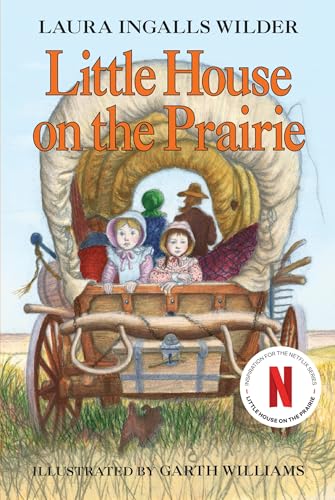
    Cover of Little House on the Prairie by Laura Ingalls Wilder

    Pa packs the covered wagon and the Ingalls family leaves the Big Woods for the open prairie, where he builds a one-room log house with his own hands.

    👍 Good for kids who want the book that started it all, with wolves, fever, a prairie fire and a family that makes a home out of nothing.

    More about Little House on the Prairie

    Laura tells about the months her family spent on the prairie in Kansas. They all get sick with malaria, Pa builds a house and a well, and the family lives right next to the Osage people. At the end, word comes that soldiers will be sent to remove settlers from Indian Territory, and Pa decides to move on before they are forced to leave.

    The book is based on Laura Ingalls Wilder’s own childhood: her family really did live in Kansas around 1869 and 1870. In real life, the land was part of the Osage reservation, and the settlers had no right to be there. Ma’s fear of the Osage is a big part of the story, so many families like to read this one together and talk about it.

    2. Caddie Woodlawn

    📖 Classic adventure · ✍️ Carol Ryrie Brink · Newbery Medal, 1936
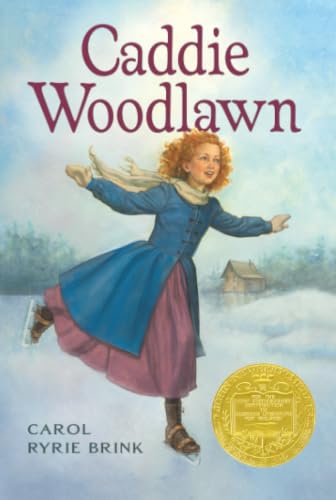
    Cover of Caddie Woodlawn by Carol Ryrie Brink

    Eleven-year-old Caddie would rather run wild in the woods with her brothers than sit inside and sew. In 1860s Wisconsin, there is plenty of wild to run in.

    👍 Good for kids who want a funny, daring girl who climbs, rides and gets into trouble, and who love stories with brothers and a loyal dog.

    More about Caddie Woodlawn

    Caddie was sick and weak when her family came to Wisconsin from Boston, so her parents let her run free with Tom and Warren to get strong. In one year she rides through the forest at night to warn a friend, faces a prairie fire, falls through the ice while skating, and has to put up with her perfect cousin Annabelle from Boston.

    The book won the Newbery Medal in 1936. Carol Ryrie Brink based it on the stories of her own grandmother, Caddie Woodhouse, who grew up on a Wisconsin farm. There is a sequel, Magical Melons.

    3. Tomorrow We’ll Go Home (TRACE in Colorado, Book 2)

    📖 Time-travel mystery · ✍️ T. A. Held · The Riddle America Cannot Explain: TRACE in Colorado · ages 9 to 12

    This time Daniel and Alex have a plan, a packing list and a backpack full of snacks. They aim for 1859 and the start of the Colorado gold rush. The stone has a different plan.

    👍 Good for kids who love frontier life but want a mystery, two boys from today stuck in a gold rush town, and a What Was Real? page at the end.

    More about Tomorrow We’ll Go Home

    The stone sets them down a year late, in 1860. Under the two triangles in the cellar, somebody has written a message in chalk: DON’T DO IT. Down in Denver, a polite man is paying more for gold than anybody else in town, and nobody asks why. Then the stone opens again, and it doesn’t take them home.

    Little House fans will find a lot that feels familiar: a young town on the edge of the frontier, food that costs a fortune, and the question of how you eat when you have no money at all. The difference is that Daniel and Alex know how the future turns out, and that might be the most dangerous thing about them.

    Tomorrow We’ll Go Home is Book 2 of The Riddle America Cannot Explain: TRACE in Colorado by T. A. Held. Want the true story first? Read what food cost in Denver in 1860, the wild food you could find near Morrison in May and how Clark, Gruber and Co. made their own gold coins in 1860. Then try the gold rush quiz.

    4. The Birchbark House

    📖 Historical novel · ✍️ Louise Erdrich · 1999 · National Book Award finalist · ages 9 and up
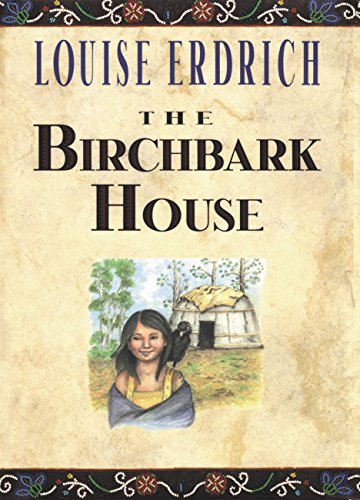
    Cover of The Birchbark House by Louise Erdrich

    A year in the life of Omakayas, a young Ojibwe girl on an island in Lake Superior, starting in the summer of 1847.

    👍 Good for kids who loved the how-it-was-done parts of Little House and want to see the frontier years through the eyes of a Native girl and her family.

    More about The Birchbark House

    The book follows Omakayas’s family through four seasons: building a summer house out of birchbark, harvesting rice in the fall, getting through a terrible winter and making maple syrup in the spring. Omakayas loves the outdoors and her pet, and doesn’t love her chores, just like any kid. The winter brings smallpox and a hard loss, so it is sad in places.

    Louise Erdrich weaves Ojibwe words into the story, so readers learn them as they go. It is the first of five Birchbark House books. Publishers Weekly suggests it for ages 9 and up.

    5. Prairie Lotus

    📖 Historical novel · ✍️ Linda Sue Park · Clarion, 2020 · 272 pages · ages 10 to 12
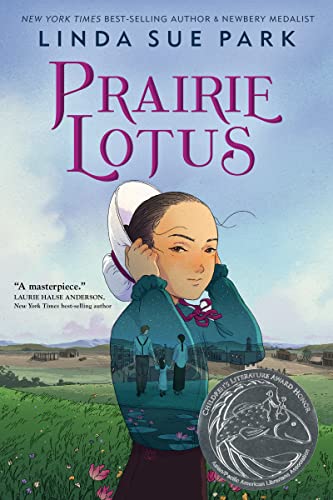
    Cover of Prairie Lotus by Linda Sue Park

    It is 1880. Hanna, fourteen, and her father arrive in a small railroad town in Dakota Territory, where they plan to open a dry goods store.

    👍 Good for kids who are ready for a slightly older story, love sewing and dresses, and want to see what frontier life was like for a girl the town didn’t welcome.

    More about Prairie Lotus

    Hanna’s mother, who was half Chinese and half Korean, has died, and Hanna and her father have been traveling for almost three years. Hanna is a gifted seamstress and dreams of going to school and designing dresses for the shop. But many people in town don’t want her there, and some keep their children home from school because of her.

    Linda Sue Park, a Newbery Medal winner, loved the Little House books as a child, and Prairie Lotus is full of the same details: food, building and fabric. In an author’s note she writes about loving those books and also seeing their problems as an adult. The book deals honestly with prejudice. Publishers Weekly suggests it for ages 10 to 12, and Kirkus Reviews for 8 to 12.

    6. Sarah, Plain and Tall

    📖 Short classic novel · ✍️ Patricia MacLachlan · Newbery Medal, 1986
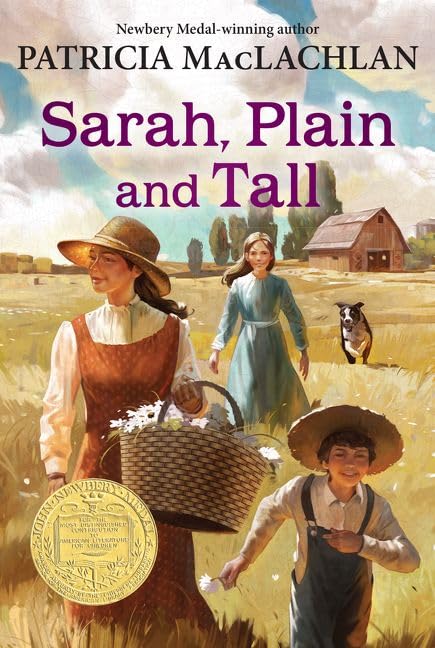
    Cover of Sarah, Plain and Tall by Patricia MacLachlan

    Papa puts an ad in the newspaper, and a woman named Sarah writes back from Maine. She will come to the prairie for one month and see.

    👍 Good for kids who want a short, gentle book to read in a day or two, and for families who like to read aloud together.

    More about Sarah, Plain and Tall

    Anna and her little brother Caleb live on a prairie farm with their father, Jacob. Their mother died soon after Caleb was born. When Sarah arrives, she misses the sea, and Caleb worries every day that the farm will not be enough to make her stay. Anna tells the story.

    It won the Newbery Medal and the Scott O’Dell Award for Historical Fiction in 1986, and it is the first of five books about the same family.

    How to choose

    • For the real Little House experience: Little House on the Prairie.
    • For a kid who wants a funny, daring heroine: Caddie Woodlawn.
    • For a mystery lover who wants time travel, a gold rush town and a What Was Real? page: Tomorrow We’ll Go Home.
    • For the frontier years from an Ojibwe girl’s side: The Birchbark House.
    • For an older reader ready for a harder story: Prairie Lotus.
    • For a short read-aloud: Sarah, Plain and Tall.

    Talk about it

    If your family moved somewhere with no stores, no doctor and no neighbors nearby, what three things would you pack? What would you miss most from home? And which job would you be good at: building, cooking, finding food or keeping everyone’s spirits up?

    More book lists

    Want more of the old West? Try gold rush books for kids, Colorado and the West adventure books or books set in the 1870s. Want time travel? Try books for kids who love Magic Tree House, time-travel books with a girl hero or what to read after I Survived. Or pick a time: the 1920s, World War II or the 1980s and 1990s.

    This list comes from TRACE in Colorado by T. A. Held, a time-travel series for ages 9 to 12 with a What Was Real? page in every book.

    Read the book: Tomorrow We’ll Go Home (Book 2) · See all the TRACE in Colorado books

  • Gold rush books for kids: Colorado, California and a time-travel adventure

    Last updated: November 4, 2026.

    Five books about the Colorado and California gold rushes for young readers: a boy who follows his uncle to the Rockies, a girl who stows away to San Francisco, a boy and his butler in the gold fields, a free old adventure from 1917 and a time-travel story that begins in Denver in 1860. Each one has a closer look underneath, and a quick chooser at the bottom.

    What these books have in common

    Every book here is about people who left home to look for gold, and about what that search cost them. Two are set in the Colorado gold rush that began in 1859, two in the California gold rush, and one moves between the two. They are historical fiction, so the characters are made up, but the rush itself really happened.

    Tomorrow We’ll Go Home adds time travel to the mix. In each TRACE in Colorado book the places and events are real, and a What Was Real? page at the end tells which parts are history and which parts are made up.

    How to choose

    Read the short description on each card first. Then open the “More about” part underneath to see who wrote the book, when it came out and how it begins. The chooser at the bottom matches each book to a kind of reader.

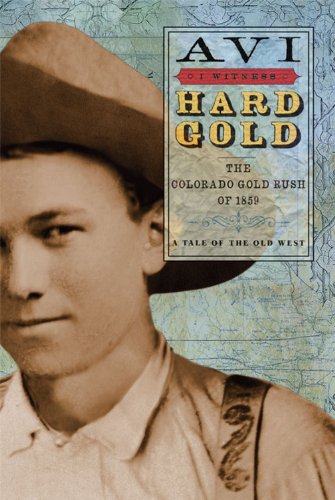
    Book cover of Hard Gold: The Colorado Gold Rush of 1859 by Avi

    1. Hard Gold: The Colorado Gold Rush of 1859

    🎂 Historical adventure · 📅 Published 2008 · ✍️ Avi, Hyperion Books for Children

    A boy sets out to find his uncle, who has struck gold in the Rocky Mountains and is in danger.

    👍 Good for kids who love a long road, a wagon train and a mystery about who to trust.

    More about Hard Gold: The Colorado Gold Rush of 1859

    Early’s uncle Jesse (more like a brother) is sure the answer is to head west and dig for gold. When Jesse flees during the night after being accused of a robbery, Early does not know what to believe. Then a message arrives: Jesse has found gold, but his life is in danger.

    Early runs away and joins a wagon train with a strange family. The closer the travelers get to the mountains, the more ruined lives they meet, lives consumed by the hunt for gold.


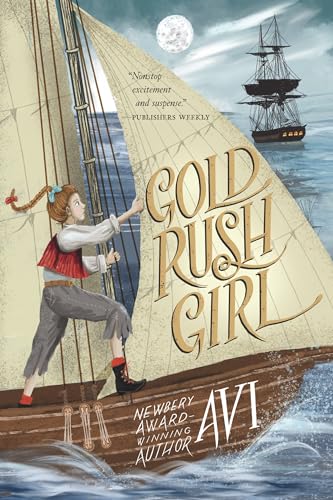
    Book cover of Gold Rush Girl by Avi

    2. Gold Rush Girl

    🎂 Historical adventure · 📅 Published 2020 · ✍️ Avi, Candlewick Press

    A girl stows away on a ship to California, and then must find her kidnapped little brother in San Francisco.

    👍 Good for kids who like brave heroines, sea voyages and a rough boomtown.

    More about Gold Rush Girl

    Tory Blaisdell lives in Providence, Rhode Island, and is tired of being told that girls belong at home. When her father loses his job and decides to seek gold in California, she stows away on the ship that will take him and her younger brother Jacob on the seven-month journey to San Francisco.

    Her father goes to the gold fields. Tory stays in the city and works to keep herself and Jacob going. When Jacob is kidnapped to be a cabin boy on a ship, she needs help from new friends to find him. This one is set in California, not Colorado, so it shows the other big gold rush of the same decade.


    Colour illustration from Tomorrow We'll Go Home (the real cover is coming)

    3. Tomorrow We’ll Go Home (TRACE in Colorado, Book 2)

    🎂 Ages 9 to 12 · 📍 Denver and the Colorado gold rush · ✍️ T. A. Held

    This time they have a plan. The stone has a different one.

    👍 Good for kids who like time travel and a race against a stranger with a secret.

    More about Tomorrow We’ll Go Home (TRACE in Colorado, Book 2)

    Tomorrow We’ll Go Home is the second book in The Riddle America Cannot Explain: TRACE in Colorado, a time-travel series by T. A. Held. Daniel packs a folder of facts, rope, matches and a blanket. Alex packs snacks. They aim for 1859, the start of the Colorado gold rush, but the stone drops them a year late, and somebody has chalked a warning under the two triangles: DON’T DO IT.

    In Denver a polite man is paying more for gold than anybody else in town, and nobody asks why. Then the stone opens again, and it does not take them home. Read the real history behind the story: Clark, Gruber & Co., the bankers who made gold coins in Denver in 1860, what food cost in Denver in 1860 and the gold rush quiz.


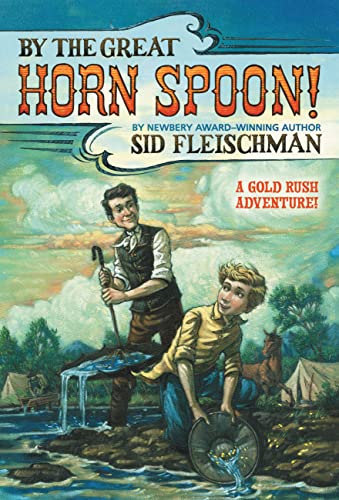
    Book cover of By the Great Horn Spoon! by Sid Fleischman

    4. By the Great Horn Spoon!

    🎂 Grades 3 to 7 · 📅 Published 1963 · ✍️ Sid Fleischman

    A twelve-year-old boy and his English butler chase their fortune in the California gold rush.

    👍 Good for kids who enjoy a funny, fast adventure with a very proper butler.

    More about By the Great Horn Spoon!

    By the Great Horn Spoon! tells the story of a 12-year-old boy and his English butler and their adventures in the California gold rush. It was made into the Disney film The Adventures of Bullwhip Griffin, starring Roddy McDowall and Suzanne Pleshette.

    Because of its setting, the California Department of Education recommends it as a classroom reading selection for grades 3 to 7.


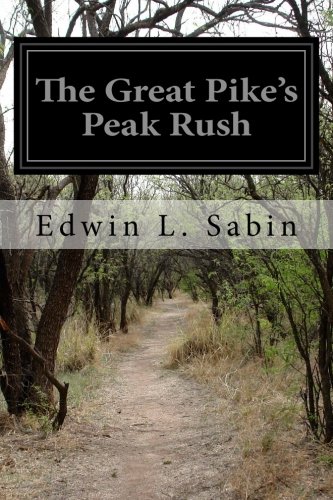
    Book cover of The Great Pike's Peak Rush by Edwin L. Sabin

    5. The Great Pike’s Peak Rush

    🎂 Old-fashioned adventure · 📅 Published 1917 · ✍️ Edwin L. Sabin · 🆓 Free to read online

    A century-old story, subtitled Terry in the New Gold Fields, written close to the time of the rush.

    👍 Good for kids who want to read an adventure that was written for kids over a hundred years ago.

    More about The Great Pike’s Peak Rush

    The full title is The Great Pike’s Peak Rush, or, Terry in the New Gold Fields. It was published by Thomas Y. Crowell in 1917, and the whole text is free on Project Gutenberg. Because it is old, the language is different from a modern novel, so it works best read aloud together or for a curious older reader.


    Which one should you pick?

    More books will be added over time. If you have a favorite gold rush book for kids, tell us.

    This story comes from TRACE in Colorado by T. A. Held, a time-travel series for ages 9 to 12 with a What Was Real? page in every book.

    Read the book: Tomorrow We’ll Go Home (Book 2) · See all the TRACE in Colorado books

    Next post: The bankers who made their own gold coins in Denver in 1860

    Loved the frontier part most? Try our list of books like Little House on the Prairie.

  • Trivia: a Colorado gold rush quiz (9 questions with answers)

    Last updated: November 3, 2026.

    How much do you know about the Colorado gold rush? Try these nine questions about Denver in 1860, the bankers who made coins, a famous hoax and the gold of Cripple Creek. Click each question to see the answer.

    Quick facts

    ❓

    Questions

    nine in all.

    🪙

    Topics

    coins, flour, a hoax and a gold camp.

    ⏱️

    Time

    about five minutes.

    🏆

    Best score

    try for nine out of nine.

    The quiz

    Click a question to see the answer.

    1. Where did Denver begin? A) Where Cherry Creek meets the Platte, B) At the foot of Pikes Peak, C) On a lake shore

    A. Across the creek was a second town, Auraria, started at the end of 1858.

    2. Where did the Rocky Mountain News building stand in 1860? A) On a hill, B) On stilts in a dry creek, C) Inside a bank

    B. It stood on stilts in the dry bed of Cherry Creek.

    3. Before more wagons arrived from Utah, what did 100 pounds of flour cost in Denver in 1860? A) One dollar, B) Five dollars, C) Fifteen dollars

    C. When more flour arrived, the price fell to eight dollars.

    4. Why did Denver miners need the coins Clark, Gruber & Co. made? A) Paper money was not allowed, B) Nobody wanted gold dust, C) The nearest mint was in San Francisco

    C. So a bank right in Denver started making coins.

    5. About how many coins could the bank make in one minute? A) One or two, B) Fifteen to twenty, C) About five hundred

    B. One by one the coins dropped out of the press.

    6. Which mountain was on the bank’s $10 and $20 coins? A) Pikes Peak, B) Longs Peak, C) Mount Elbert

    A. It did not look much like the real mountain, and by 1861 it was gone from the coins.

    7. About how many people rushed to Cañon City in the Mount Pisgah hoax of 1884? A) 50, B) 500, C) 5,000

    C. About 5,000 people came to buy supplies.

    8. Who found rich ore at Cripple Creek in October 1890? A) Bob Womack, B) Clark, Gruber, C) Winfield Scott Stratton

    A. Bob Womack. Stratton staked the Independence on July 4, 1891.

    9. How much did a Cripple Creek miner earn for an eight-hour day in the early 1890s? A) 10 cents, B) $3, C) $50

    B. About $3 a day.

    What is real and what is made up

    Every answer here is real history, checked for this series. Tomorrow We’ll Go Home is a made-up time-travel adventure, and the quiz questions come from the trivia cards that go with it.

    This story comes from TRACE in Colorado by T. A. Held, a time-travel series for ages 9 to 12 with a What Was Real? page in every book.

    Read the book: Tomorrow We’ll Go Home (Book 2) · See all the TRACE in Colorado books

    Previous post: The Swiss Cottage in Morrison: from hotel to college

    Next post: For parents and teachers: a gold rush discussion guide

  • For parents and teachers: a gold rush discussion guide

    Last updated: November 3, 2026.

    How can you talk with a child about the Colorado gold rush? This guide gives questions to discuss, words to learn and a real place to read about: Denver’s Union Depot. It uses only checked history and gives no story spoilers.

    Quick facts

    👧

    Age

    written for ages 9 to 12.

    💬

    Talk about

    money, trust, trade and travel.

    📚

    Words

    mint, assay, hoax, claim.

    🚉

    Real place

    Denver’s Union Depot, opened June 1, 1881.

    💡 Did you know? Union Depot opened on June 1, 1881. It was built of limestone and rhyolite, was nearly 500 feet long and had a clock tower in the middle. It burned on March 18, 1894 and was rebuilt.

    Questions to talk about

    Use these after reading any post in the series.

    New words

    Mint: a place where official coins are made. Assay: to test ore to see how much gold it holds. Hoax: a trick that fools many people. Claim: the land a prospector has the right to mine.

    Denver in 1891

    In the early 1890s Denver had cable cars from the end of 1888, the first electric lines soon after, and horsecars still running. A child arriving at Union Depot would see streetcars running down the middle of the street.

    Try this at home

    • Why did Denver need its own coins in 1860?
    • Why did nobody believe Bob Womack in 1890?
    • How can you tell whether a big news story is true?
    • Why do prices go down when more of something arrives?
    • What would you bring to a gold camp if you could only carry one bag?

    What is real and what is made up

    The facts in these posts come from checked history. Tomorrow We’ll Go Home is a made-up time-travel adventure, and the What Was Real? page in the book separates the real from the invented.

    This story comes from TRACE in Colorado by T. A. Held, a time-travel series for ages 9 to 12 with a What Was Real? page in every book.

    Read the book: Tomorrow We’ll Go Home (Book 2) · See all the TRACE in Colorado books

    Previous post: Trivia: a Colorado gold rush quiz

  • How did people look for gold at Cripple Creek in 1891?

    Last updated: November 3, 2026.

    How did prospectors find gold at Cripple Creek in 1891? Near the surface the gold was free gold, loose in weathered rock, so a person with a shovel and a pan could find it. This post explains how that worked and how people and supplies got there before any railroad.

    Quick facts

    ⛏️

    Free gold

    near the surface gold lay loose in weathered rock.

    🪙

    Deeper down

    the gold was locked inside minerals called tellurides.

    🛞

    Getting there

    a wagon and stage road from Florissant, where the railroad ended.

    🚂

    Railroads

    none reached Cripple Creek until 1894.

    💡 Did you know? A Cripple Creek miner earned about $3 for an eight-hour day in the early 1890s.

    Surface gold first

    Small deposits near the surface came first. People dug up surface dirt and washed it in a pan. The water carries away the light dirt, and the heavy gold stays at the bottom. Those small finds led prospectors to the rich veins in the rock below.

    Why deeper gold was harder

    Deeper in the ground the gold was locked inside minerals called tellurides. It could not simply be washed out. That kind of gold needed mining and later a mill. For the first people in 1891, the easy surface gold was the way in.

    How did supplies arrive?

    The Colorado Midland railroad reached Florissant in 1886 or 1887 (sources differ). From there a wagon and stage road linked the district to the railroad until the Midland Terminal reached Cripple Creek in 1895. The Florence & Cripple Creek railroad arrived in 1894. So in May 1891 a supply wagon fits the real history.

    Try this at home

    • Why does the heavy gold stay in the pan while the light dirt washes away?
    • Why do you think the surface gold was found before the deep veins?
    • What would you pack for a trip by wagon to a camp of twenty tents?

    What is real and what is made up

    Free gold, tellurides, the Florissant road and the railroad dates are real history. Tomorrow We’ll Go Home is a made-up time-travel adventure; the wagon fare in the story was arranged for the story and is not a real price.

    This story comes from TRACE in Colorado by T. A. Held, a time-travel series for ages 9 to 12 with a What Was Real? page in every book.

    Read the book: Tomorrow We’ll Go Home (Book 2) · See all the TRACE in Colorado books

    Previous post: Bob Womack and the gold of Cripple Creek

    Next post: What did food cost in Denver in 1860?

  • What did food cost in Denver in 1860?

    Last updated: November 3, 2026.

    What did food cost in Denver in 1860? A lot. Everything had to come by wagon over long distances, so flour, potatoes and eggs were expensive. This post shows some real prices and how they changed.

    Quick facts

    🌾

    Flour

    $15 a hundred pounds at first, then $8 in October 1860.

    🥔

    Potatoes and onions

    25 cents a pound in 1859.

    🥚

    Eggs

    75 cents a dozen in 1859.

    🍞

    A loaf

    a loaf for two bits (25 cents) fits.

    💡 Did you know? Denver began where Cherry Creek runs into the South Platte River. In 1860 the Rocky Mountain News office stood on stilts in the dry bed of Cherry Creek. The flood of 1864 destroyed it.

    Timeline: Denver’s first years

    Late 1858

    Auraria is founded across the creek from Denver.

    April and May 1859

    The big wave of gold seekers arrives.

    1860

    Flour costs $15 a hundred pounds.

    October 1860

    Utah wagons arrive and the price falls to $8.

    1864

    The flood destroys the newspaper building in the creek bed.

    Why was food so expensive?

    Almost nothing was grown near the gold fields yet. Food had to be hauled in by wagon, so a sack of flour cost many times what it cost back home. When Utah shipments arrived in the fall of 1860, there was more flour to buy and the price dropped from $15 to $8 for a hundred pounds.

    Compare it with wages

    Pay in the gold fields could be good, but prices ate much of it. Later, in the early 1890s, a Cripple Creek miner earned about $3 for an eight-hour day. Prices are always tied to how far goods must travel.

    Try this at home

    • If flour cost $15 for 100 pounds, how much was one pound?
    • Why did the price drop once more flour arrived?
    • What food in your kitchen came from far away?

    What is real and what is made up

    The flour prices, the 1859 prices and the Cherry Creek setting are real history. Tomorrow We’ll Go Home is a made-up time-travel adventure that visits Denver in 1860; the price of one loaf in the story fits the real prices of the time.

    This story comes from TRACE in Colorado by T. A. Held, a time-travel series for ages 9 to 12 with a What Was Real? page in every book.

    Read the book: Tomorrow We’ll Go Home (Book 2) · See all the TRACE in Colorado books

    Previous post: How did people look for gold at Cripple Creek in 1891?

    Next post: Wild food you could find near Morrison in May

  • Wild food you could find near Morrison, Colorado in May

    Last updated: November 3, 2026.

    What wild food grows near Morrison, Colorado in May? Wild onion, dandelion, curly dock and young cattail shoots. This post tells what travelers could find in spring, what was not ready yet, and how to start a fire with a spark.

    Quick facts

    🧅

    Wild onion

    a spring plant that smells like an onion.

    🌼

    Dandelion

    the leaves can be eaten.

    🌿

    Curly dock

    a plant with long wavy-edged leaves.

    🌱

    Cattail

    the young shoots in spring.

    💡 Did you know? Currants ripen in July and August and pine nuts in the fall, so a hungry traveler in May could not rely on them.

    Why May is tricky

    In May the plants are just starting to grow. Berries and nuts are not ready, so spring food is mostly young leaves and shoots. A person in 1891 who ran out of food near Morrison would have to look for green things beside streams.

    What about fire?

    To cook anything, you need fire. A spark comes from striking steel against a hard stone such as quartz or flint. A chip of white quartz works.

    A safety note

    Never eat a wild plant unless an adult who knows plants says it is safe. Some wild plants are poisonous.

    Try this at home

    • Why would berries and nuts not be ready in May?
    • Name two things you would need to cook a wild meal.
    • Why is it important to have an adult check wild plants?

    What is real and what is made up

    The plants and the ripening times are real. Tomorrow We’ll Go Home is a made-up time-travel adventure; its characters use the same wild food and a chip of white quartz to make a spark.

    This story comes from TRACE in Colorado by T. A. Held, a time-travel series for ages 9 to 12 with a What Was Real? page in every book.

    Read the book: Tomorrow We’ll Go Home (Book 2) · See all the TRACE in Colorado books

    Previous post: What did food cost in Denver in 1860?

    Next post: The Swiss Cottage in Morrison: from hotel to college

  • The Swiss Cottage in Morrison: from hotel to college

    Last updated: November 3, 2026.

    What was the Swiss Cottage in Morrison, Colorado? It was a building that was first a hotel and then a college. Sacred Heart College used it from 1884 to 1888. This post tells the story and adds a fun fact about Morrison’s old newspapers.

    Quick facts

    🏨

    First

    a hotel.

    🎓

    Then

    Sacred Heart College, from 1884 to 1888.

    📰

    Newspapers

    four papers used 408 Bear Creek Avenue between 1889 and 1917.

    📍

    Where

    Morrison, Colorado.

    💡 Did you know? The Morrison Bud, one of those papers, ran until 1900.

    The building

    The Swiss Cottage, also known as Evergreen House, stood in Morrison. It was a hotel before it became a college. Sacred Heart College used it from 1884 to 1888.

    Morrison’s newspapers

    From 1889 to 1917, four papers used the building at 408 Bear Creek Avenue, one after another: The Bud, The Jefferson, the Morrison Independent and the Morrison Monitor. The Monitor was the last, around 1915.

    Getting to Denver

    A trip from Morrison to Denver is about 16 miles. In the early 1890s the usual Western train fare was about 3 cents a mile, so a ticket would cost about 48 cents. That is an estimate, not a record of the real fare.

    Try this at home

    • Why might a hotel turn into a school?
    • What building in your town has had more than one job?
    • How many miles is a round trip between Morrison and Denver?

    What is real and what is made up

    The Swiss Cottage, its years as a college and the newspapers are real history. Tomorrow We’ll Go Home is a made-up time-travel adventure that visits Morrison in 1891, when the Morrison Bud was still printing.

    This story comes from TRACE in Colorado by T. A. Held, a time-travel series for ages 9 to 12 with a What Was Real? page in every book.

    Read the book: Tomorrow We’ll Go Home (Book 2) · See all the TRACE in Colorado books

    Previous post: Wild food you could find near Morrison in May

    Next post: Trivia: a Colorado gold rush quiz

  • Clark, Gruber & Co.: the Denver bankers who made their own gold coins in 1860

    Last updated: November 3, 2026.

    Did a bank in Denver really make its own gold coins? Yes. In the summer of 1860, a bank called Clark, Gruber & Co. struck gold coins in Denver, because the nearest government mint was far away. This post tells who the bankers were, how fast they worked, and how the story ended.

    Quick facts

    📅

    When

    the bank opened on July 10, 1860, and coining began about July 16.

    📍

    Where

    the corner of today’s 16th and Market Streets in Denver.

    🪙

    The coins

    $2.50, $5, $10 and $20 pieces, struck at 15 to 20 a minute.

    🏛️

    The end

    coining went on to the end of 1862 and made $594,305 in all.

    💡 Did you know? The 1860 coins held a little more than their face value in gold, and the $20 coin was slightly larger and heavier than the government’s. The $10 and $20 coins showed a stylized Pikes Peak that did not look much like the real mountain.

    Timeline: from gold dust to coins

    Late 1858

    Auraria, the town across the creek from Denver, is founded.

    Spring 1859

    The big wave of gold seekers arrives, in April and May.

    July 10, 1860

    Clark, Gruber & Co. opens as a bank.

    About July 16, 1860

    The first coins are struck.

    1861

    The Pikes Peak picture is dropped from the coins.

    End of 1862

    Coining stops.

    April 1863

    The government buys the building for $25,000.

    Why make coins in Denver?

    Miners paid for things with gold dust, which had to be weighed every time. Coins were easier. But in 1860 the nearest government mint, a place where official coins are made, was in San Francisco, which had opened in 1854. That is a very long way from Denver by wagon. A bank in Denver that could turn gold into coins had an easy customer list.

    Who were the bankers?

    Clark, Gruber & Co. belonged to three partners: the brothers Austin M. Clark and Milton E. Clark, and Emanuel H. Gruber. All three were real people. Austin Clark is one of the real names mentioned in Tomorrow We’ll Go Home.

    How fast did they work?

    The bank could strike fifteen to twenty coins a minute. One by one they dropped out of the press and into a bucket. Over about two and a half years the bank made $594,305 worth of coins.

    What happened to the building?

    In April 1863 the government bought the building for $25,000. Readers of Book 1 will know it later as the Assay Office.

    Try this at home

    • Fifteen coins a minute: how many is that in ten minutes? In an hour?
    • Why do you think the bankers put a mountain on their coins?
    • Why would a miner prefer coins to gold dust?

    What is real and what is made up

    The bank, the partners, the coin sizes and the numbers above are real history. Tomorrow We’ll Go Home is a made-up time-travel adventure that visits Denver in 1860. Its What Was Real? page explains which parts of Denver in 1860 come from real history.

    This story comes from TRACE in Colorado by T. A. Held, a time-travel series for ages 9 to 12 with a What Was Real? page in every book.

    Read the book: Tomorrow We’ll Go Home (Book 2) · See all the TRACE in Colorado books

    Next post: The Mount Pisgah gold hoax of 1884

  • The Mount Pisgah gold hoax of 1884: 5,000 people and a fake gold mine

    Last updated: November 3, 2026.

    What was the Mount Pisgah hoax? In 1884, a hole in the ground near Cañon City, Colorado, was said to hold gold ore worth a fortune. It was a trick, and about 5,000 people fell for it. This post tells the story, and the surprise that came a few years later.

    Quick facts

    📅

    Year

    1884.

    📍

    Where

    about 45 miles from Cañon City, Colorado.

    🪙

    The claim

    ore said to be worth $2,000 a ton.

    👥

    The crowd

    about 5,000 people poured into Cañon City to buy supplies.

    💡 Did you know? Real gold was found in the same part of Colorado a few years later, at a place called Cripple Creek.

    Timeline: a fake mine and a real one

    1884

    The Mount Pisgah hoax. About 5,000 people rush to Cañon City.

    October 1890

    Bob Womack finds rich ore at Cripple Creek. Few people believe him.

    April 1891

    The Cripple Creek mining district is organized.

    What does it mean to salt a mine?

    To salt a mine means to put gold into a hole in the ground so that it looks rich, then sell it or the dream of it. The Mount Pisgah hole was salted. Samples from it were said to assay at $2,000 a ton. To assay means to test ore to find out how much gold is in it.

    Why did 5,000 people come?

    People believed the news and wanted to be early. Before they could dig anywhere, they needed tools, food and tents, so thousands poured into Cañon City to buy supplies. The people who sold supplies did well, no matter what was in the hole.

    Why this matters later

    When Bob Womack found real gold at Cripple Creek in 1890, many people remembered Mount Pisgah and did not believe him. You can read that story in our post about Bob Womack and Cripple Creek.

    Try this at home

    • Why do you think people believed the news about Mount Pisgah?
    • Who really made money in the Mount Pisgah rush?
    • How can you check if a story is true before you act on it?

    What is real and what is made up

    The hoax, the numbers and the crowd are real history. Tomorrow We’ll Go Home is a made-up time-travel adventure, and the Mount Pisgah story is one of the real events its What Was Real? page explains.

    This story comes from TRACE in Colorado by T. A. Held, a time-travel series for ages 9 to 12 with a What Was Real? page in every book.

    Read the book: Tomorrow We’ll Go Home (Book 2) · See all the TRACE in Colorado books

    Previous post: Clark, Gruber & Co.: the Denver bankers who made their own gold coins in 1860

    Next post: Bob Womack and the gold of Cripple Creek